
You need to accept the hand you’re given. It’ll be special delivery and you’ll need to sign for the package. Then it’s your hand.
Tim Kane
You need to accept the hand you’re given. It’ll be special delivery and you’ll need to sign for the package. Then it’s your hand.
Tim Kane
Arkane Curiosities

You are walking alone, late at night. You see a pretty girl from behind. But when she turns, the girl has no face. Only a smile filled with blackened teeth. This is the frightening yokai called Ohaguro Bettari.
The name “Ohaguro” refers to the practice of dyeing one’s teeth black, which was popular in Japan during the Edo period (1603-1868). The process of dyeing teeth black involved applying a special mixture of vinegar, iron filings, and other ingredients to the teeth. The mixture would turn the teeth black over time, and the process needed to be repeated every few days to maintain the color.
The custom was also associated with the idea of “mibae,” which means “to show one’s maturity.” Married women who did not dye their teeth black were considered immature and not yet ready for marriage.
The tradition of “Ohaguro” explains the black teeth and “Bettari” means “appearing suddenly” or “appearing out of nowhere.” This yokai will be drawn to anyone walking alone at night.
The creature takes the form of a beautiful young woman wearing a kimono. She hides her face and asks the person if she looks beautiful. If the person says no, she will disappear. If the person says yes, she will follow them for the rest of the night.
A closer look reveals a shocking creature. The Ohaguro Bettari has no facial features, save its smile — a mouth filled with black teeth. She will laugh at your fear and surprise (and this is perhaps the reason for the yokai’s trickery).
The lesson here: stay clear of pretty woman late at night.
Tim Kane
[mailerlite_form form_id=2]

When news streams and bogus facts overwhelm you, you’re caught in a true media storm.
Tim Kane
Arkane Curiosities
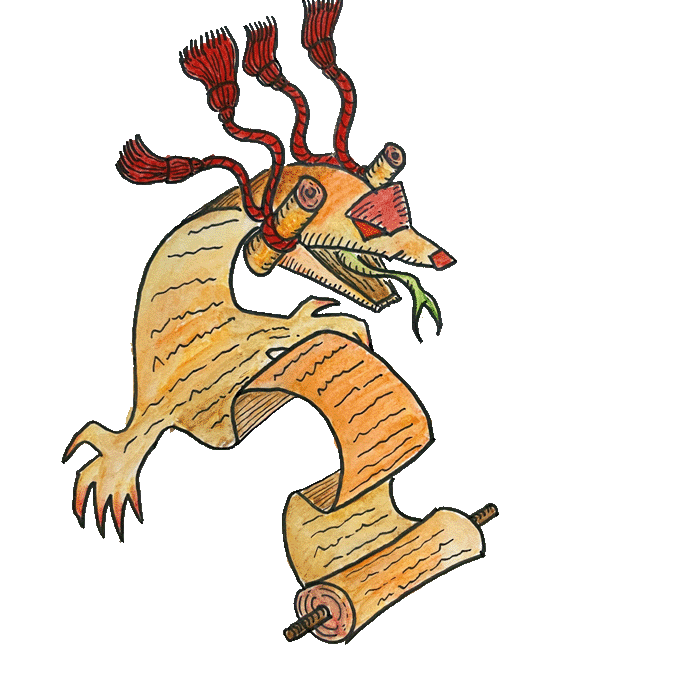
Writers, how many times have you started a new story or novel, only to jump ship for a new, shinier idea? Well, your written work might have some feelings about being abandoned. The Kyorinrin is literally words given life.
In Japan, the tradition of the tsukumogami yokai allows tools and objects to acquire a spirit. Common examples of objects that can become tsukumogami include tools such as umbrellas, sandals, or teapots, as well as household items like lamps or futons. Once the object becomes a tsukumogami, it gains the ability to move and act on its own, often with mischievous or malevolent intent.
In Japanese folklore, tsukumogami are often depicted as small, furry creatures with big eyes and mischievous personalities. They are said to appear on the night of Setsubun, the day before the start of spring, and cause chaos and mischief in homes and businesses. However, some tsukumogami are more benevolent and may even bring good luck to those who keep them in their homes.
The Kyōrinrin is a special type of tsukumogami formed when a scroll or book has lain forgotten for many years. After gathering a layer of dust, the writing gains a spirit. The Kyōrinrin decorate themselves with extravagant kimonos and ornate details, perhaps because they want to be noticed by their creator. They also develop bird-like qualities: beaks and long expandable wings.
The Kyōrinrin shake off their dust and seek out their owners who have forgotten them. They only want to spread their knowledge and if it has to be by force, then so be it.
So before your own writing grabs you by the throat and forces you to read it, perhaps you should dust off your own forgotten treasures and take a peek.
Tim Kane
[mailerlite_form form_id=2]
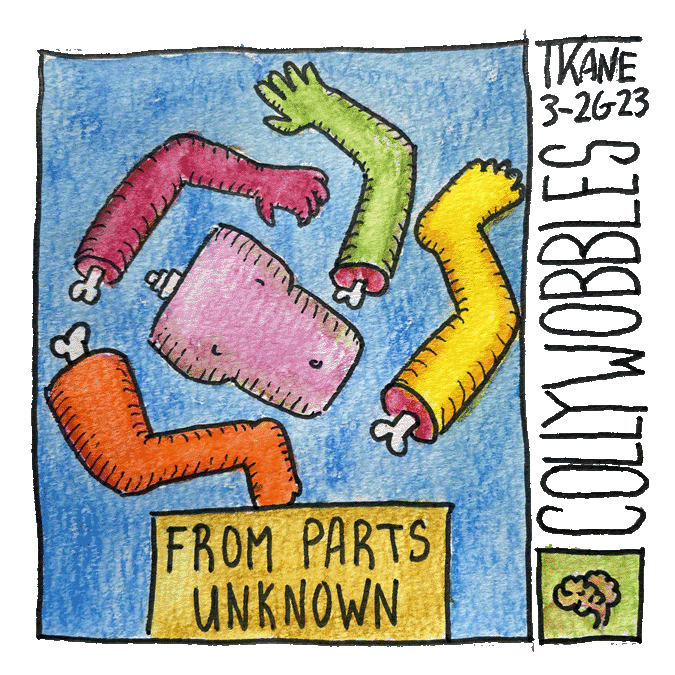
When assembling your Frankenstein monster (or flesh golem) you need a reliable place to source your parts. The worst scenario is to get body pieces from parts unknown.
Tim Kane
 Tim Kane Books