
When news streams and bogus facts overwhelm you, you’re caught in a true media storm.
Tim Kane
When news streams and bogus facts overwhelm you, you’re caught in a true media storm.
Tim Kane
Arkane Curiosities
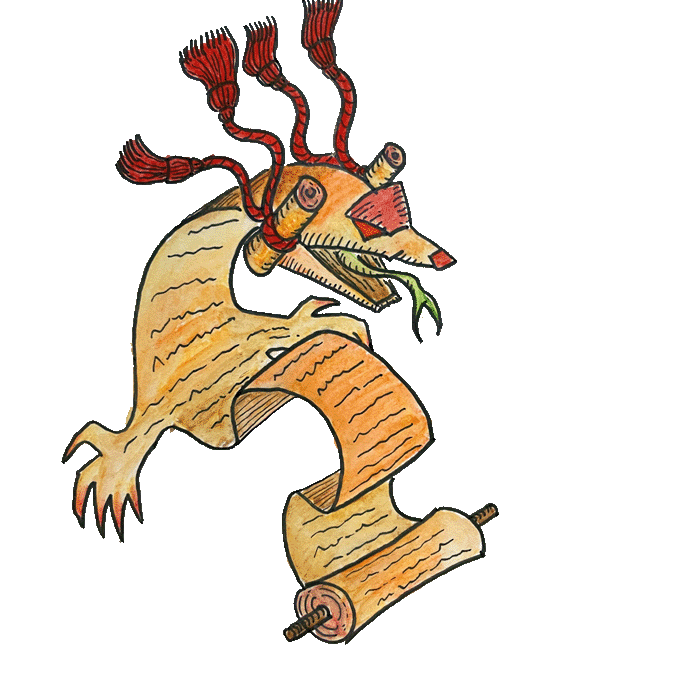
Writers, how many times have you started a new story or novel, only to jump ship for a new, shinier idea? Well, your written work might have some feelings about being abandoned. The Kyorinrin is literally words given life.
In Japan, the tradition of the tsukumogami yokai allows tools and objects to acquire a spirit. Common examples of objects that can become tsukumogami include tools such as umbrellas, sandals, or teapots, as well as household items like lamps or futons. Once the object becomes a tsukumogami, it gains the ability to move and act on its own, often with mischievous or malevolent intent.
In Japanese folklore, tsukumogami are often depicted as small, furry creatures with big eyes and mischievous personalities. They are said to appear on the night of Setsubun, the day before the start of spring, and cause chaos and mischief in homes and businesses. However, some tsukumogami are more benevolent and may even bring good luck to those who keep them in their homes.
The Kyōrinrin is a special type of tsukumogami formed when a scroll or book has lain forgotten for many years. After gathering a layer of dust, the writing gains a spirit. The Kyōrinrin decorate themselves with extravagant kimonos and ornate details, perhaps because they want to be noticed by their creator. They also develop bird-like qualities: beaks and long expandable wings.
The Kyōrinrin shake off their dust and seek out their owners who have forgotten them. They only want to spread their knowledge and if it has to be by force, then so be it.
So before your own writing grabs you by the throat and forces you to read it, perhaps you should dust off your own forgotten treasures and take a peek.
Tim Kane
[mailerlite_form form_id=2]
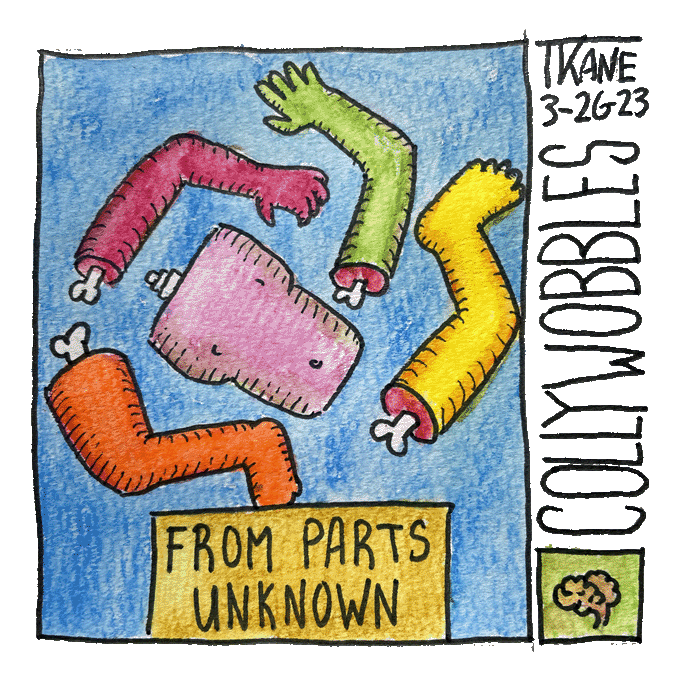
When assembling your Frankenstein monster (or flesh golem) you need a reliable place to source your parts. The worst scenario is to get body pieces from parts unknown.
Tim Kane
Arkane Curiosities
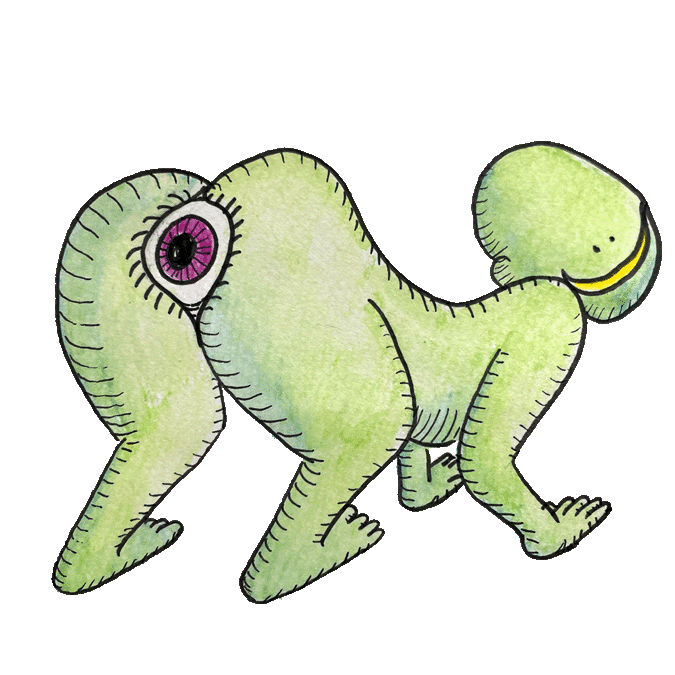
To the Western mind, images of ghosts and the supernatural conjures up amorphous spirits or tall creepy slender men. But in Japan, the supernatural takes a hilarious and often creepy twist. The word Yokai can be translated as monster, demon, spirit, or goblin and the come in many strange and bizarre forms. Yet, perhaps none more peculiar than the Shirime or eyeball butt yokai.
The word “shirime” translates literally to “butt eye” but it also has the meaning of a “backward glance”, which is quite literal to how this yokai looks at you. The shirime has the body of a man or woman, but instead of a face, it has a single large eyeball where its butthole should be. Other meanings for “shirime” have qualities of distress, which seems to be the motivation for this prankster creature.
The shirime approaches you looking, in all respects, like a normal person. It wears a kimono and asks you for a moment to spare. Once it has your attention, the kimono drops away. You see that this person has no facial features. It bends over, spreading its butt cheeks, to reveal a single eyeball, shining like lightning.
And that’s it. It doesn’t do anything else to you. Shock seems to be this creature’s only purpose.
Little is known about this yokai. A Japanese poet, Yosa no Buson, wrote the first and only encounter with this supernatural being. Some believe that shirime’s true form is just an animal, shapeshifting into a disturbing form in order to play a practical joke on us humans.
Tim Kane
[mailerlite_form form_id=2]
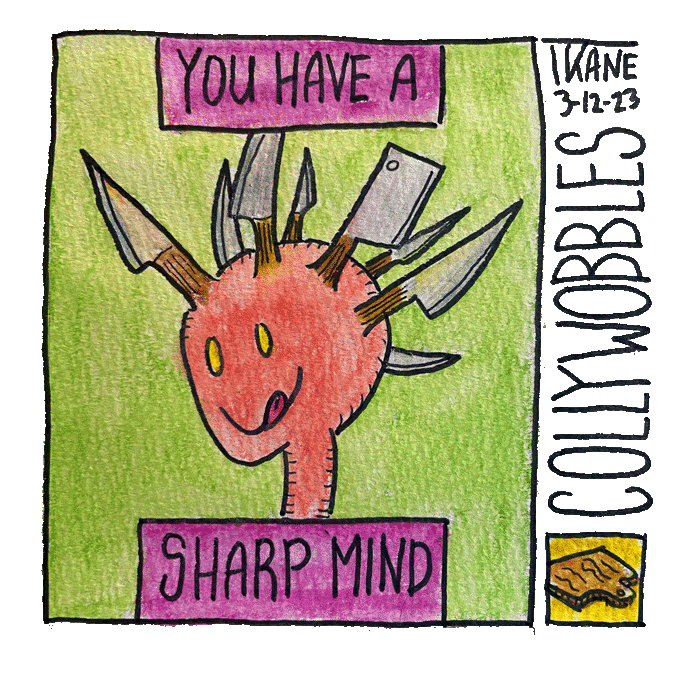
Has anyone ever told you that you have a sharp mind? Does that mean you have a head full of knives? We certainly equate dull with being stupid. But then, what would a mind sharpener look like?
Tim Kane
 Tim Kane Books