
A tantalizing blend of cerebellum and ice create this pick me up for those of your waking from a dirt nap. The ghoul brew is the perfect drink for the ghoul on the go.
Tim Kane
A tantalizing blend of cerebellum and ice create this pick me up for those of your waking from a dirt nap. The ghoul brew is the perfect drink for the ghoul on the go.
Tim Kane
Arkane Curiosities

HBO’s House of Dragons tantalizes our imaginations about a world filled with flying reptiles. Yet throughout history, not all dragons had wings and breathed fire. The dragons of China slithered through the skies millenia ago and were just as deadly.
Chinese dragons controlled the weather and symbolized royalty and divine good fortune. They guarded heaven and inhabited nearly every biome in Asia.
Wang Fu, a philosopher and poet in the early Han Dynasty (206 BCE – CE 220) wrote extensively on the anatomy of dragons. According to him, all Chinese dragons (and Asian dragons in general) share nine characteristics:
Notice that, unlike their western counterparts, only one animal is of the reptile variety. This creature is more at home with a Greek Chimera than a European dragon.
Wang Fu also stated that dragons have exactly 117 scales. That’s right. Not a scale more or less. You see, dragons were seen as concise in their construction. Even the scales themselves were divided up, much like a baking recipe, with 81 scales representing yang essence and 36 representing yin essence.
Although they are portrayed as male (having beards and horns), Chinese dragons are essentiallly gender neutral or non-binary (having some parts yang and others yin). Instead, the Chinese phoenix is split into male (凤) and female (凰) versions.
The yin scales give the dragon its aggressive and destructive side, but thanks to its smaller ratio, it’s balanced by the peace and serenity of yang. Just as a flood or tidal wave can wreak havoc (yin is associated with water), so too, dragons can summon storms or cause droughts by withholding water.
The Chinese believe that all Asian dragons originated in China and that as they flew farther away, they lost some of their power.
Imperial dragons are the only ones to have five toes. The more common dragons have to make do with only four. Korean dragons only have four toes (being removed from the center of China) and Japanese dragons have only three (even farther from China).
Unfortunately, these days no one remembers these strict rules about the number of toes and people draw all dragons with five toes.
In many stories, dragons can stretch their bodies or even make themselves disappear. They can also take on the form of a fish, snake or human being.
Dragons could also shrink to very small sizes. In the illustration, a Buddhist monk convinces a dragon to fit into a rice bowl.
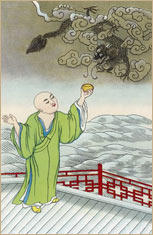
Dragons are not born. Instead they transform into a dragon from another creature (like a snake or carp). This might account for the various animals which make up their appearance.
The process of transformation can take thousands of years. Just to grow those 117 scales can take a millennium. Often, young Chinese dragons appear more like fish until they reach maturity.
There really is no need for young dragons because they are not seen as monsters roaming the countryside, as in Europe. Instead, they are forces of nature, akin to the Greek fates or the Norse Valerie’s. We don’t see the fates having little fates running around. There’s no need.
Tim Kane
[mailerlite_form form_id=2]

Do witches float? Why yes they do with vanilla ice cream and root beer. Plus a heft dose of magic.
Tim Kane
Arkane Curiosities
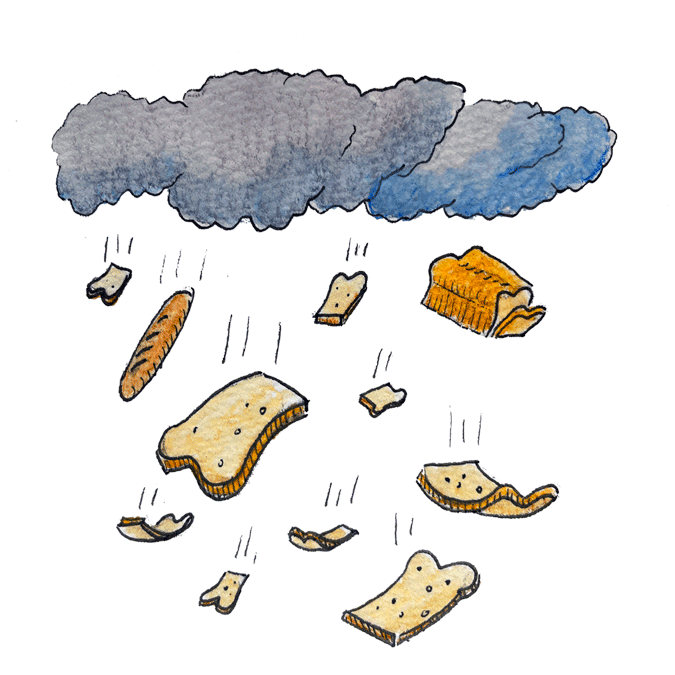
Manna was a supernatural food given to the Israelites during their 40-year trek through the desert. It brings up images of divine bread and even Jesus’ miracle with the loaves and fishes. In the Bible it’s called the “Bread of Heaven,” “Angel’s Food,” and “Spiritual Meat.”
When the Jews set out from Egypt, they very quickly ran out of food. God sent a magical dew to the desert floor and when it evaporated, it left a flaky substance on the ground (resembling frost).
The raw manna tasted like water made with honey. The Israelites ground these flakes with hand mills. They boiled the manna in pots to create flat cakes, which tasted like pasties baked with olive oil.
The manna continued to appear on the ground each morning (except Sabbath, where they collected a double portion the day before). The Jews consumed this angelic food for 40 years until they crossed the border of Canaan. Once returned to the promised land, the divine foodstuffs vanished forever.
Eating the same thing day after day can get monotonous. Soon, people pined for the tastes and textures of food back in Egypt — yearning for cucumbers, melons, leeks, onions and garlic. They also wanted to nosh on some fresh meat.
God compiled and sent an enormous flock of quail along with the manna. The people greedily collected days worth of quail. This so angered God, that he struck the Israelites with a plague.
As a divine food, manna was made up of only nutritious matter. The body absorbed every morsel and the Israelites expelled no waste. Additionally, manna had a fragrant smell that women would use as a perfume.
The Jewish people had only four hours to collect the manna before it melted under the scorching desert sun. The melted manna created streams, giving sustenance to deer and other wildlife. Should a foreigner eat an animal who drank of these streams, they would taste the divine food. Otherwise, tradition states, that manna tasted bitter to gentiles.
Tim Kane
[mailerlite_form form_id=2]

With a massive iron content, the vampire tea is sure to satisfy even the thirstiest blood sucker.
Tim Kane
 Tim Kane Books