
Simply dropping the F bomb can cause all sorts of destruction. Yet in the world of warfare, all weapons are profane.
Tim Kane
Simply dropping the F bomb can cause all sorts of destruction. Yet in the world of warfare, all weapons are profane.
Tim Kane
Arkane Curiosities

In the realm of mystical practices, divination takes many forms. Among them is Cledonism or Cledonomancy, a lesser-known method drawing meaning from chance utterances and unexpected noises. Rooted in ancient times, Cledonism offers a unique way to seek guidance and tap into the whispers of fate.
Cledonism traces its roots back to ancient Greece, where chance events and spontaneous words were considered messages from the gods or the universe. The term “cledon” in Greek means “omen” or “divine utterance.” In those times, people believed that these utterances held significant messages or warnings, and interpreting them correctly could guide their actions and decisions.
The Roman Cicero observed that even the utterances of men could bring ill luck. Simply mentioning the word incendium (meaning description) at a meal brought bad luck on all. Even the word prison was replaced with domicilim (simply “dwelling”). In other words, he invented the euphemism.
Pausanias commented on the use of cledonism. After a person whispered their question in a god’s ear in the agora. , they plugged their own ears and listened for the god’s response from chance words and phrases overheard throughout the day.
Begin by cultivating a state of heightened awareness. Whether you’re facing a decision or seeking guidance, maintain an open mind and receptivity to the unexpected. Frame a clear and specific question or intention in your mind. This will help focus the divination process and invite meaningful responses.
Now, go about your day, paying attention to the environment around you. Whether you’re out for a walk, working, or simply going about daily tasks, remain attuned to any sounds, words, or snippets of conversation that catch your attention.
When you encounter unexpected words, phrases, or sounds, pause and take note. These could be snippets from conversations, radio, TV, or even a passing statement on the street. The key is their spontaneity and relevance to your question or intention. Consider how they may connect to your question or intention. Trust your intuition and the subtle whispers of fate to guide your interpretation.
Whether you choose to delve into this ancient practice or simply remain open to the unexpected, may the whispers of fate guide you on your journey. Stay curious and attuned to the symphony of life’s chance utterances, for they may hold the keys to your destiny.
Tim Kane
[mailerlite_form form_id=2]

You’ll be the most popular pirate as a headcanon. You can resell boarders as well as know more about fictional characters you kin.
Tim Kane
Arkane Curiosities

Imagine spinning around rapidly until you’re dizzy enough to take a tumble. That’s the essence of gyromancy. This age-old art has twirled its way through history, captivating curious minds and spinning seekers into new realms of insight. Take a spin down the memory lane of gyromancy’s history, followed by a twirl into the peculiar world of falling gyromancy. And remember, it’s not the future until you twirl till you puke.
To truly appreciate the peculiar charm of falling gyromancy, we must first explore the roots of gyromancy itself. This ancient practice has been a part of human fascination for centuries.
Gyromancy derived from the Greek words “gyros” (meaning “circle” or “turn”) and “manteia” (meaning “divination”). The Greeks believed that spinning could unlock mystical insights into the future, making gyromancy one of their cherished divination methods.
Before you start, draw a circle of letters on the ground or floor, preferable when the moon was in an appropriate astrological position. Then start spinning. You walk in circles or even stumble around. When you eventually fall, and you will fall, the letter you land on is indicated. These seemingly random characters are then pieced together to form words, phrases, or sentences, serving as the divination message.
Interpreting the results of falling gyromancy is where the true magic lies. With no standardized rules to abide by, interpretations are as diverse as the seekers themselves. It’s a mix of intuition, context, and symbolism, making each reading unique and personal.
Another method saves the puking and lets a coin do all the spinning. The set up is the same as before, only you need a much smaller circle of letters, something that could fit on a table or possibly even a ouija board.
Make a nick on one edge of the coin. This will serve as a pointer. Then spin the coin as you concentrate on your query. Words are eventually spelled out by using the letters the coin “points” to.
So, the next time you find yourself twirling in thought, perhaps consider giving gyromancy a spin – who knows what whimsical messages may await when you take a tumble in pursuit of ancient wisdom!
Tim Kane
[mailerlite_form form_id=2]
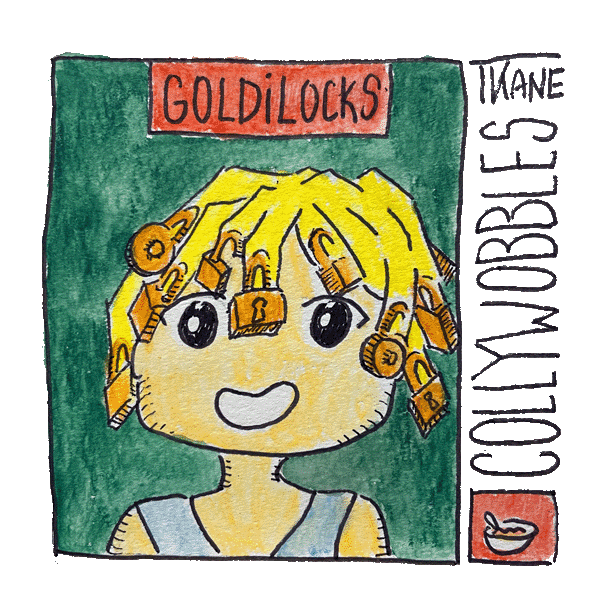
The girl was able to break into the bears’ house because she was trained to pick her own Goldilocks.
Tim Kane
 Tim Kane Books