The Night Has Teeth Cover Art

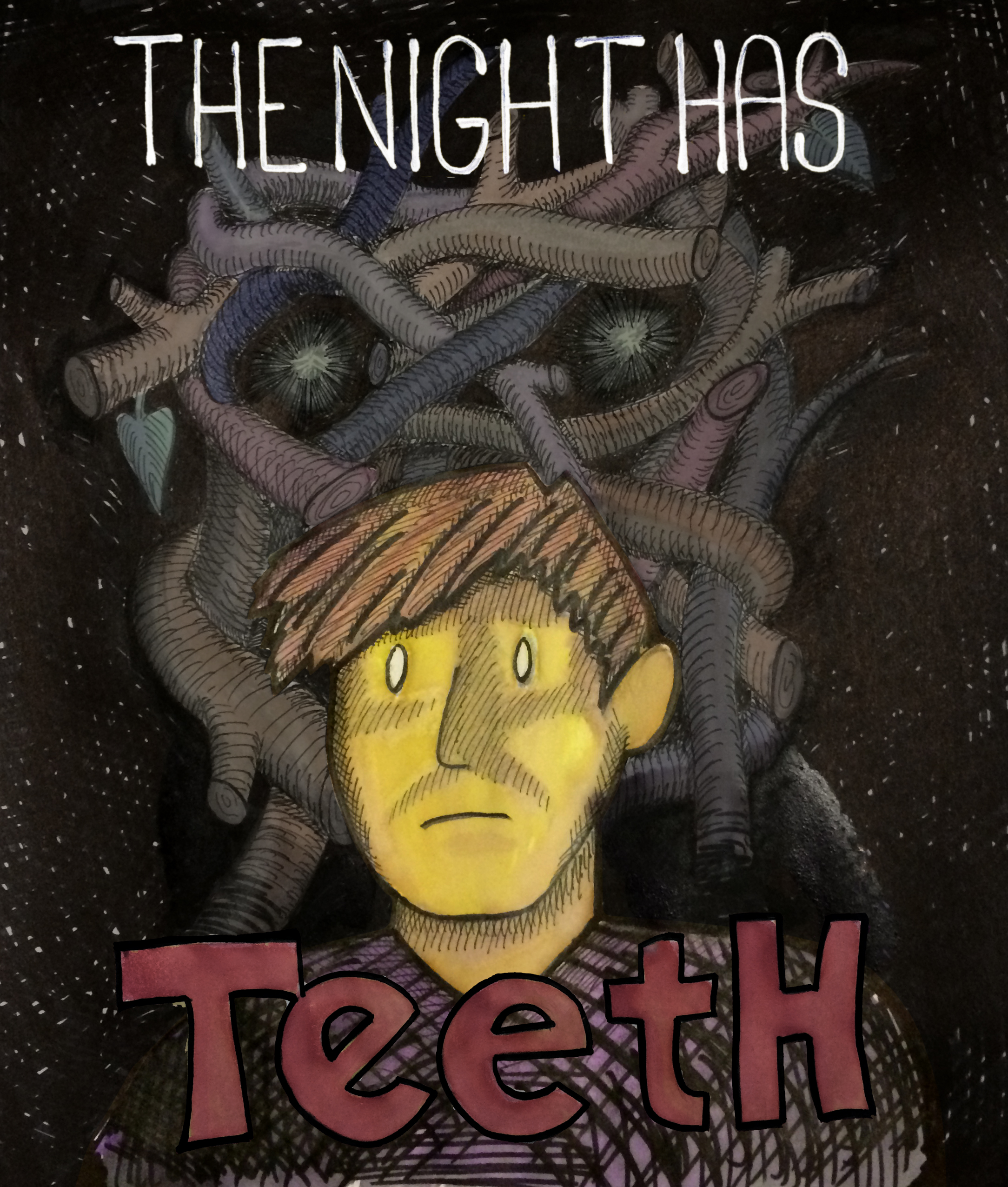
I worked out two variants for cover art for my web comic novella: The Night Has Teeth. My goal with this writing was to make something genuinely creepy without stooping to gore and blood. True horror doesn’t need special effects (even written ones). The creep factor is the true horror. To that end, it worked out two possible covers. Not sure which I’ll use yet. Weigh in if you have an opinion.

This cover is the first I sketched. I envisioned using a wood texture for the teeth. Yes, it’s literal: the night has teeth and it’s going to bite you.

Night Has Teeth 2


Then I got to thinking about the creature in the story: a slinking bogeyman made of twigs and slugs and flies. It never really came across well in the writing, but I figured a visual would do it.

Night Teeth Cover variant dark


I call this my dark variant cover art. It shows the protagonist, Donald and the creature looming up behind him.

Tell me what you think?

Tim Kane

Porcelain Dolls So Realistic, You Swear They’re Alive

I have a seven-year old daughter, so, yeah, I see a lot of dolls. From Barbie to Ever After High. However, when I stumbled across the book Enchanted Doll by Marina Bychkova, I was ushered into a new world of doll art. I have to say, that dolls, as a whole, have never interested me. As guy, my desire to own dolls started and ended with action figures (Star Wars and G.I. Joe). However, I do love art of all kinds and the dolls created by Bychkova deserve to be in museums.

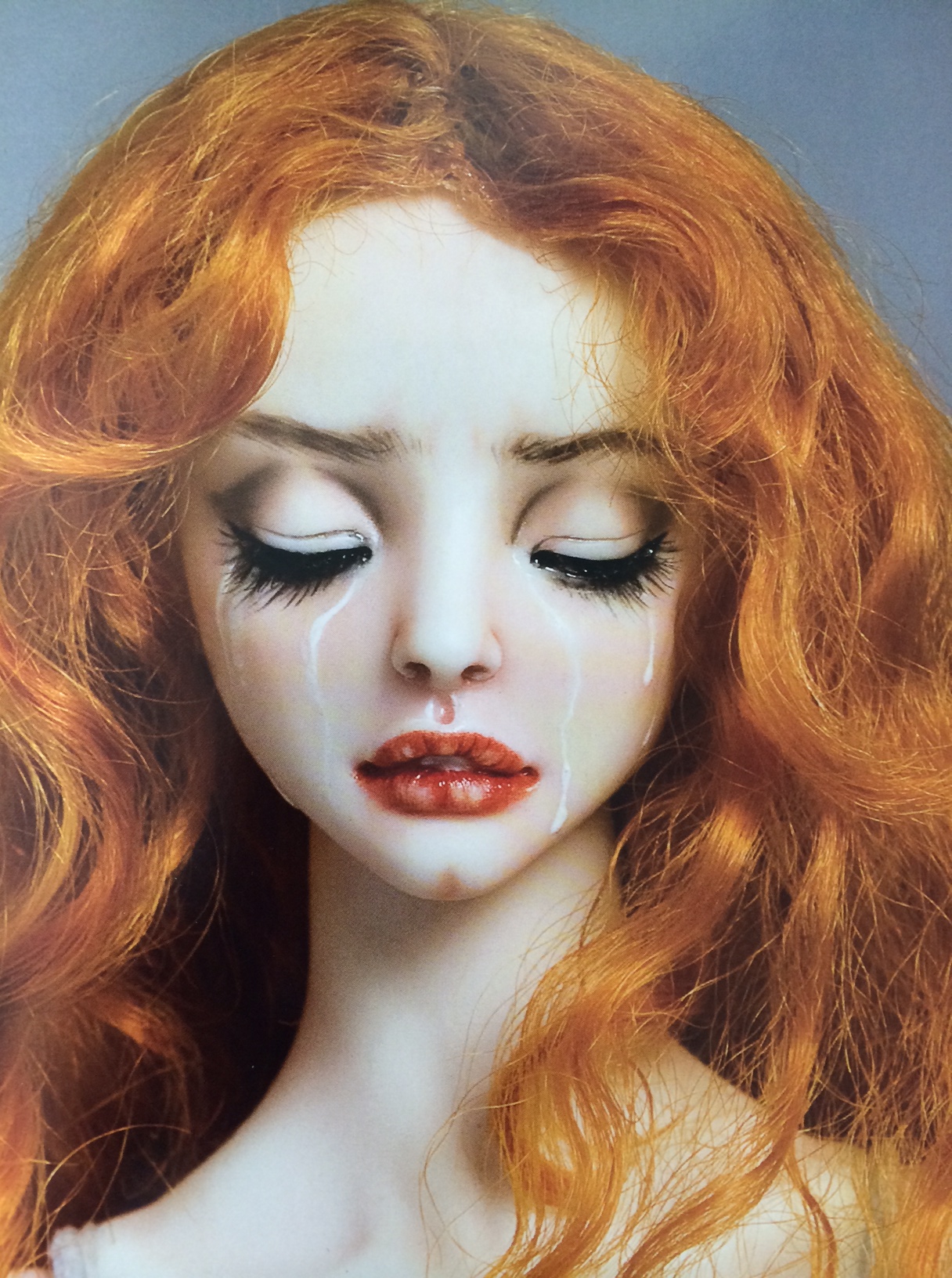
photo 1

What Bychkova creates is nothing short of amazing. Look at the following close up from the end of her book and note how she paints in the tears. Now tell me, if you just glanced at that, and didn’t know it was a doll, you’d think it was a photo-realistic painting.

photo 2

Just creating beautiful “pin-up” quality art is one thing. But Bychkova takes it one step farther. She bases her dolls on fairy tales and legends. Here are a few of my favorites here along with the inspiration Bychkova includes.

Bride of Frankenstein

Bychkova finds her inspiration for this doll from Mary Shelley’s Frankenstein, Camilla d’Errico’s Helmetgirls, and Erte’s conceptual fashion designs that appeared in Harper’s Bazaar magazine. Bychkova envisioned the “Bride” as a woman who went through so much high-voltage shenanigans, that her hair bleached white. She says: “Being electrocuted with several thousand volts of electricity destroyed all the pigmentation in her body, bleaching her once vivid complexion.” The Stempunk styled metal helmet helps pump oxygen to her brain and also adds some neural zapping to keep her thinking.

photo2


Little Red Riding Hood

Did I mention that Bychkova also creates all of her own clothing? Just look at the ornamentation in that red cape. Speaking of the cape, we all know the story of the little girl on the way to grandma’s who gets waylaid by a wolf. With Bychkova’s version, she imagines the peasant girl as a “rebellious, yet painfully naive teenage heiress on an ill-advised quest for adventure and independence.” Unfortunately, she is stalked by a the predatory wolf.

photo 3


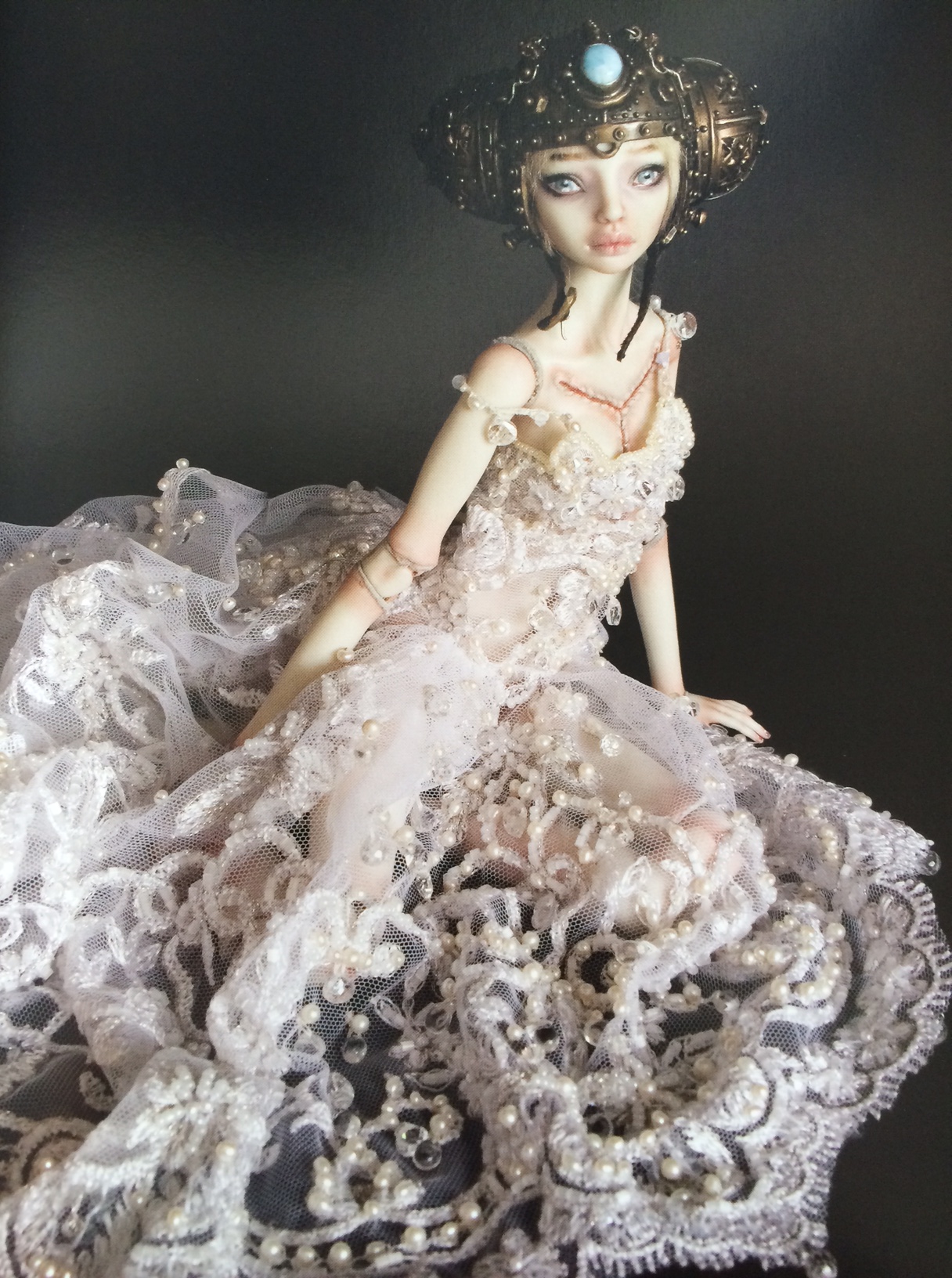
Cathedral

Not all of Bychkova’s dolls are based on fables. With “Cathedral” she shows her love for Renaissance art and gothic architecture. She says: “As a student, I was eager to experience the magnificent works of art and celebrated places from the pages of my art history textbooks. Soon after graduation, I embarked on a six-week grand tour of Italy in a camper van. While there, I was intoxicated by the Italian art, architecture, culture, and religious iconography—it truly was a sensory overload.” This experience inspired her to make art. The Cathedral doll is directly linked to her memories of Italy, especially the jewel-encrusted reliquaries in the Vatican.

photo 5


Phantom of the Opera

Although not a doll of Christine, this Chandelier doll was inspired by the falling chandelier from the Phantom of the Opera stage production. This is an experimental piece for Bychkova which focuses on the lighting rather than the clothes. She imagines this chandelier as being worn by a model in a Paris catwalk for a fashion show. She exaggerated the proportions in order to create that “over the top” feel of haute couture. She says that this project “is a comment on the constrictive and at times brutal nature of fashion, showing how willingly women embrace these discomforts for the sake of conforming to accepted standards of beauty.”

photo 4


There are many many more gorgeous dolls in the Enchanted Doll book. Please check it out when you get the chance. Your imagination will thank you.

Tim Kane

De Chirico and his Fantastic Landscapes

I’ve spent the past few days scouring my art books in search one specific artist. I recalled seeing his fantastic landscapes that seemed so desolate, jet full of energy. In this world, Greco/Roman-styled buildings stood solitary with shadows that stretched all the way across the painting.  I wanted these to be the inspiration for the world of the Tarot. After quite a bit of time, I finally found what I was searching for: the art of Giorgio de Chirico.

Piazza d'Italia 
signed 'g. de Chirico' (lower left) 
oil on canvas 
11 7/8 x 15¾in. (30 x 40cm.) 
Painted circa 1956

Piazza d’Italia circa 1956. This painting is exactly what I picture a dreamscape to look like. On the surface it looks simple and straightforward, but then I start to wonder. What is that train doing in the background? Who are those two people talking?

Technically, de Chirico wasn’t a surrealist. He worked with some of the artists at that time, but he art was more symbolic and used dream imagery. This is what drew me to him.

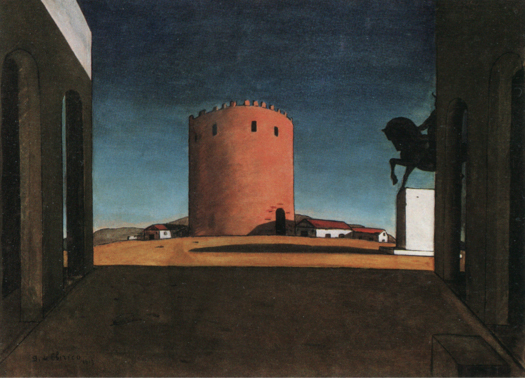
La Torre Rosa 1913

La Torre Rosa 1913. This was painted during de Chirico’s stint in Paris. You can see the long shadows that characterized his work.

Giorgio de Chirico was born in Volos, a town in Greece on July 10, 1888. When his father died in 1905, the family moved to Munich. At the age of seventeen, de Chirico studied at the Academy of Fine Arts where he was introduced to the ideas of Nietzche. De Chirico also found inspiration in the European Symbolist artists like Franz Stuck and Carlos Schwabe. De Chirico loved their use of dream-like imagery. His earliest paintings used Symbolist ideas with his love of Greece and Italian antiquities. His paintings also represented his musings on the true nature of reality.
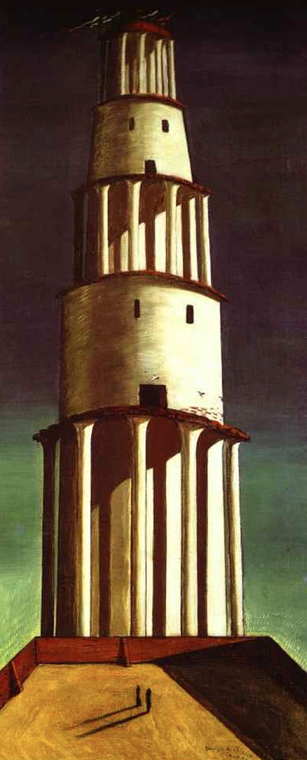
La Grande Torre 1919

La Grande Torre 1919. Again, this tower seems so simple on the surface, but the depth of the shadows draws me in. What lives inside that tower?

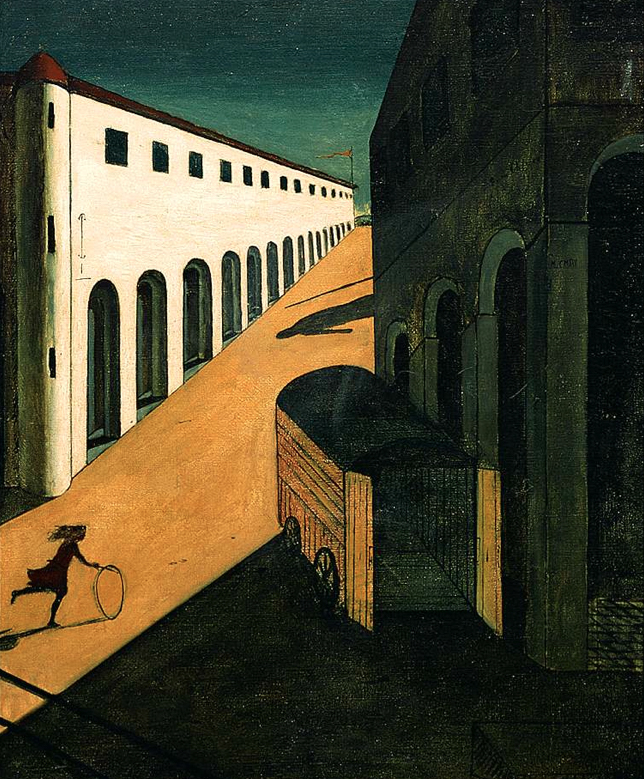
After settling in Florence, de Chirico traveled to Paris in 1911. There he met a number of avant-garde artists and writers, including Pablo Picasso and Constantin Brancusi. He also exhibited his work to the public. It was during this time (1911-15) that De Chirico created many of his most influential paintings such as “The Mystery and Melancholy of a Street” (1914). His paintings showed scenes with classical architecture where only a single lone figure or monument was present. Often long shadows hinted at other elements or figures just out of view. This creates an unsettling mood.

Mystery and Melancholy of a Street 1914

Mystery and Melancholy of a Street 1914. This is one of de Chirico’s most famous paintings. Notice the shadows of two figures just out of view. That creates an unsettling image for me as my mind desperately wonders who or what they are.

The Great War (World War I) forced de Chirico and his brother into the Italian Army in 1915. De Chirico was stationed in Ferrara, but soon had a nervous breakdown and recouped in a military hospital. In 1917, he met artist Carlo Carrà, who helped him create his style of “metaphysical painting” that emphasized the hidden significance of ordinary places and objects.
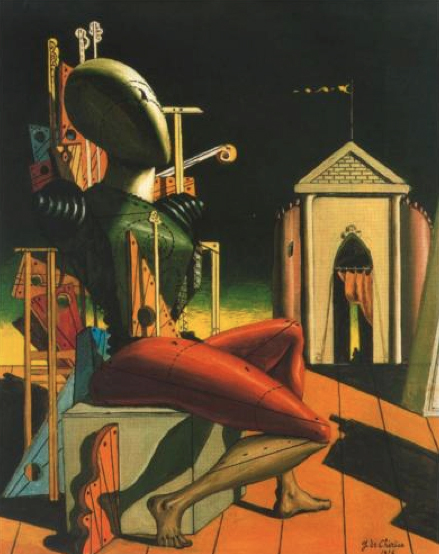
The Predictor 1919

The Predictor 1919. Landscapes weren’t the only subject de Chirico painted. He often included these mannequin creatures with oblong blank heads.

De Chirico and Carlo Carrà created a style known as Pittura Metafisica. This type of painting showed recognizable items, but displayed in an unusual manner. De Chirico created city squares with arcades and distant walls. The scenes were dominated by classical statues or his metaphysical mannequins, which were derived from tailor’s dummies. Sometimes, these figures were the only “human” presence in the painting.
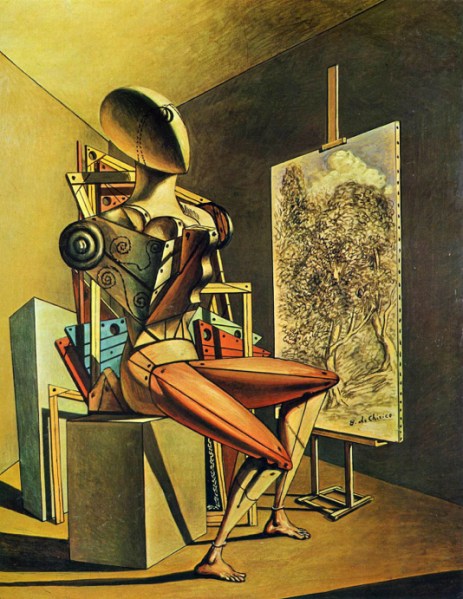
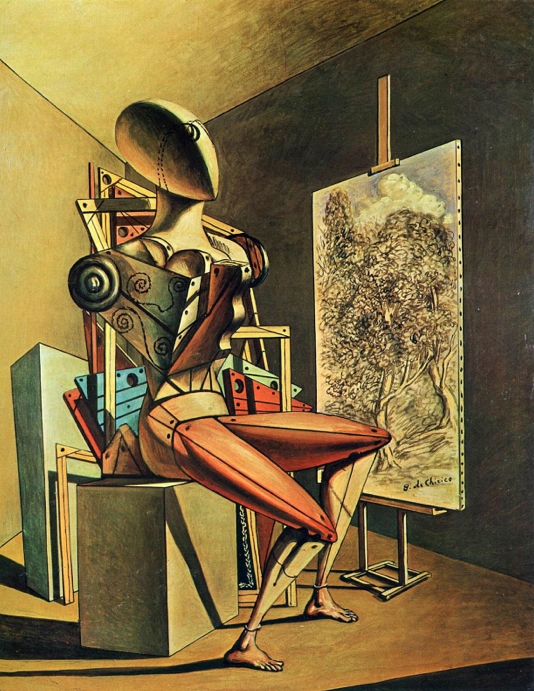
Mystery

This painting of a mannequin draws me in, yet I cannot find the title or the year it was painted. I see de Chirico’s signature on the painting. I know that there were some paintings created by other artists with his signature and this might be one. However the cubist shape of this mannequin is compelling.

De Chirico developed this technique from his readings of of the German philosophers Friedrich Nietzsche, Arthur Schopenhauer and Otto Weininger. He became interested in Nietzche’s idea of the eternal return and the circularity of time. In this philosophy, true reality was always hidden behind the reality of appearances and visible only to the ‘clearsighted’ at enigmatic moments. De Chirico wanted to unmask reality and show the mystery that lay underneath.

Giorgio de Chirico (1898 - 1978. Grêce). Visite aux Bains mystérieux I, 1935

Visite aux Bains mystérieux I, 1935. This is perhaps the most surreal of de Chirico’s paintings. I wonder what happens inside that tiny building? Is it more than just a changing room?

What mystery lies beneath the surface of our reality? De Chirico sought to find it through his painting. His work encourages us to look deeper and see beyond the obvious. We are all seekers of the truth.

Tim Kane

Pinterest Lives Again

I had (notice past tense) an extensive list of photos tagged and cataloged on Pinterest. But then life came crashing in and I stopped posting. My email changed and voila, I was no longer able to access my Pinterest account. Oh, it’s still there, just languishing and underfed.

To rectify this, I created a brand new Pinterest account and starting following myself (that would be my old account). Therefore I can repin all my old photos (the 1000s) onto my new site. Tedious? Yes. But something I can do while in line at the grocery store.

Here are some sample pins, currently centered around my debut novel, Tarot: The Magician.

Wordle Tarot

All of the first chapter of Tarot: The Magician

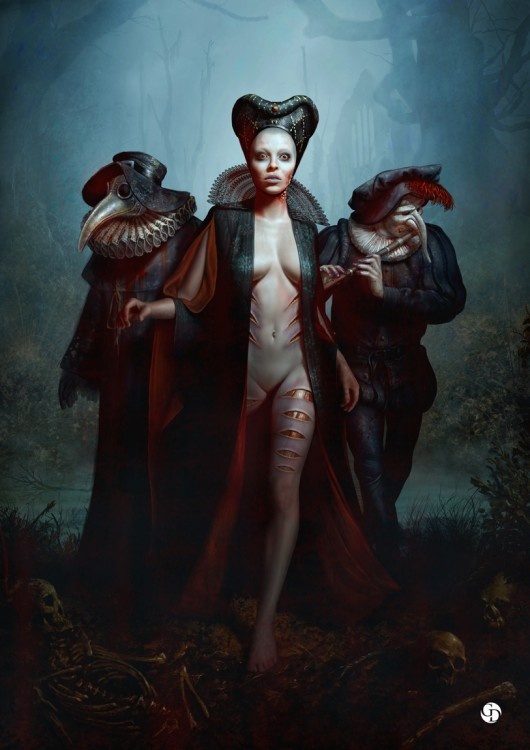
I love the mystery of this photo. It's called "Discovered" by David Dallilet. This reminds me of the Black Plague suits doctors would wear.

I love the mystery of this photo. It’s called “Discovered” by David Dallilet. This reminds me of the Black Plague suits doctors would wear.

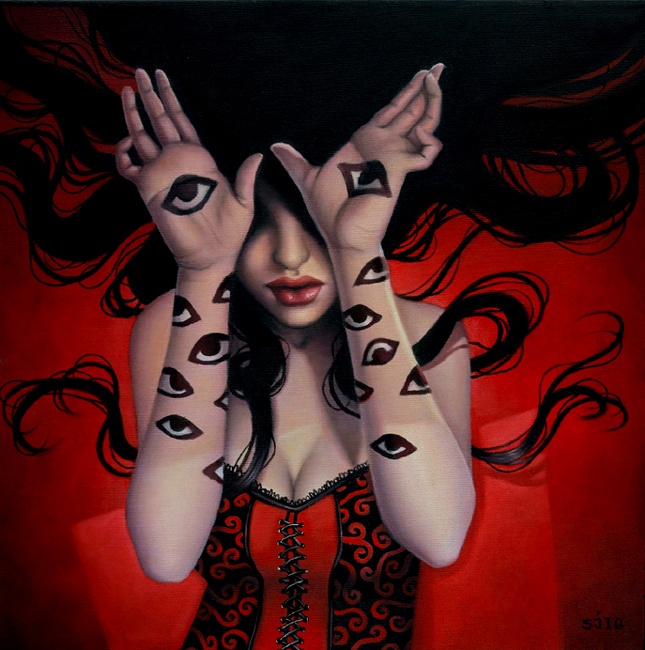
This painting, called "All Seeing" reminds me of Guiermo Del Toro's work. Although the painting is by Sarah Jones.

This painting, called “All Seeing” reminds me of Guiermo Del Toro’s work. Although the painting is by Sarah Jones.

Yes. I also adore books. In 2005, Swiss artist Jan Reymond began constructing elaborate installations each year, made of the old, unsold books as a last hurrah for the soon-to-be discarded objects.

Yes. I also adore books. In 2005, Swiss artist Jan Reymond began constructing elaborate installations each year, made of the old, unsold books as a last hurrah for the soon-to-be discarded objects.

Tim Kane

Stempunk Fetish Watches and Sculptures

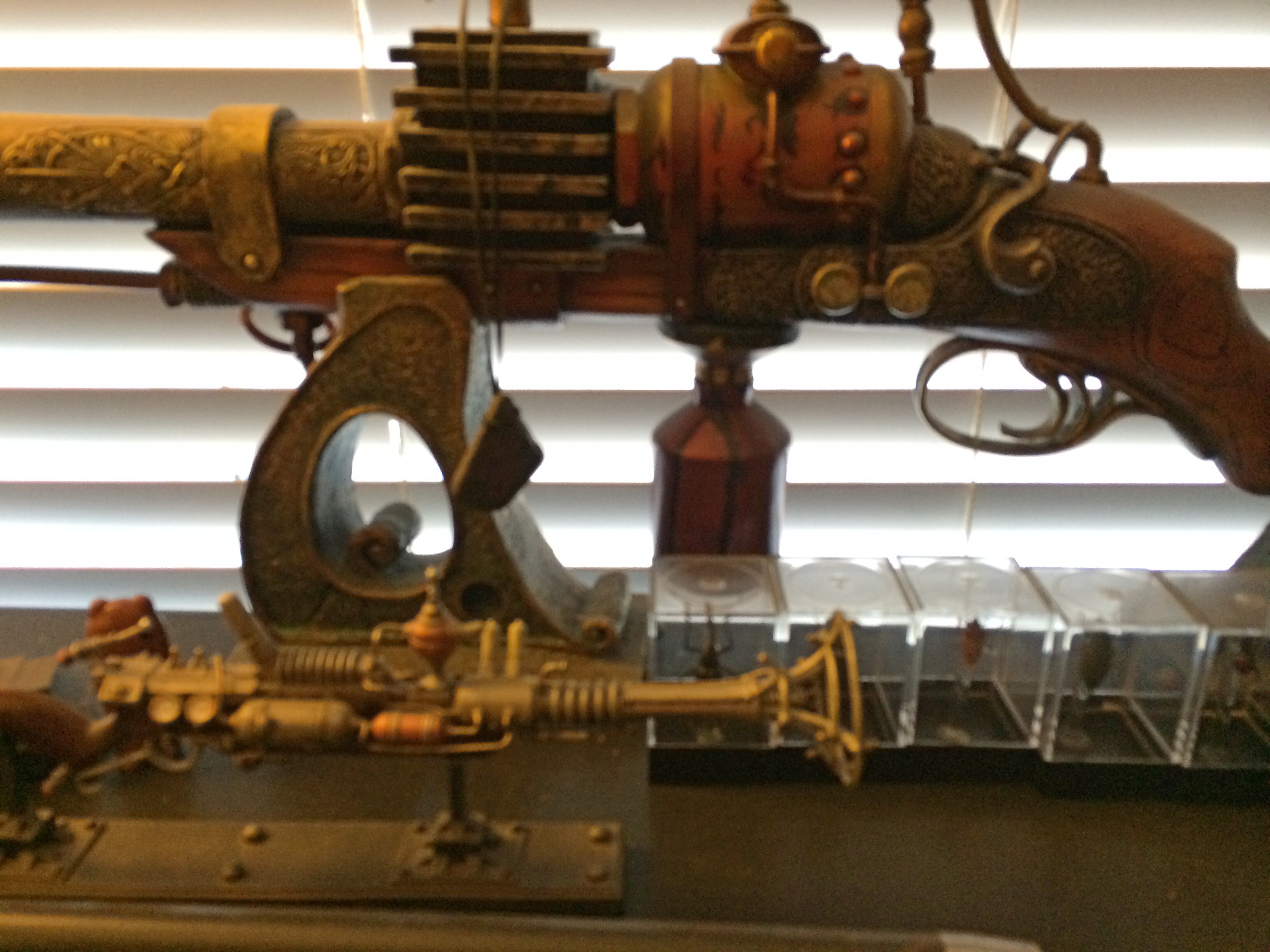
I am truly a sucker for Steampunk as an aesthetic. Just a glance around my office reveals multiple gear or steam-related items.

IMG_0892

I’ve also had a yen for gear driven watches. Multiple pocket watches have come and gone (not really gone, more gathering dust on the shelf). Most never quite live up to the functionality promised by Victorian mechanization. Probably because they were made by modern hands instead of crafted by artisans. Regrettably, I end up with battery driven wrist watches that don’t look as sleek, but function none the less.

Still, my heart belongs to gears.

That’s why when I discovered All Natural Arts by Susan Beatrice, I was hooked. One look at the amazing work she’s done and you’ll slaver yourself into a Steampunk coma.

Here are some of my favorites:

mouxmi97uoyd740twrtt

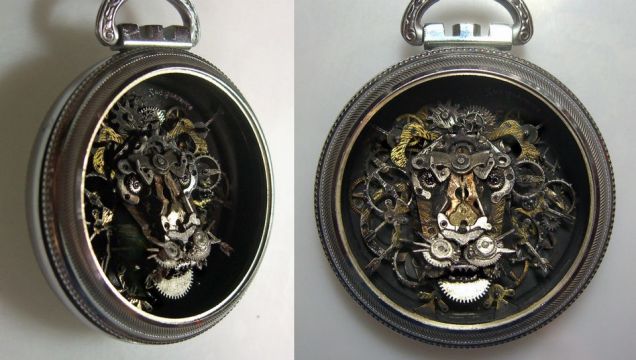
This is called The Beast of the Machine. The front view is extraordinary, but then take a look at it from an angle. You’ll see how Beatrice has built this image up, so it’s more sculpture than simply a flat illustration.

gt6yiqoob31w9nnujfbb

This Steampunk Bunny has been crafted out of clock parts. Of course. What else would you use to fashion such an exquisite animal. I particularly like the curved pieces that makeup the ears.

kw7rahahfubu8uqv6ja2

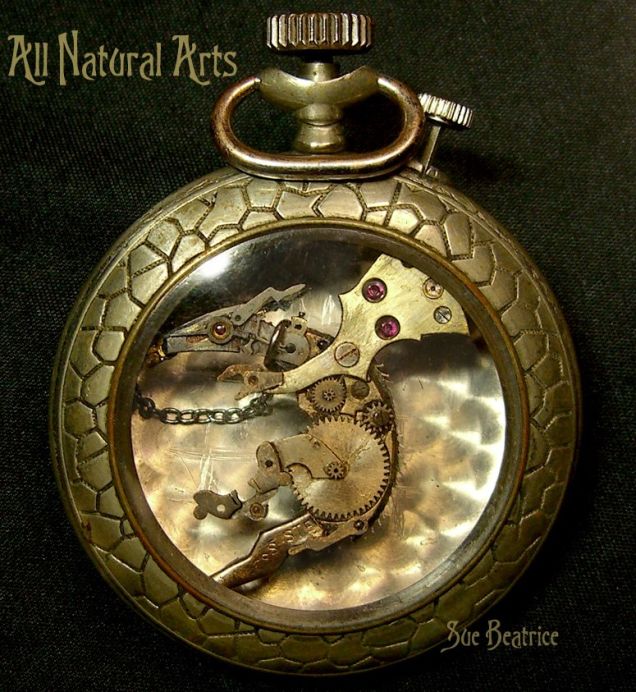
At first glance this appears to be a simple, albeit amazing, dragon sculpture placed inside a pocket watch case. But when you open it up…

oo0r2rdg2p6enschbte5

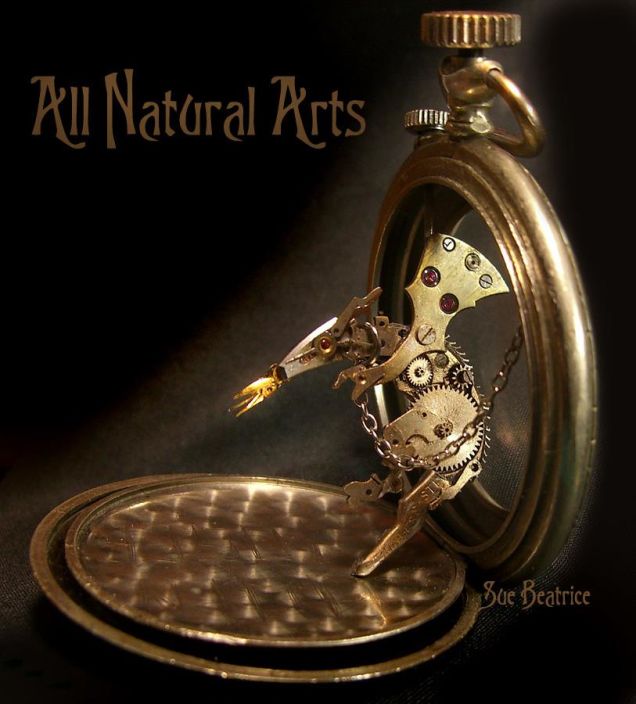
The dragon rotates and now you can see the flames shooting out. Astounding. I particularly like the chain that keeps the dragon tethered to the watch case as if it might fly away at any moment.

Beatrice has many more Steampunk creations, along with illustrations and fairies. Go ahead and check out All Natural Arts for yourself.  All of her art is for sale.

Tim Kane