Love, Death, Betrayal and Giant Snails

As a kid I experimented with Tarot cards. I think many of us did. That sort of rampant curiosity that comes with being a teen. The occult didn’t escape my attention. The mysterious Tarot cards, so iconic as a tool of prophecy, drew me in.

snail

Years later, this dabbling turned into downright research for my first published novel—Tarot: The Magician. I didn’t just want a story about evil Tarot cards. That felt too simplistic. Something the Syfy channel would whip up as their movie of the week. Instead, I delved into the history of the cards and how they started as the Dance of Death (see my article on it here).

Three of the Major Arcana cards particularly influenced me: The Magician, Death, and the Hanged Man. These not only became themes for the novel, but characters as well.

The Magician Becomes Love

The title of the novel revolves around a man named Luke Rykell (you can read some of his history here). He helped create the cursed deck. His reward: being trapped inside. But he was no magician.

The history of the card dates back to more of a con-artist or street hustler. One name for the original Magician card is Thimblerigger. Those were the sorts of fellas who tricked people with the three card monty. Their sleight of hand seemed like magic, thus the name of magician.

Here the "Magician" is shown with his most famous trick: the cups and ball.

Here the “Magician” is shown with his most famous trick: the cups and ball.

For most of the history of the tarot, the Magician was simply a street performer and con man. In fact the card’s name was the Juggler or the Trickster. This all changed when the occultist Éliphas Lévi redesigned this card. He depicted the Magician holding one of the card suits (usually a wand) with the others lying on the table (these items replaced the cups and ball trick). Later, Paul Christian (a devotee of Lévi) renamed The Juggler as The Magus, and the change was complete.

How does this relate to love? For most, the Magician represents skill, creativity, and free will. Yet when this card pops up with a romance question, the meaning shifts. It indicates that the time for a new romance is at hand. The moment is now.

Death is the Ultimate Change

Most folks are frightened when the Death card appears in a Tarot reading. They shouldn’t be. The Death card represents change—clearing out the old to make way for the new. Think about a forest fire. As destructive as this process is, it burns away brush that is clogging out new growth. Only with this destruction can the forest revitalize itself. Even after the Black Plague that scoured Europe, the survivors were stronger for it. New evidence suggests that the disease targeted weaker and more frail people, leaving a stronger populace in its wake.

Visconti-Sforza_tarot_deck._Death

In the story of Tarot: The Magician, there is a death in our heroine’s past. Right now, this loss weighs on her, and prevents her from moving on with her life. She needs to deal with it, and clear it away in order to grow.

The Hanged Man has Betrayed You

The man hanging my one foot represents a traitor (the original Italian name was Il Traditore, the Traitor). May believe this represent Judas Iscariot, and the fifteenth century Rosenwald deck shows the figure clutching a small bag in each hand. This might be the thirty pieces of silver.

mshangedman_med

Another argument suggests that this figure is Muzio Attendolo, who had been given a high position by the the Pope and then chose to speak out against him. The offended Pope ordered pictured painted of Muzio Attendolo upside-down and suspended from one foot. This type of art was called shame painting. The Pope displayed these paintings all over Rome.

In both cases, the men hanging upside down were traitors. And that’s the meaning used in Tarot: The Magician. The brother to Luke Rykell is Gabriel and he was tasked with illustrating the cursed deck of cards. Only when he reached the final illustration, he balked—not ready to doom his soul to eternal torment. His betrayal led to the entrapment of Luke inside the Tarot cards themselves.

What Does a Giant Snail Have to Do with All This?

The fact that Luke lives in a tower attached to a snail is not a mistake. While researching the aspects of the magician card, I wanted to hone in on the idea of the will and the mind (both traits associated with the Magician card). This led me to the spiral of the snail’s shell, and how it winds in on itself. This is a common symbol for expanded consciousness. In sacred geometry, the spiral follows the Golden Ratio.
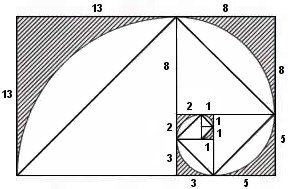
spirala

So the home for Luke was both a way to expand his magical powers of intellect, but also a prison that spiraled in forever. It also wasn’t lost on me that in Christian symbolism, the snail stands for sloth. Although Luke is far from lazy, he does linger in his card for hundreds of years and this plays on his mind.

There are many stories attached to the Tarot cards. The symbolism is rich and goes back centuries. The more you dig up on the Tarot, the more they will amaze you.

Tim Kane

A Theme Song for an eBook

Having grown up seeing images of the Beatles recording at Abbey Road, I’ve always wondered what it was like inside a recording studio. I finally got my chance. Last weekend, my musician friends abducted me to record a theme song to my new ebook: Tarot: The Magician. The results were tremendous.

The “John Lennon” of the group was Bradley Coy. This was a surreal experience for me in many ways, not the least being that I taught this young man back when he was in sixth grade. He was phenomenal musician then and even better now.

IMG_0773

Bradley Coy with Mark C. Jackson in the foreground.

He recycled an old melody he’d written to create the “theme song” for my book. Now I know what you’re thinking: books don’t have theme songs. So true. But book trailers do. I have animated a book trailer. Being that I have only enough knowledge of music to be dangerous, I wanted some sort of professional song to score the 40 seconds of animated trailer.

Given my druthers, I probably would have lifted a song, ran it backward through some filters. It wouldn’t have been good, but serviceable. Fortunately, Bradley materialized form the musical woodwork and transformed his melody into a perfect compliment to the atmosphere of the book.

We visited the recording studio of David Morgan, who has outfitted his room with more guitars and sound equipment than the average Guitar Center. He had recorded plenty of albums there for local artists, but he was curious about scoring music to a video. It turned out to more tricky than you’d think.

IMG_0632

David Morgan suggesting how to match the music to the video.

Bradley would play the melody flawlessly, but the timing to the video eluded him. Or he’d nail it, only to boff a chord near the end. Thankfully we had the guiding presence of Mark C. Jackson, a fellow musician and writer. He knew that the first dozen takes were simply warm up for the real performance. As we neared that “perfect” moment, his energy spiked. He leapt out of his seat to encourage Bradley to create the perfect mixture of melancholy and gloominess (yes, that’s the tone for the book).

IMG_0667

Mark C Jackson suggesting how to line up the music with the video.

Bradley’s whole take on the melody was one of a vintage piano with a vaudevillian touch. He and I both share a yen for the Beats and the Surrealists. It seemed natural that the music for a surrealistic novel be a riff from the 1930s.

IMG_0720

Bradley seriously contemplating the melody.

What was I doing during all this? Not a lot. Mostly I played the documenter, snapping pictures to capture the moment. Bradley finally nailed it, leaving the end of the melody dangling like an unanswered question. It might bug some people, but for me, it was simply perfect.

IMG_0669

There I am, observing all of this. I get writing. But music recording baffles me.

You can listen to the track here. The full trailer will be revealed at the end of May.

Tim Kane

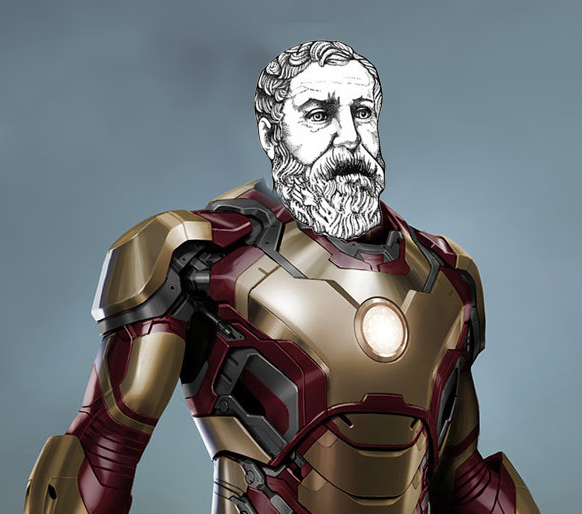
Hero of Alexandria was the Tony Stark of His Day

If the ancient world has taught me anything it’s this: Everything was invented thousands of years ago. Only we’ve forgotten nearly all of it.

Hero Iron Man

One such uber-inventer was Hero of Alexandria (also called Heron). He lived and studied in the city of Alexandria in Egypt (between 60 and 70 AD). This city had become a center for learning, drawing scholars from all over the ancient world to exchange ideas and, in Hero’s case, build some pretty cool machines.

Hero was responsible for the first steam engine, wind-powered machines, robots, and the railroad. After that, he built some more crazy contraptions. Enough to make Wile E Coyote look like a layabout.

Hero had the disadvantage of being born two centuries before the Renaissance and the Industrial Revolution. Thus, most of his inventions were millennia before their time. Even his own life is a mystery. He most likely taught at the Musaeum at Alexandria, the gathering place for scholars. It was there that he thought up his Iron Man inventions.

The Steam Engine

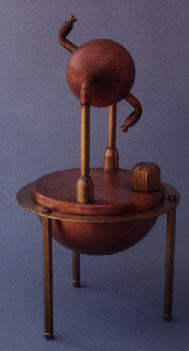
Okay, so this wasn’t the type of steam engine that could power a locomotive across the Wild West. But it could have, if Hero had spent more time on perfecting it. Basically he used steam to cause a ball to spin around, thus converting heat into mechanical energy. Hero called this an aeolipile.

Aeolipile


Hero’s Aeolipile was a fascinating curio and nothing more because although it could create mechanical energy, there were no gears or cars or other machines that could use that energy. This was the ancient world after all. However, there is no other mention of such a device until we get to the Ottoman inventor Taqi al-Din in 1577, who was hailed as the greatest scientist on Earth. If he was the greatest for copying Hero’s steam engine, what does that make Hero?

Railroad

Instead of iron tracks, the ancient world’s version of a rail road consisted of grooved paths pulled by people or horses. The most famous was the Diolkos, cutting across the narrow isthmus of Corinth. It allowed ships to be hauled overland (sort of like a land version of the Panama Canal).

1866esu8dj3rkjpg

Hero didn’t invent the railroad. It dated back to 600 BCE. However, if Hero had combined it with his steam engine, we’d have the industrial revolution back in ancient Greece. Imagine steampunks in togas.

Robots

Although he might not have created the railroad, Hero was very much into automating tasks. He created all sorts of devices that were “programmed” to do certain functions and the left alone (with no human input) to complete those functions.

He constructed an automaton called “”Hercules and the Dragon”, powered by water. As water pours into the container Hercules hits the dragon’s head. This causes the dragon to shoot water into Hercules’ face.

hero

He used wind to power a pipe organ (making him the first to use wind to power a machine). As the arm turned from the wind, it transferred the motion to an air compressor. Then the organ was activated, the air was released to create a flute sound.

400px-The_Early_English_Organ_Builders_and_their_work_Page_14


He even created a vending machine that served up holy water.

vending machine2

Drop a coin into the slot and a balance beam moves, drawing out a plug from a jar of holy water. As the balance beam reverts to equilibrium, the jug of holy water is sealed and your purchase ends. If only Hero had invented the candy bar.

And yes, he also made the very first robot. Sources suggest that Heron created a cart programmed to move along different directions. Around 60 CE, he built a cart with a rope wrapped around two independent axles. A falling weight provided the power. Pegs projected from the axle (sort of like cogs) and Heron used these to change how the rope was wound around the axel. This let the cart change direction and move the way Hero wanted to.

Tech0026e

The cart was controlled with knots tied to ropes. When Hero pulled a rope, the knot moved a lever which caused certain actions to happen. He used the same process to create a mechanical play almost 10 minutes long, including dropping metal balls onto a sheet of metal to resemble thunder.

5zm5z4n5-1346909505

Genius at Math

If you any doubts that Hero was a genius way before his time, take a look at his mathematical accomplishments. He came up with the basics for Fermat’s principle. Hero stated that a light ray would always take the shortest route between two points. This is the basis for optics and fiber optics.

In his spare time, he discovered a quick way to find the square root of a number. He also created a formula (called Hero’s formula) to calculate the area of any triangle using only the lengths of its sides. Finally he discovered imaginary numbers. No, they’re not made up. When you square a number, say 4, the result is 16. When you square a negative number, like -4, the result it also 16. (The negatives cancel out). But, what happens when you take the square root of a negative number, like -16. The answer isn’t 4 or -4. It’s imaginary 4 (can you tell I was a math geek in school?).

Enough. Let it be known that Hero of Alexandria was the most amazing inventor of the ancient world, and perhaps all time.

Tim Kane

The Surreal Terror of Sleep Paralysis

Sleep paralysis has a logical and scientific explanation. It’s a phenomenon where you partially wake up from sleep, but your muscles still remain frozen. A biological glitch in our bodies causing one part of us to wake from the dream, while the rest of the body is on lockdown. Perfectly explainable. Yet try telling that to someone who’s lived through it.

The experience can be terrible. You’re still dreaming and the things you see appear real. But you cannot move or speak or scream.

You are frozen in terror, staring up at the monstrous creations of your subconscious.

Sleep paralysis is actually a protection mechanism designed to keep you safe while dreaming. The images and scenarios in your dream are vivid and seem real. If a tiger leaps out, you scream and run. Your muscles are locked down to prevent you from flailing about or making a large racket (that would have attracted predators back in the day).

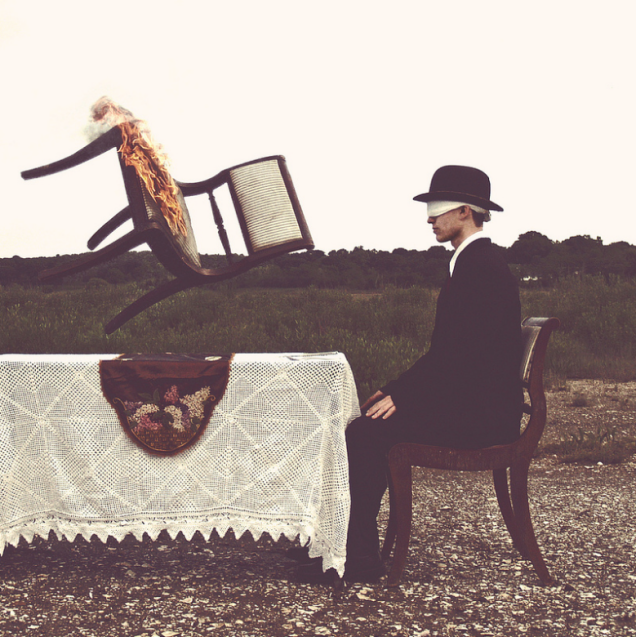
Even as we understand more about this phenomenon, there’s no denying the surreal quality it evokes—to see your dreams as real, right there before you. Photographer Nicolas Bruno has captured some of these images. He is a victim of sleep paralysis and his photos are a window into his subconscious mind.

19gef8hpvg9nzpng

Bruno began to jot down notes about his dreams. He wanted to recreate them using recurring imagery (like gas masks, bowler hats, or lanterns) and compose them the way a painter would. His photos show a haunting world that Bruno describes as  “a bittersweet homage” to his dream-world life.

19gefiqommv7upng

Often times, dreams serve as a way to work through the events of a day. But dreams aren’t logical. They are an emotional outlet. You typically see your fears come alive, such as being buried alive. The fears don’t make sense. It’s your minds way of dealing with them.

19gef8hppy7zopng


Because dreams mash up images, the result can seem surreal and downright strange. We move from place to place instantly.

The glitch of sleep paralysis has haunted humanity for thousands of years. Over that time, cultures created creatures that stalk us in the night as a way to explain the frightening sessions of paralysis. They myths center around nocturnal monsters or demons.

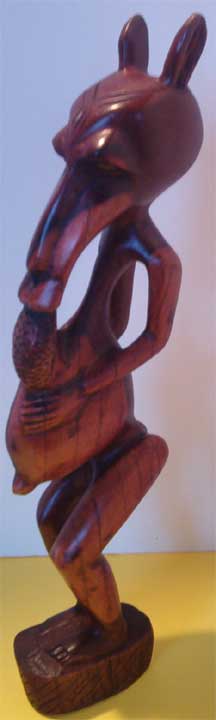
In the Amazon, we have the Boto, a river dolphin that transforms at night into a vaguely human creature. It wears a hat to cover it’s blowhole. In Africa, the night prowler takes the form of a bear. Known as the Tokoloshe, it slinks in at night and bites the toes off children as they sleep.

A carving of a Tokoloshe.

A carving of a Tokoloshe.

The folks at the Sleep Paralysis Project, along with director Carla MacKinnon, have created a documentary about sleep paralysis. This both serves as an explanation and a terrifying vision of the phenomenon. Be warned, if you don’t suffer from bad dreams, you will after watching this.

The film Devil in the Room depicts the grotesque creatures alongside the scientific explanation. It was meant to evoke the feeling of sleep paralysis and I say it does a damn good job.

Tim Kane

Your Book is Alive!

Do you ever wonder if books have personalities? Do they act like the stories inside them? Well one artist sees beyond the words (and pulpy pages) to the soul of the book.

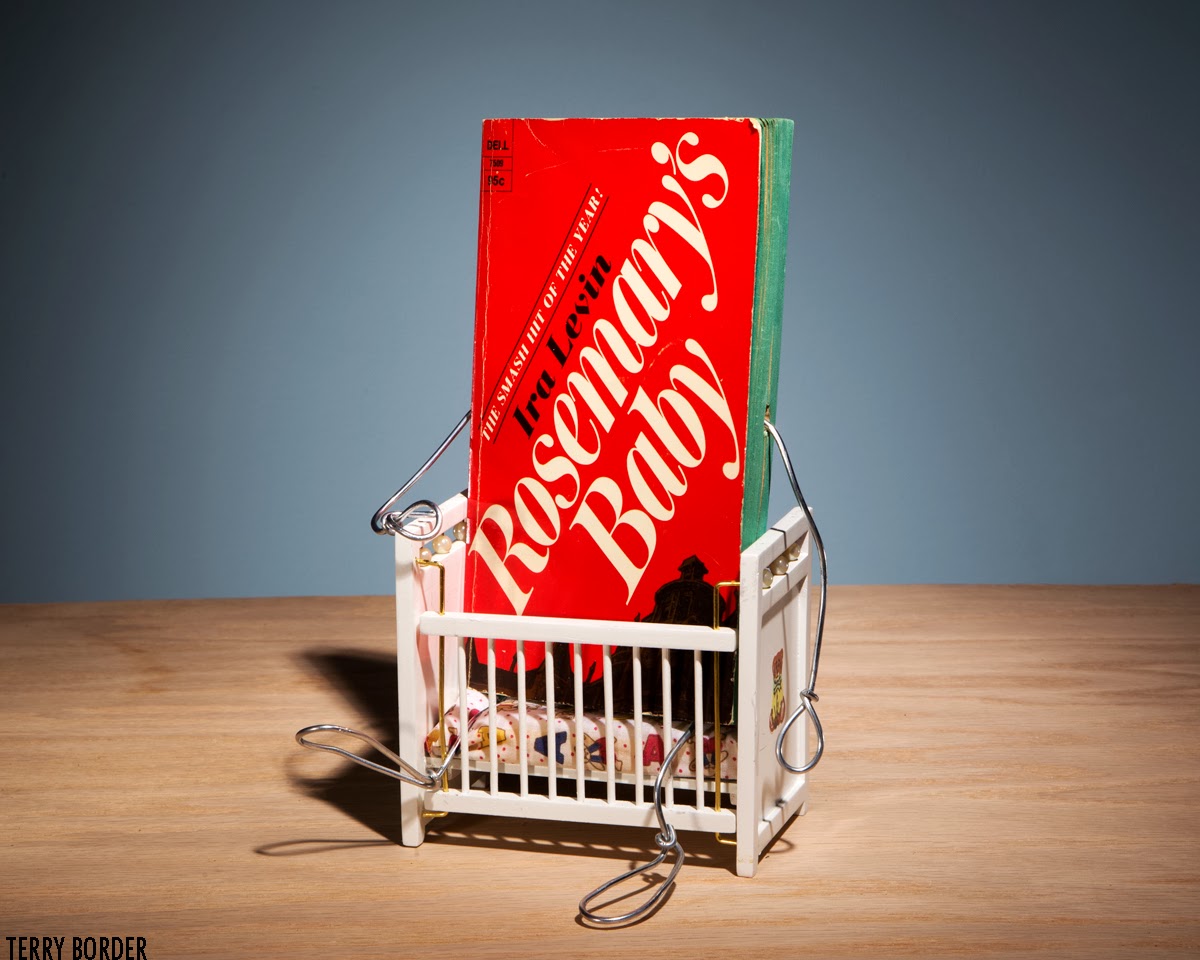
Terry Border is an artist who specializes in sculptures using paperclips. His series Wiry Limbs, Paper Backs shows us the book coming alive. Now if you’ve never experienced a paperback, then you should know that back would bend into a curve after many reading (especially if it was a long book) leading to the pages falling out. They weren’t wonderful, but they were cheap. The Kindle ebooks of their day. I’ve personally read most of the books Mr. Border uses in his art series (most with the same paperback covers as depicted).

rosemarysbaby

Mr. Border first came up with this idea when he spied a rack of paperbacks at his local bookstore (yup, those spiral racks were where I used to see them). He loved the personality of the covers and wanted to transform the books into little book people.

FANTASTICFOUR

This one is particularly dear to me. Having collected Fantastic Four most of my life, I really does capture the whimsy of the comic. Mr. Fantastic is the only superhero from the group you could possibly create with wire.

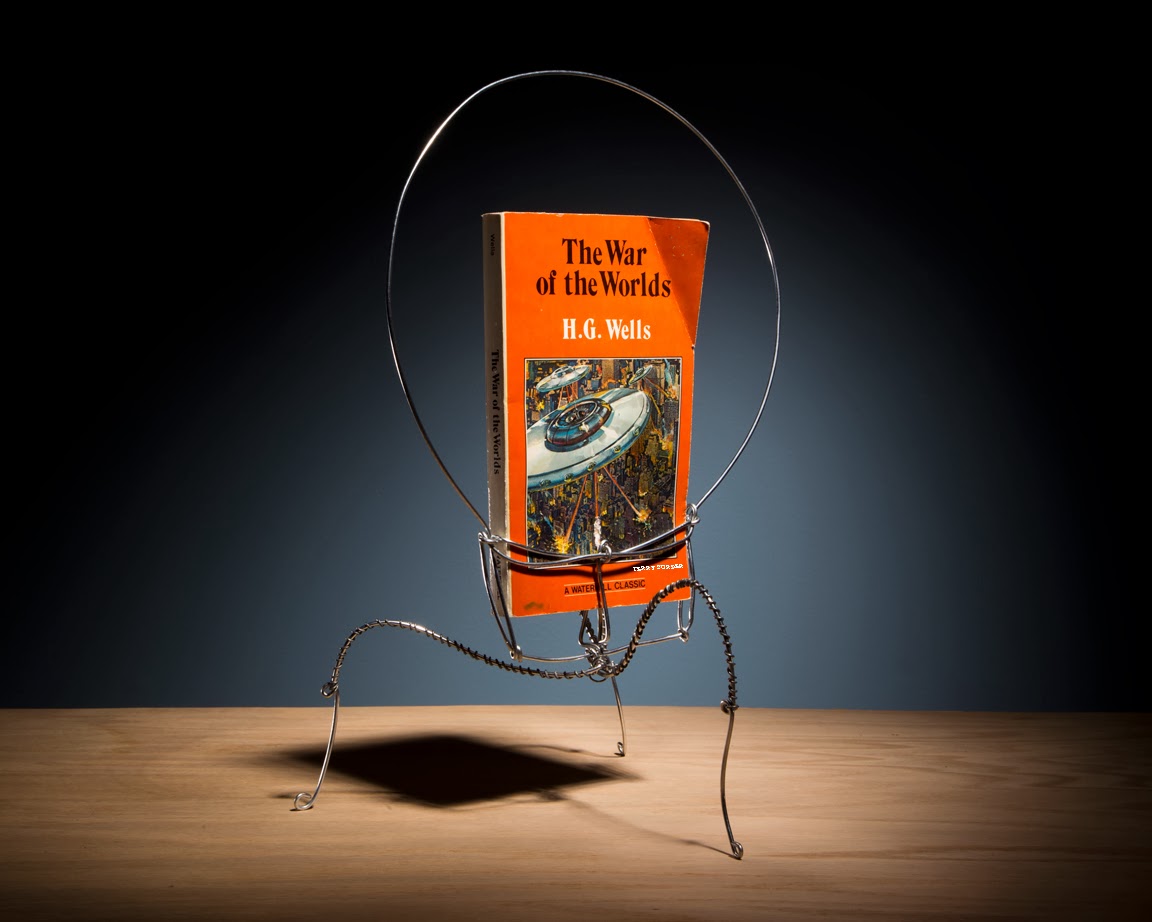
WARofWORLDS

Mr. Border does more than fantasy and horror, but these are my favs. I read War of the Worlds as a preteen and it still sticks with me. I’m a Wells over Verne sort of fella.

small mini-wheats

It’t not all paperback art. This picture is titled “Late to Breakfast” and shows a twisted sense of humor I can firmly get behind.

snailonplate

Finally, before I add every single image from his site, I wanted to show that it’s not all bent wire that makes up Mr. Border’s whimsey. I love this that is titled “Where Pasta Shells Come From.”

Check out his site to see more. And don’t forget that behind every single object is a creature waiting to burst out.

Tim Kane