Teeny Haunts: The Dark Watchers

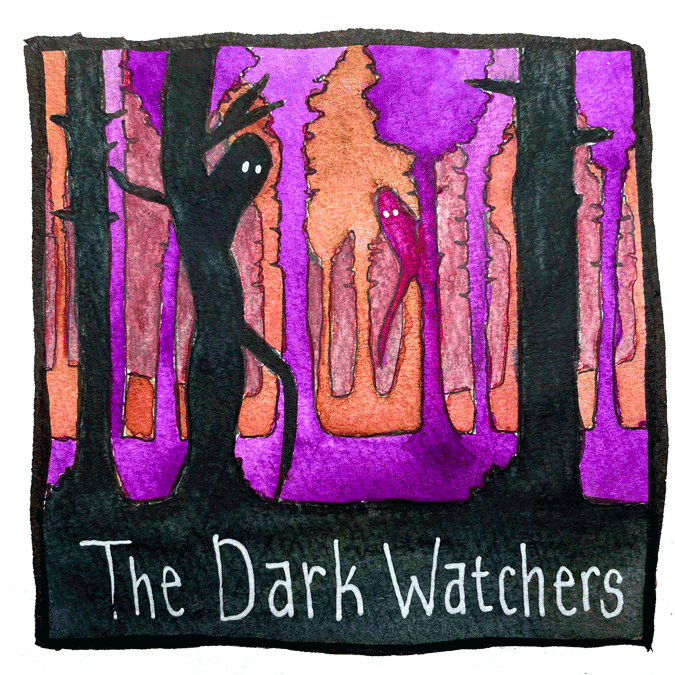
The Dark Watchers are shadow people who materialize in the mountains of Santa Lucia California. Many people have witnessed these strange folk, often singly but sometimes in groups. I read of one account where two motorists were surrounded by these glowing eyed figures.

Steinbeck wrote about them in his 1938 short story “Flight”.

“Pepe looked up to the top of the next dry withered ridge. He saw a dark form against the sky, a man’s figure standing on top of a rock, and he glanced away quickly not to appear curious. When a moment later he looked up again, the figure was gone.”

Short Story Collection: The Long Valley

This experience of the dark watchers vanishing when you look away is a common one. People glimpse them while driving or walking only to have the figures vanish upon closer inspection.

The poet Robinson Jeffers also commented on the shadowy observers:

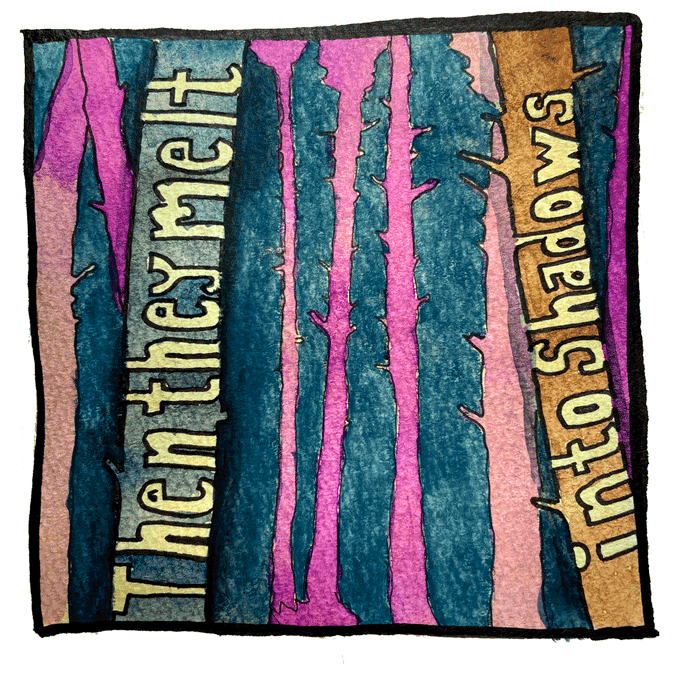
“He thought it might be one of the watchers, who are often seen in this length of coast-range, forms that look human to human eyes, but certainly are not human. They come from behind ridges to watch. He was not surprised when the figure turning toward him in the quiet twilight showed his own face. Then it melted and merged into the shadows beyond it.”

“Such Counsels You Gave Me” from 1937

I used the idea of them melting into the shadows for the illustrations.

One theory posits that swaying trees cast against fog create these specters. Our pattern-seeking brains misinterpret the image (a phenomenon is known as pareidolia). This is similar to how a Rorschach test works.

Yet the accounts of people who have witnessed are too varied to be simply a trick of the brain. One eye witness stated that the dark watcher waved back and smoked a cigar.

Whoever these mysterious figures are, they seem to not want to harm us. Still, let’s leave them be. Just in case.

Tim Kane

Teeny Haunts: Elevator to Another World

As a kid, I always dreamed of journeying to another dimension — the tagline of Twilight Zone Fresh in my head.

You unlock this door with the key of imagination. Beyond it is another dimension: a dimension of sound, a dimension of sight, a dimension of mind. You’re moving into a land of both shadow and substance, of things and ideas. You’ve just crossed over into… the Twilight Zone.

Twilight Zone Introduction

The myth of the Elevator to Another World feels like it belongs smack dab in the middle of Rod Serling’s fictive playground. Despite seeming like it has been with us for years, the legend developed only in this century.

Lucia Peters, from The Encyclopedia of the Impossible, traced the story back to a malfunction with a Japanese elevator. In 2006, an elevator began to ascend with the doors still open (much like the incident in the Resident Evil film). A sixteen-year old high school student was killed in the incident. Investigation into the death showed that a certain brand of elevator had led to a string of deaths.

Elevator Scene from Resident Evil, 2002

The action of the evaluator lifting on its own accord parallels the ritual of the Elevator to Another World. And, though the faulty elevators were replaced, people were understandably nervous about riding on them. Thus the dangerous myth of our extra-dimensional elevator was born. It’s a coping mechanism for the fear swirling around a series of actual accidents.

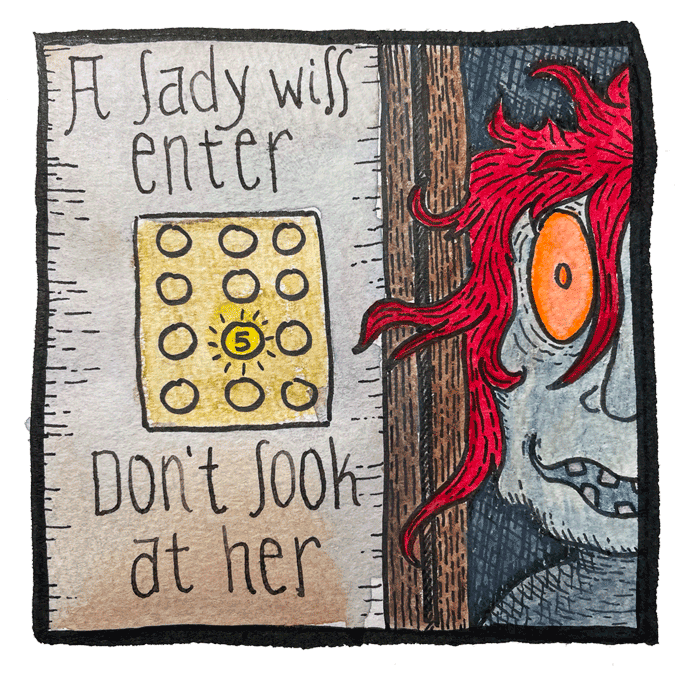
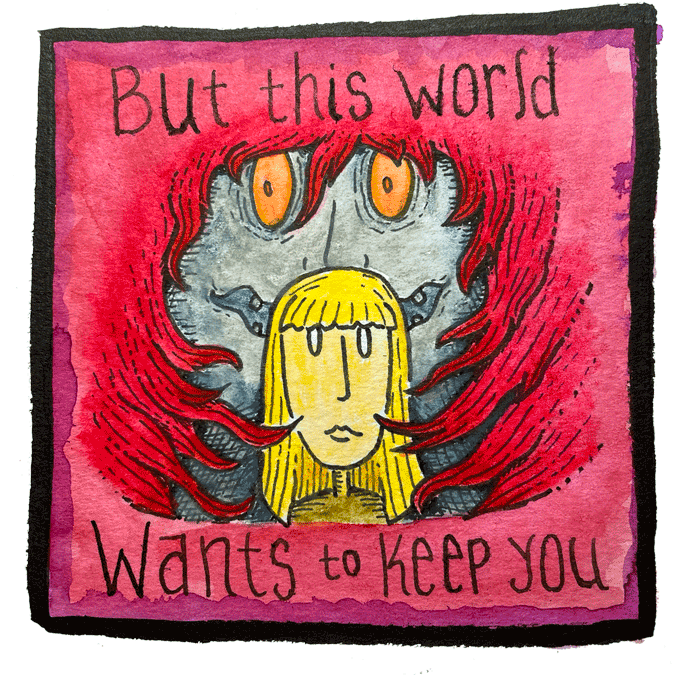
Yet the element of the lady who enters on the fifth floor doesn’t seem to fit entirely into the Japanese accident. For this, we can look to another source. A short story by William Sleator in 1993, called simply “The Elevator” introduces the idea of a disturbing lady entering the elevator car when you ride alone. The protagonist is a young boy who already has anxieties about riding the old, dilapidated elevator. In this instance, the creepy lady (dressed in green) enters on the fourteenth floor (not the fifth). Yet the other elements of the story and the idea that the lady might trap you are all present in the tale. Perhaps it had an influence on the myth.

But that’s all it is, right? Just a tall tale.

Or is it? The idea that when you try this experiment, you might not return allows the ritual to have no real evidence to back it up. After all, the folks who’ve tried it might have succeeded and just jaunted off to another world.

So the next time you’re in an elevator, maybe you might play the elevator game and see where it takes you. Just beware of the lady from the 5th floor.

Tim Kane

The Gigantic Beard That Was Evil

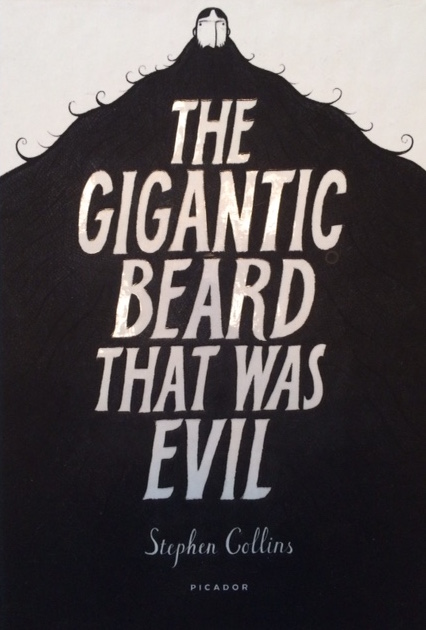
Strolling through my Barnes and Noble, I stumbled across a graphic novel called “The Gigantic Beard That Was Evil.” How could I resist? Not only was it a beard. But it was an evil beard to boot.

FullSizeRender-6

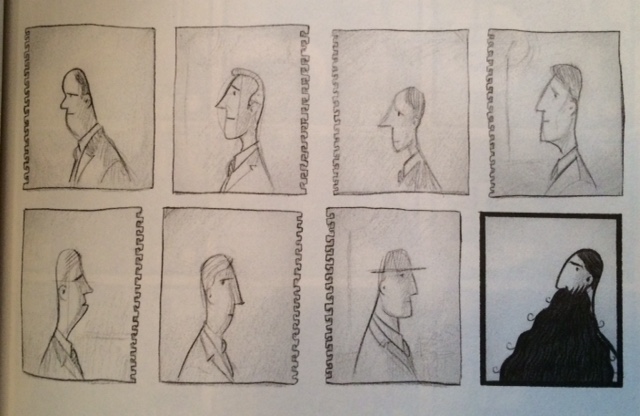
The graphic novel, but Stephen Collins, is a tranquil journey through a surreal word. I want to liken it to  Terry Gilliam or Tim Burton, but the experience isn’t that overt or obvious. The book’s tag line perhaps says it best — The job of skin is to keep it all in. Here, the skin means the skin of the world. Normalcy. The job of normalcy is to keep all the weird and frightening stuff in, so you don’t have to experience it. In this sense, the book take on a bit of the Cthulhu mythology. Only instead of a tentacled cephalopod, we get a massive black beard (which is evil, don’t forget).

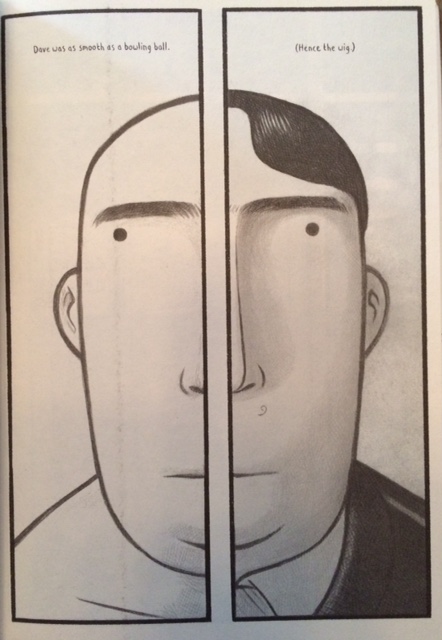
Collins does a wonderful job of setting up the back story. Our protagonist, Dave, is totally bald and hairless, except for a single hair. This makes his eventual bearddom even more of a 180. This would be wonderful foreshadowing if the book title and image didn’t already let you know that the beard is, in fact, coming.

FullSizeRender-4

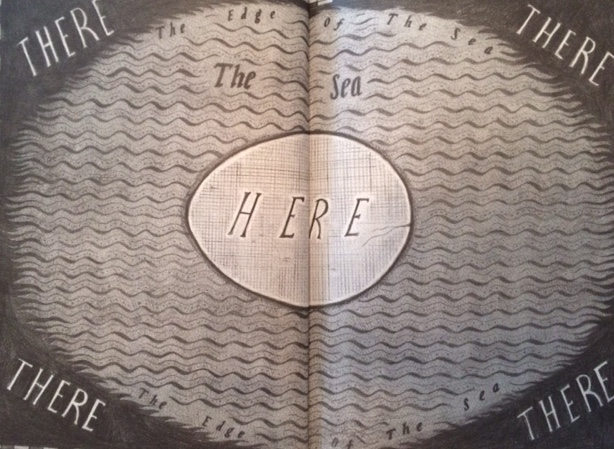
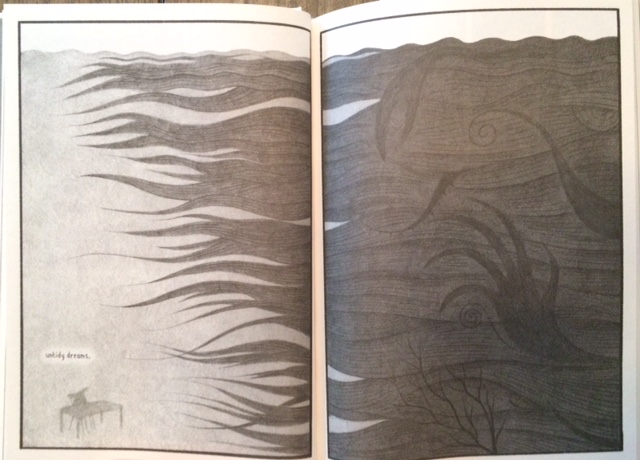
Even so, I like how the Collins explains his world and gives its limitations, letting the reader know what’s at stake. For example, everyone in this graphic novel lives in a place called Here. It’s very similar to where you live, in fact. Only Here is an island surrounded by There. There is the unknown. The chaotic. The untidy.

FullSizeRender-5

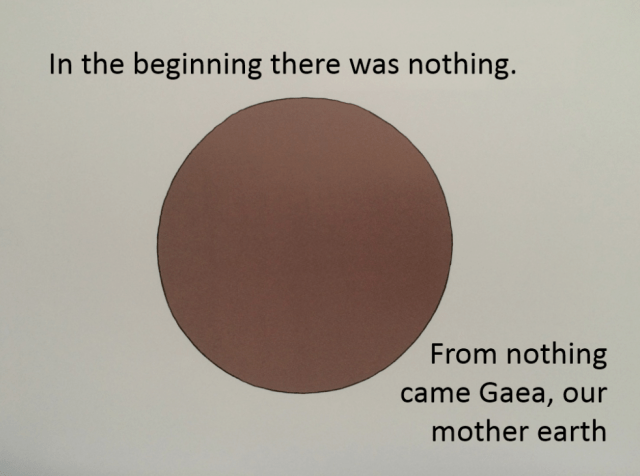
The image of Here versus There brings to mind the Greek idea of the beginning of the world.

Chaos

Tidiness seems to be a prevalent theme in the book. many pages and images are devoted to the tidying of the streets and the people. Gradually, as the evil beard makes its presence known, untidiness happens.

Dave’s only source of joy is sitting by his window and sketching the passersby (all while listening to the Bangles “Eternal Flame” on repeat). After he grows his beard, he notices how similar all the people are, and by contrast, how different he’s become.

FullSizeRender-2

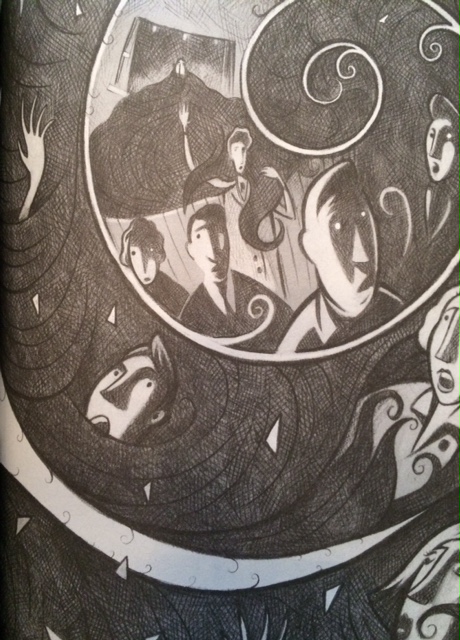
But this difference was there all along. Hidden beneath the skin of his dreams. He’s always heard the voices of There, hissing into his brain, bringing untidy thoughts.

FullSizeRender-3

Of course, along with the brilliant story, we have Collins’s astounding artwork. His visuals aptly capture the serene creepiness of chaos leaking into the world.

FullSizeRender


I highly recommend this book. Buy it and give it a good read through. You won’t regret it. Even if you are clean shaven.

Tim Kane

Do You Want Your Fashion to Interact with the World?

Imagine a dress that would react to people around you. Lash out if you felt threatened. Light up if you were happy? Sound like something from Bladerunner? Think again. These dresses have become reality, thanks to Dutch fashiontech designer Anouk Wipprecht.

Spider_dress

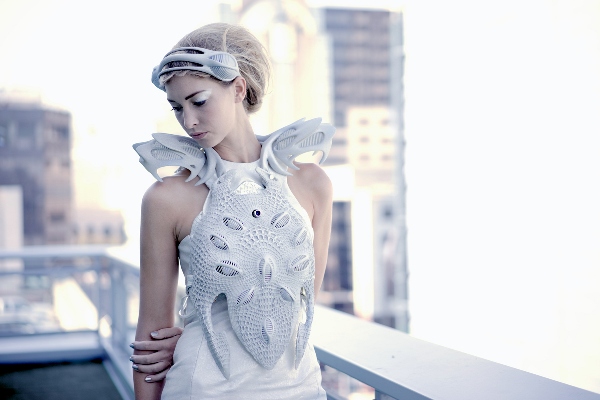
This is Anouk’s Spider Dress 2.0. The spider leg epaulettes on each shoulder are actually tiny robots. They link to proximity sensors and a respiration sensor. This means that if someone moves aggressively towards you, and you don’t like it, your increase in respiration will trigger the mechanical legs to move up and into an attack position. Additionally the black LED shells stationed along the garment, meant to  resemble spider eyes, automatically flash in warning when someone gets near you.

Robotic Spider Dress [Intel Edison based] // 2015 teaser from Anouk Wipprecht on Vimeo.

Anouk’s original Spider Dress (designed in collaboration with engineer Daniel Schatzmayr) shows the sinister robotic spider legs. These legs also extend, but won’t react to the proximity of others. It was simply meant as a performance art piece about personal space.

spiderdress03

Although the Spider Dress is Anouk’s most recent project, he has experimented with interactive clothing for a while. Take the Smoke Dress, which covers the wearer with fog as soon as people approach. The Smoke Dress functions as a protective shield, the designer says, “just like an octopus in self-defense” envelops itself in clouds of ink.”

img_20130911_111120


Interactive Smoke Dress @ AUTODESK Gallery pop up Paris from Anouk Wipprecht on Vimeo.

Anouk also created her Synapse Dress which reads the wear’s thoughts. When the person is excited about something, this triggers the LED lights in the dress to glow. It creates a sense of vulnerability because everyone around you will know what you are thinking.

JASONPERRY_DSC2623_small


Much of the interactivity in Anouk’s fashion are thanks to an Intel chip called Edison. Watch the micro-documentary about how the chip helps the clothes sense the users thoughts.

Interactive Intel-Edison based Synapse dress by Dutch fashion-tech designer reveals wearers metal states from Anouk Wipprecht on Vimeo.

One of Anouk’s earliest fashion and tech mashups looks like it came straight out of a Steampunk novel. The Faraday Dress lights up when exposed to the power of high-voltage, low-current, high-frequency, alternating-current electricity. That forking lightning you see in the picture is real. 94 metal panels comprised the outfit, cut out of a sheet of metal using the water jet.

makerfaire_02


In this making of video you can see a hesitant model wearing the dress as the faraday device launches arcs of electricity at the dress.

Anouk Wipprecht lives and works in San Francisco. She strives to create fashion that will connect the body and the clothing. She began combining fashion and technology three years ago. A one year sting to Sweden offered her a chance to study “body, fashion & technology” at the Malmo university. There she worked on Arduino-based application possibilities and smart fabric concepting.

leadImage_preview


Tim Kane

De Chirico and his Fantastic Landscapes

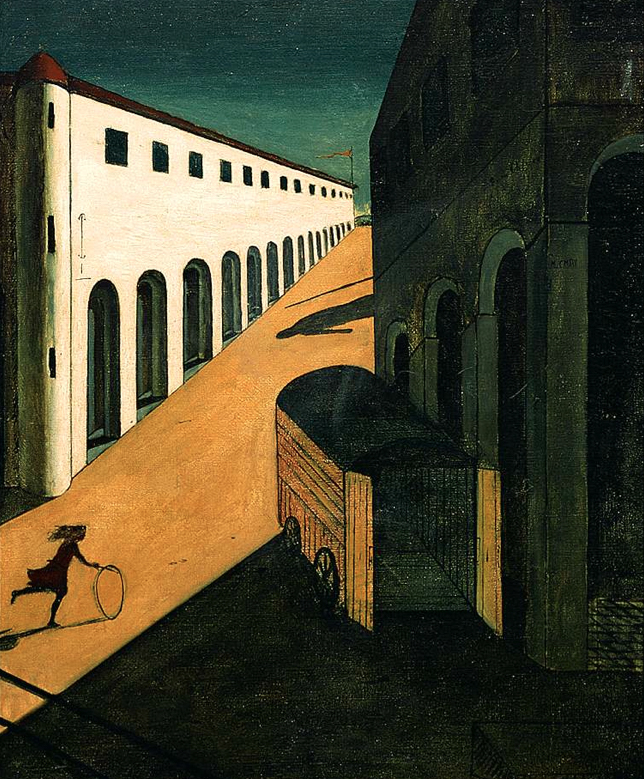
I’ve spent the past few days scouring my art books in search one specific artist. I recalled seeing his fantastic landscapes that seemed so desolate, jet full of energy. In this world, Greco/Roman-styled buildings stood solitary with shadows that stretched all the way across the painting.  I wanted these to be the inspiration for the world of the Tarot. After quite a bit of time, I finally found what I was searching for: the art of Giorgio de Chirico.

Piazza d'Italia 
signed 'g. de Chirico' (lower left) 
oil on canvas 
11 7/8 x 15¾in. (30 x 40cm.) 
Painted circa 1956

Piazza d’Italia circa 1956. This painting is exactly what I picture a dreamscape to look like. On the surface it looks simple and straightforward, but then I start to wonder. What is that train doing in the background? Who are those two people talking?

Technically, de Chirico wasn’t a surrealist. He worked with some of the artists at that time, but he art was more symbolic and used dream imagery. This is what drew me to him.
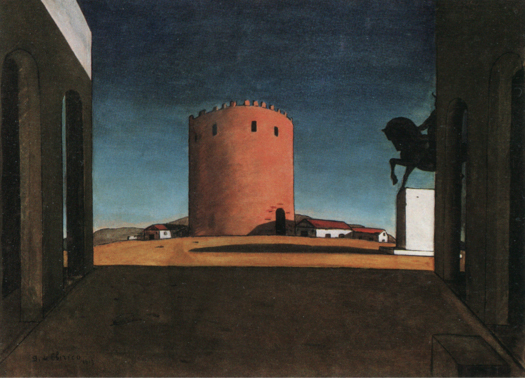
La Torre Rosa 1913

La Torre Rosa 1913. This was painted during de Chirico’s stint in Paris. You can see the long shadows that characterized his work.

Giorgio de Chirico was born in Volos, a town in Greece on July 10, 1888. When his father died in 1905, the family moved to Munich. At the age of seventeen, de Chirico studied at the Academy of Fine Arts where he was introduced to the ideas of Nietzche. De Chirico also found inspiration in the European Symbolist artists like Franz Stuck and Carlos Schwabe. De Chirico loved their use of dream-like imagery. His earliest paintings used Symbolist ideas with his love of Greece and Italian antiquities. His paintings also represented his musings on the true nature of reality.
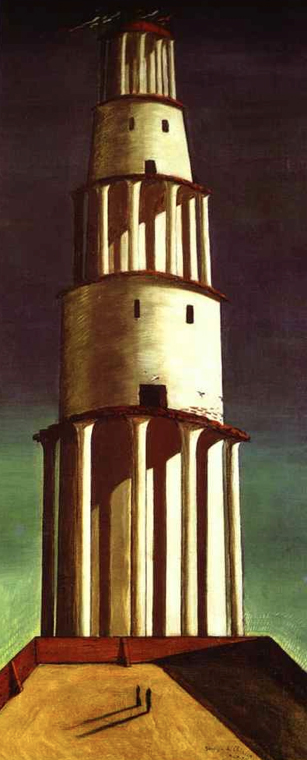
La Grande Torre 1919

La Grande Torre 1919. Again, this tower seems so simple on the surface, but the depth of the shadows draws me in. What lives inside that tower?

After settling in Florence, de Chirico traveled to Paris in 1911. There he met a number of avant-garde artists and writers, including Pablo Picasso and Constantin Brancusi. He also exhibited his work to the public. It was during this time (1911-15) that De Chirico created many of his most influential paintings such as “The Mystery and Melancholy of a Street” (1914). His paintings showed scenes with classical architecture where only a single lone figure or monument was present. Often long shadows hinted at other elements or figures just out of view. This creates an unsettling mood.

Mystery and Melancholy of a Street 1914

Mystery and Melancholy of a Street 1914. This is one of de Chirico’s most famous paintings. Notice the shadows of two figures just out of view. That creates an unsettling image for me as my mind desperately wonders who or what they are.

The Great War (World War I) forced de Chirico and his brother into the Italian Army in 1915. De Chirico was stationed in Ferrara, but soon had a nervous breakdown and recouped in a military hospital. In 1917, he met artist Carlo Carrà, who helped him create his style of “metaphysical painting” that emphasized the hidden significance of ordinary places and objects.

The Predictor 1919

The Predictor 1919. Landscapes weren’t the only subject de Chirico painted. He often included these mannequin creatures with oblong blank heads.

De Chirico and Carlo Carrà created a style known as Pittura Metafisica. This type of painting showed recognizable items, but displayed in an unusual manner. De Chirico created city squares with arcades and distant walls. The scenes were dominated by classical statues or his metaphysical mannequins, which were derived from tailor’s dummies. Sometimes, these figures were the only “human” presence in the painting.
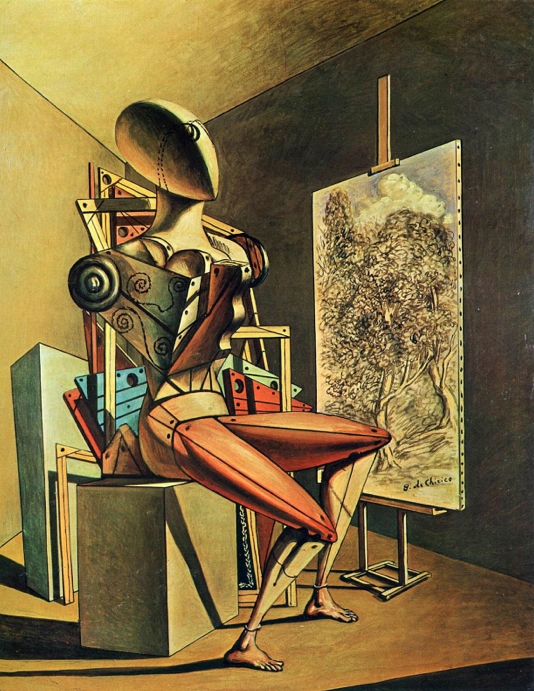
Mystery

This painting of a mannequin draws me in, yet I cannot find the title or the year it was painted. I see de Chirico’s signature on the painting. I know that there were some paintings created by other artists with his signature and this might be one. However the cubist shape of this mannequin is compelling.

De Chirico developed this technique from his readings of of the German philosophers Friedrich Nietzsche, Arthur Schopenhauer and Otto Weininger. He became interested in Nietzche’s idea of the eternal return and the circularity of time. In this philosophy, true reality was always hidden behind the reality of appearances and visible only to the ‘clearsighted’ at enigmatic moments. De Chirico wanted to unmask reality and show the mystery that lay underneath.

Giorgio de Chirico (1898 - 1978. Grêce). Visite aux Bains mystérieux I, 1935

Visite aux Bains mystérieux I, 1935. This is perhaps the most surreal of de Chirico’s paintings. I wonder what happens inside that tiny building? Is it more than just a changing room?

What mystery lies beneath the surface of our reality? De Chirico sought to find it through his painting. His work encourages us to look deeper and see beyond the obvious. We are all seekers of the truth.

Tim Kane