Self-Destructing Ideas (To Sit or Not to Sit)

Imagine if you had an idea. A great one. Something that might amaze people. Only to have that idea explode into nothingness after a few people hear about it. This is not fiction. It’s a reality.

Book and music companies use digital rights management (DRM) to control how their products are used. Harper Collins only allows library users to check out a book so many times before the book “self-destructs”. They say that this mimics the wear and tear on a real book. But the digital copy doesn’t have wear and tear. It’s just an idea.

To make this point even more absurd, take a look at the Self Destruct Chair by graphic designer Thibault Brevet. This seat is designed to allow eight people the pleasure of sitting on it. After that, it falls apart and you need to buy a new one.

DRM CHAIR from Thibault Brevet on Vimeo.

We’re all used to products built as cheaply as possible so that it easily breaks. Then you really do nee to buy a new one. But ideas don’t break. That’s what a digital book is. An idea. Yes, companies need to make money, but limiting library access is ridiculous.

Another example of seats that attack back comes from China. It seems there are too few benches in parts to accommodate all the butts that want a seat. Most people would assume you’d simply build more parks. Nope, the folks of the Yantai Park in Shangdong province, eastern China, have other ideas. The benches are coin operated. Yes. They have spikes that stick up to keep you from sitting. Slip in a coin and get a few precious minutes of ass time before the iron maiden spikes skewer your nether regions.
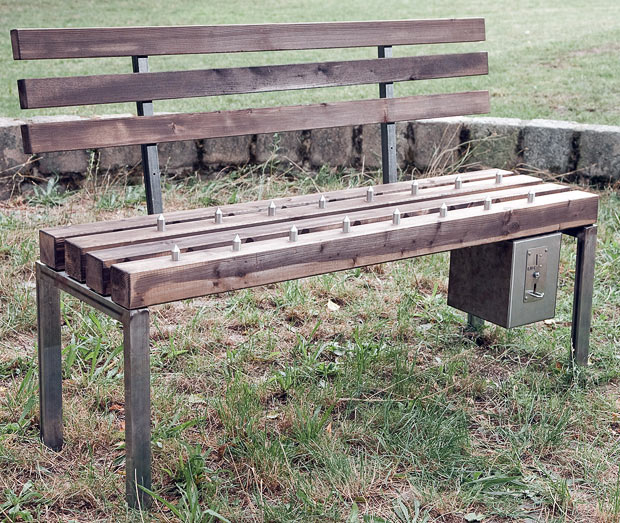
park-bench-spikes_1697959i

Oh, for safety reasons, the benches emit a piercing bleep just before the spikes pop up. So now we’ve destroyed two ideas: The idea of sitting on a bench, and the idea of a quiet park (imagine the chorus of beeping, coupled with the occasional yelp from a slow park-goer).

Incidentally, the Chinese were not responsible for this brilliant idea. The bench above is built by Fabian Brunsing and is called the Pay & Sit bench. Apparently, this has been torturing Europeans for a few years now. Check out this video (meant as an actual advertisement to get you to purchase one).

PAY & SIT: the private bench (HD) from Fabian Brunsing on Vimeo.

I think the next logical step is this:

art_conceptuel_small

This is a conceptual art piece titled “Office Terror” designed by Johan Schulé. I think this artist nailed it (so to speak) that sitting is a pleasure and should not be overlooked. Just like any idea. You can’t tax or make money off of it.

Tim Kane
Nosferatu: The Film Resurrected (Part 2)

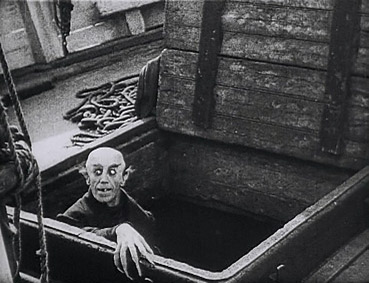
Florence Stoker, widow to Bram Stoker, did all she could to stamp out any imitators to the vampire in Dracula. She had all copies of Freidrich Willhelm Murnau’s Nosferatu, Eine Symphonie des Grauens burned. Yet Nosferatu did not stay dead. Like any good horror movie, the villain revived himself and carried on the fight. A print of the film resurfaced in 1929, playing to audiences in New York and Detroit. However preeminent Dracula scholar, David J. Skal, writes that the film “was not taken seriously” and that most audiences considered it “a boring picture”. The print was then purchased by Universal to see what had already been done in terms of a vampire movie. The film was studied by all the key creative personnel leading to the Universal production of Dracula in 1931.

nosferatu5b

The undead film continued to rise from the grave throughout the years. An abridged version was aired on television in the 1960s as part of Silents Please, and subsequently released by Entertainment films under the title Terror of Dracula, and then again by Blackhawk Films under the name Dracula. Blackhawk also released the original version to the collector’s market under the title Nosferatu the Vampire. An unabridged copy of the movie survived Florence Stoker’s death warrant and was restored and screened at Berlin’s Film Festival in 1984.

Despite its influence on the making of the 1931 Dracula, Nosferatu has few film decedents. It’s theme of vampire as a scourging plague has only been seriously taken up by two films: the 1979 remake by Werner Herzog, Nosferatu: The Vampyre.

Another film (same year) was the television miniseries of Salem’s Lot, directed by Tobe Hooper.

Perhaps if the original Nosferatu, Eine Symphonie des Grauens had been allowed regular release, this would not be the case. It remains to be seen if Nosferatu will vanish again with the daylight or if this rare film will rise again in a new form.

For more information on the making of the original Dracula, check out David Skal’s book Hollywood Gothic: The Tangled Web of Dracula from Novel to Stage to Screen.

Tim Kane

Nosferatu: The Film That Died (Part 1)

There is no doubt that Freidrich Willhelm Murnau’s Nosferatu, Eine Symphonie des Grauens (Symphony of Horror) is a piece of landmark cinema, both for its Expressionist filmmaking and its unique treatment of the vampire as plague. Yet few people saw this monumental film prior to 1960. Though slated for destruction by Bram Stoker’s widow, the film managed to survive, popping up in the most peculiar places.

NosferatuShadow

Here is a trailer for Nosferatu (colorized, but it’s the best of the batch) that shows just how ominous Max Schrek was in this part.

Nosferatu debuted at the Marble Hall of the Berlin Zoological Gardens in 1922. The movie was the first and last product of a small art collective called Prana Films — the brainchild of artist Albin Grau (later Nosferatu’s production designer). A month later, Florence Stoker caught wind, and she started the legal machines rolling. Her only income at this point was her deceased husband’s book Dracula, and she would not let some German production company steal her meal ticket. During the 1920s, intellectual rights were a bit dodgy, so Florence paid one British pound to join the British Incorporated Society of Authors to help defend her property. Never mind that the society would also pick up the tab for the potentially huge legal bills.

Florence_StokerFlorence seemed unaware that a second vampire film, this one called Drakula, was produced by a Hungarian company in 1921. Although the title harkens back to Bram Stoker’s novel, the resemblance ends there. This film, now lost save for some stills, was more concerned with eye gouging than straight out vampirism. Nosferatu on the other hand took much of its plot from Stoker’s Dracula, changing only the names.

The film continued to be exhibited in Germany and Budapest up through 1925, though Prana was beleaguered by creditors and harassed by Florence Stoker. They tried to settle with the society, offering a cut of the film’s take in order for them to use the Dracula title in England and America. Florence would not relent.

She not only wanted Prana to halt exhibition of the film, she wanted it torched — all prints and negatives of the film destroyed. And she got her way. In 1925 Florence won her case and the destruction order went through. Nosferatu, Eine Symphonie des Grauens vanished into thin air just as Count Orlock, the vampire in the film, did when exposed to the rays of the morning sun.

For more information on the making of the original Dracula, check out David Skal’s book Hollywood Gothic: The Tangled Web of Dracula from Novel to Stage to Screen.

Tim Kane

The Dark Whispers of the Elder Futhark

I don’t buy into most divination practices. Many don’t make sense (like the I Ching) or some are too darned complicated (Tarot), but I do have a yen for runes. Maybe it’s the German heritage, but these symbols speak to me.

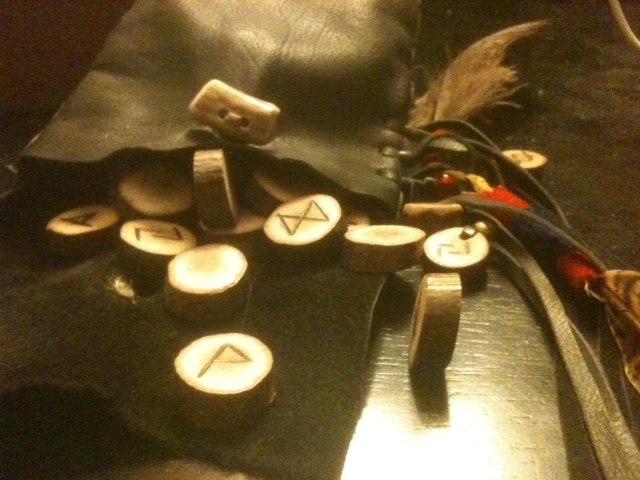
runebag

The word rune has a long and clandestine history. The Old Norse called it runir meaning secret or hidden lore. In Old English it became rün, a secret consultation. Finally the Gothic language titled it as runa, dark sayings, or whispers. These dark whispers are not malicious by any stretch of the imagination. Rather, the runes are like a friend, confiding secrets to you, and rune casting is the best way to get your new friend talking.

Each rune symbol represents both a letter of the alphabet and an idea (see the letters here), but these are a far cry from their true meaning. This only comes from using the runes, over and over and over again. I don’t mean be a fanatic about it. For goodness sake have a life, but allow these messages and the stories they represent to enter into your life.

I don’t put in for the various meditations and soul searchings that many of the books I’ve read suggest when working with runes. I’m a pragmatist. How can I get these things to work for me? What I’ve found is that the runes, as a divination source, are far more practical and straightforward than say the Tarot. I tried various divinatory techniques with the runes, kept what I liked, threw away the rest.

One that I use most often and with tremendous success is rune casting. What’s best about this method is that I don’t even need to have any runes on me to practice it. Once I threw a casting in the parking lot of McDonalds with a bundle of coffee stirrers. I’ve found that there is a bond that develops between you, the caster, and the runes themselves. Often you must read into the casting to find its true meaning, sometimes going by gut reaction.

The manner for casting is pretty simple. If you’ve purchased or made a set of runes, make sure they’re all inside a pouch. Reach inside with the question posed clearly in mind. It helps to be brutally specific here. The more loopholes you allow the runes, the more they’ll take. This method works best with questions that can be answered with a qualified yes or no. Don’t ask how or why because the runes won’t tell you. As in everything in life, you’ll have to figure those out for yourself. Reach inside, grasp a handful of runes, and toss them onto the ground or table. Now a word of caution here, toss does not mean hurl with the force of a two-year-old with his ball. You don’t want to loose any of the runes, just scatter them randomly. Let them decide how to land. The basic interpretation is simple, if more runes are turned face up, the answer is positive (yes), if more are turned down, negative (no). The trick comes in qualifying the answer. What’s the ratio of upright to overturned runes? If you have, say four to one or five to two, the answer is a very sure yes. If they’re all turned face up, then you have little doubt in the matter. The same goes for face down. When the ratio is close or dead even, then you’re stuck with a qualified maybe. Don’t be disappointed. This only means that your fate isn’t decided yet.

EhwazFinally you can interpret the meanings of the upright runes themselves. The most important rune to see is Ehwaz, because it confirms without a doubt those runes around it. It can push a maybe over to yes or confirm a negative result for sure.

If you don’t have runes to cast, you can also use a set of nine sticks, or coffee stirrers or straws, anything about the same size. This method is little more unpredictable and sometimes yields nothing more than a vague notion. I’ve used it for a quick spot check when away from home. Cast the sticks out just like the runes and then examine them. Because the rune signs are all made up of straight lines, sometimes the sticks will form the shapes of a rune. Be careful though, not every crossed stick is Gebo or Naudhiz. When a rune is created, it’ll be rather obvious. If you get nothing, then you’re left with another maybe. In this method you typically see only a single rune, and must interpret the answer from that rune’s meaning. Usually this will not give you a yes or no answer, rather a quality regarding your question. Like I said, it’s not rocket science, but it can help guide you in a clutch.

Rune casting is like inviting a new person over for diner. The first time you meet will be awkward. You may struggle for things to say. But the more often you two meet, the closer you’ll become, until soon you’ll find yourself rather comfortable with those crazy looking symbols. Then you might feel a gentle rush of air by your ear as you catch just a snippet of those dark whispers. The secrets of the runes.

Tim Kane

Werewolf Ointment and Child Horderves

Most folk think they know the werewolf legend. You get bit by a werewolf and then become one. Yet how did the first werewolves begin? Its like the chicken and the egg dilemma. The best place to look is sixteenth century France. Between 1520 and 1630 there were 30,000 cases of lycanthropy. That’s a whole lot of baying at the moon. Reading through the various cases, I noticed some trends emerge.

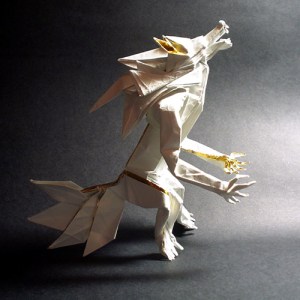
Origami Werewolf

Origami Werewolf

The Dark Lord

It’s no surprise in a devout Christian country that the devil would be blamed for any wrongdoing. In two legends, a figure dressed all in black approaches the victims and tempts them. In 1502, Pierre Burgot was trying to gather up his sheep when he ran across an ominous horseman all in black. The stranger called himself “The Lord” and asked Burgot to obey him. In a second meeting, The Lord commanded that Burgot denounce God.

Another case involved a boy called Jean Grenier. He ran away from an abusive father, finally meeting the Lord of the Jungle in the woods. The man was tall, dressed in black, and sat upon a horse. (Puts a whole new meaning to tall, dark and handsome.) This Lord kissed Grenier with icy lips. On their second meeting (and it seems the nasty part of the deal happens at the second meeting) the Lord scratched a tattoo onto the boy’s thigh, marking him.

Curse of the Werewolf 1961

Curse of the Werewolf 1961

Werewolf Ointment

Apparently the Dark Lord carries around vials of werewolf ointment. In both the above cases, this is what caused the transformation. In the case of Burgot, he met a man called Michel Verdum (possibly a friend of the Lord). He commanded Burgot to strip naked and rub magic ointment on his body. During the process, Burgot saw his arms and legs transform, becoming hairy and lupine. Verdum also became a werewolf and together they ravaged the countryside.

The boy lycanthrope, Grenier, had a similar experience. The Jungle Lord gave the boy ointment and a wolf skin. After anointing himself, the wolfskin transformed Grenier into a werewolf. One view of the lycanthrope is as a skin walker.

The Beast of Gevaudan, published by Basset, 1764 (color engraving). Musee Nat. des Arts et Traditions Populaires, Paris, France­

The Beast of Gevaudan, published by Basset, 1764 (color engraving). Musee Nat. des Arts et Traditions Populaires, Paris, France­

Eating Children

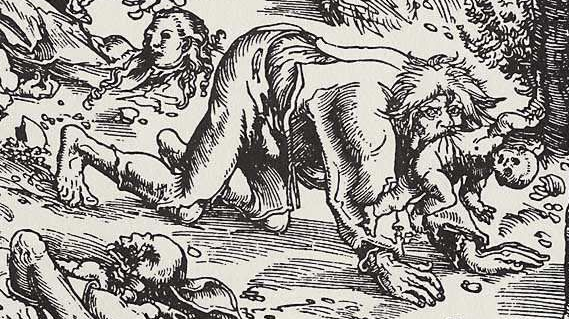
Apparently, the favorite food of werewolves is children, raw and crunchy. Burgot tore apart a seven-year-old boy and abducted a four-year-old girl. He and Verdum ate up every last bit. Grenier attacked and ate fifteen children, including one from a cradle.

The werewolf of Caude (1598) was tried for killing and eating a boy of fifteen. There was also a werewolf who used a tailor shop to lure children (because so many kids desperately yearn to hem and stitch).

Finally, the Hermit of Dole (Gilles Garnier) munched down on several children in 1573. Another werewolf, Gilas Garner, attacked children with paws and teeth, eating flesh from their legs and belly. Bottom line, it did not pay to be a teen in medieval France.

Werwolf2

Werewolf by Lucas Cranach

In none of these cases do further werewolves multiply by excessive bites. The legends seem clear that some mingling with the dark forces causes lycanthropy, not some disease.

Tim Kane