Mine Your Inner Hurt

It doesn’t matter what sort of art you take up—writing, painting, music, cooking—you need to dig deep into whatever hurt you have. If not, then the art will be false and flimsy.

Salvador Dali pondering how to make himself insane in the office of Dr. Sigmund Freud from the film “The Death of Salvador Dali.”

I was watching the Next Food Network Star. On one episode, a contestant opened up about how he lived his childhood scavenging from garbage cans. This not only moved me, it showed how authentic he was. Another contestant would not open up. She obviously had some sort of hurt in the past. One that had shaped her way of thinking, yet she was afraid of going to that dark place. On that episode she was eliminated. Why? Because she didn’t connect with the viewers.

Be authentic with your art. If it doesn’t hurt, then you’re not doing it right. When you dig into your inner self, it’s like therapy. Only art comes out the other end. If you’re not willing to be brutally honest with yourself, then your work will feel false. It’s like the difference between a museum painting and a hotel painting. They both contain skill, but only one has passion.

Salvador Dali once toured a museum of paintings. After viewing them all, a reporter asked him which one he liked the most. Dali pointed at a door, freshly painted and still wet. He said there was more skill and passion in that door than any of the other paintings.

Tim Kane

Which Type of “Cool” Are You?

I was walking my dog in the park the other day and saw a couple walking by. The guy was doing everything he could to “look cool”. Then I thought, every guy tries to look cool, but each in different ways. What are the different styles of cool? Can you think of anyone you know who’d qualify?

Jock Cool
These are the kids who want nothing more than to wear a team jacket along with a championship ring. They define themselves by their sport and their workout routine. My mind blanked on modern examples, so I went old school on this one.

Emilio Estevez from Breakfast Club

Nerd Cool
These guys live for the A+ grade. They do all their homework, everyday. They even ask for extra credit to do over vacations. If they’re not solving a problem, then they’re not living. Their self-worth derives from their class rank.

Although Sheldon (from Big Bang Theory) also has geek cool, he mostly defines himself by his ability to outsmart others.

Geek Cool
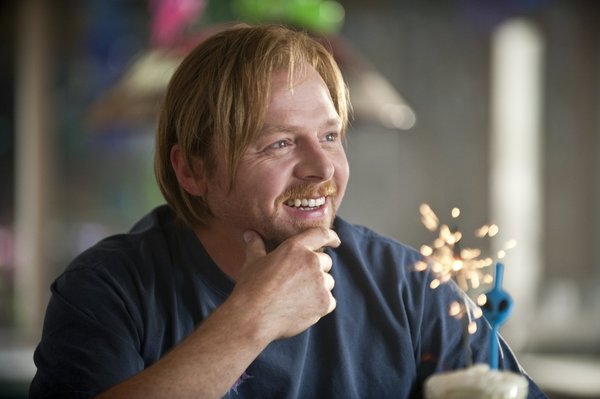
How many action figures have you got? These guys strive to be big in the popular culture universe of video games, comic books, role playing games, you name it. In fact, these fellas are perfectly happy to invent an alternate universe to live in, so long as there are rolled tacos.

Simon Pegg from the movie Paul believes that aliens are among us.

Party Cool
You know this type. He attends every party (that is, if he isn’t throwing it himself). The more people in attendance, then the higher his social status (even if he hardly knows who they all are).

Robert Downey Jr from Iron Man II. When he’s not hanging out in giant doughnuts, he throws amazing parties.

Counterculture Cool
At best, these guys are original and imaginative. At worst, they simply assume the uniform of “the different”. Generally, if everyone else likes something, then this guy won’t.

Pretty much every movie Johnny Depp acts in defines itself by its desire for a different worldview. He embodies the best of the counterculture.

Skater Cool
This is a subset of counterculture cool. Saggy pants, board in hand, this guy likes nothing more than to ride. He defines himself by the tricks he can perform and his hair gel.

Andrew Garfield as Peter Parker in Amazing Spiderman. Loved how they started him off as a skater.


Smart-Ass Cool
This guy always has a joke or a comeback. He defines himself by how hard he can make you laugh. If you squirt milk out your nose, bonus.

Adam Sandberg comic stars opposite old school funny man Adam Sandler. He lives and breaths the funny.

Every style has its uniform and expectations. The goal, of course, is to step outside these molds and discover the real you. Then you have internal cool, like these guys.

The king of cool. From music to film, David Bowie oozes coolness.

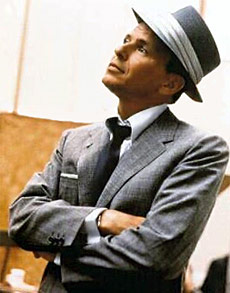
It’s Frank Sinatra’s world. We just live in it. If you’ve never heard old blue eyes sing, then you haven’t lived.

Nuff Said.

Tim Kane

Staring at the Progress Bar

I used to make my living as a computer graphic designer. I was pretty good at it. I designed ads for Winston Tires (not around anymore) and designed the box for TurboTax (that’s still with us). What I hated about the process was the computer. Being totally reliant on technology to get the work done is frustrating. Mostly, it was the progress bar.

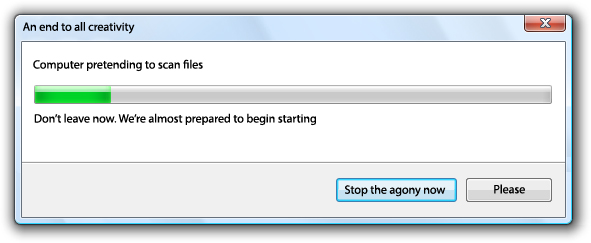
You know how it goes. Here’s the situation right now. I’ve decided to update and add a few videos to my iPad. So I hook everything up through iTunes and then the bane of my existence appears. The progress bar. It inches forward, sucking the life from me.

I should walk away, but I can’t. It’s hypnotic. I stare at it, watching the percentage creep forward. I can literally stand there for hours. It’s so pointless. Finally, head upstairs and take a shower because I needed to go out soon. That broke the trance. Once I was away from the progress bar, I could actually progress with my life.

Writing doesn’t have quite as much of that. First off, the file sizes are so small, there’s only a glimpse of a progress bar. Also, I can print out pages or switch to long hand and still be productive. Take that technology.

If you’re stuck with something that is technology dependent, I feel for you. No one likes the progress bar. The best advice I can give you is make sure your other outlets (creative or otherwise) don’t rely on batteries, updates, or Internet.

Tim Kane

Coping With “Thirteen Reasons Why”

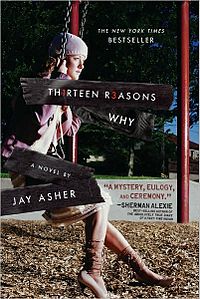
I just finished reading “Thirteen Reasons Why” by Jay Asher. And when I say “just finished” I mean minutes ago. I burned through the last forty pages. Breathless.

I loved the book.

More than just a typical reader would. As a school teacher, I’ve run across kids who needed similar help (not the same, thankfully). I find that school, and teaching, is a mixed bag of learning, friendship, and therapy.

First, let me give you a freeway version of the story (no spoilers, I promise). The novel follows the story of Hannah Baker, a girl who has committed suicide. We hear her words though audiotapes she left for the thirteen people connected with her suicide. Intercut with this is the first person narration of Clay. He’s listening because he’s on the tapes, somewhere. He spends the novel trying to figure out what he did to push a girl over the edge.

Every year (every year, at least since I ran across my first case of a girl cutting) I talk to the students about coping mechanisms. How to unload all that stress and anger that builds up inside. And it does. It’s like shaking up a can of soda. If you don’t know how to release the pressure, it will explode. Trust me, I know.

As I guy, mostly this comes out with hitting things. I’ve dented two car roofs (both mine) and hit the floor so hard it actually shook the house. I don’t think those were the best therapies, but they were better than the alternatives.

Basically, you need a way to get those inner demons out. Hannah (from the novel) had the right idea with poetry. Unfortunately, circumstances conspired against her. Journaling also works. This is essentially what Hannah did with her tapes. It was too late when she worked through her emotions. It’s something you need to start with.

Art is another one. I recall, as a disaffected teen, I attacked a painting with so much force, that I broke the paint brush. (Seeing a trend here?) Once, a poet visited my class (this is fast forwarding to when I was a teacher) and she told the kids something I will never forget. Poems don’t have to be about sadness or joy. Any emotion will do. Anger in fact. She encouraged my class to get angry with their muse.

Essentially, I think I became a writer as a coping mechanism. A way to pour out all the ick that lived inside. I’ve dealt with double dealing friends and some nasty gossip. I simply gave that stuff for my characters to deal with. A bit nasty on my part, but hey, it let me heal. Then I could talk to those people again and not be filled with hate.

The only thing about Jay Asher’s book that bugged me was the parents. Where were they? He had Hannah offer an excuse about the business failing, but I needed to see it more. Why? Because I want to believe that they could have helped. You see I have a little daughter. And when she struggles with her teen years, I hope I can be there for her. I know it’s possible, probably even likely, that suicidal teens don’t confide in their parents. But as a reader (and a father) I would have hoped Asher would have addressed it. Maybe he did. (I haven’t finished with the questions at the end, so maybe he addressed it there.)

I guess I feel like Clay sometimes. As a kid (I know I’m jumping around here) I had a friend who’s father killed himself. One day, at friend’s house, he just broke down, crying. Hell, I had no clue what to do. I was something like thirteen or fourteen. But I listened to him. Especially because the others in our group wouldn’t. He survived the rest of high school without any further incident. So I’m glad I did something. At the very least, I didn’t turn away.

If you ever have someone open up to you, don’t push them away. Listen. Be there for them. Do something that they can’t.

Tim Kane

The Seven and a Half Rules Writer’s Shouldn’t Need

Writing is a confusingly simple process of transcribing motives and plot points into physical form. Here are some tips.

Rule 1
You’ll need a pencil or a pen. Perhaps charcoal or crayons are your flair. Something to make the interior screams of your brain visible to the masses.

Rule 2
Paper is the choice of four out of five writers. However, don’t turn a cold shoulder to bark, bedsheets or cave walls. All excellent media.

Rule 3
Fortify yourself with stimulants. All that creativity can drain on your soul. I recommend chocolate and coffee. But that’s just me.

Rule 4
Sometimes you don’t feel like writing. You stare at the paper (or computer screen if you’re the techno-type) and nothing comes. Just pure white. Minutes slip by and your mind reels. Congratulations, you’re meditating. Some people pay big money for that kind of thing.

Rule 5
A diary or a journal can be a tremendous place to let your innermost turmoil spill on to the page. Just be sure to lock that book up. Wouldn’t want any of those secrets leaking into your writerly work.

Rule 6
Don’t forget to add characters. I hear those are important to your writing. Unless you’re genre, then ignore them and plot, plot, plot.

Rule 7
Set your story someplace interesting. Not a bathroom or a school. Maybe a jungle or the DMV waiting line. Those places are always chock full of suspense.

Rule 7 and a half
Be sure to have a compelling ending.

Write on fellow wordsmiths.

Tim Kane