Creative Starvation

I recently read an article on io9 about how the body can survive up to 70 days without food. It goes through several stages where the body cannibalizes muscle and bone to keep the brain alive. As a writer, I wondered if this process could happen creatively.
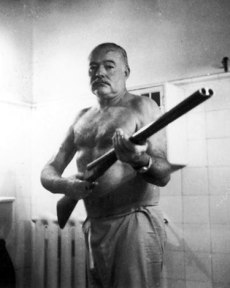
Somehow dying creativity made me think of Hemingway and his shotgun.

I just exited a two month funk. I had just finished edits on a manuscript, but wasn’t due to hear from my agent for a while. (I’m a deadline person. Without one, I’m lost.) I worked up a new novel idea, but the routine of churning out pages each day wasn’t there. I felt starved.

Here’s how I think creative starvation might work on anyone art-minded.

1-2 days after finishing a project
You feel that high that seems to never go away. It’s like creative adrenaline. You feel pumped.

3-7 days after finishing a project
This is the hot spot. You either start something new (I mean just dive in) or you don’t. In physical starvation, the brain takes 25% of the body’s energy. In creative types, imagination takes the largest share. During this time, it’s spinning out of control because it doesn’t have a clear direction. It’s a wet paintbrush searching for a canvas.

1-3 weeks after finishing a project
This is when your imagination starts to cannibalize other ideas. You might find the novel you’re reading an incredible inspiration. Maybe you could mimic it somehow. Or perhaps you dive into blog writing. You convince yourself that it’s also creative and just the same as fiction writing. Yet all these endeavors further drain and weaken your creative spirit.

Onward past 3 weeks
There are a few options here. Unless a deadline or some event propels you back into writing, your imagination might perish. Without the fresh nourishment of routine and a clear project to work on, it starves.

Treatment: Take one chair. Apply butt. Type.

That’s it. Even if garbage comes it. Because it probably will. You need to type. Wake up the creative muse that’s comatose inside you.

Write on.

Tim Kane

Wordle Transforms Stories into Art

A colleague of mine introduced me to a website called Wordle. This site allows you to paste text (any text) and it will create a word cloud. The size of the word reflects how often its used in the text. For my experiments, I used a few short stories I’d written and posted on this blog.

This is from a blog post called “Do-It-Yourself Zombie Kit.” No surprise that zombie would get center stage. The story is tongue in cheek about what you’d really need to do to create your own zombie (voodoo style).

This is a piece of flash fiction titled “Selling Your Sister to the Goblins.” I like that Wordle put “teeth” next to “goblin.”

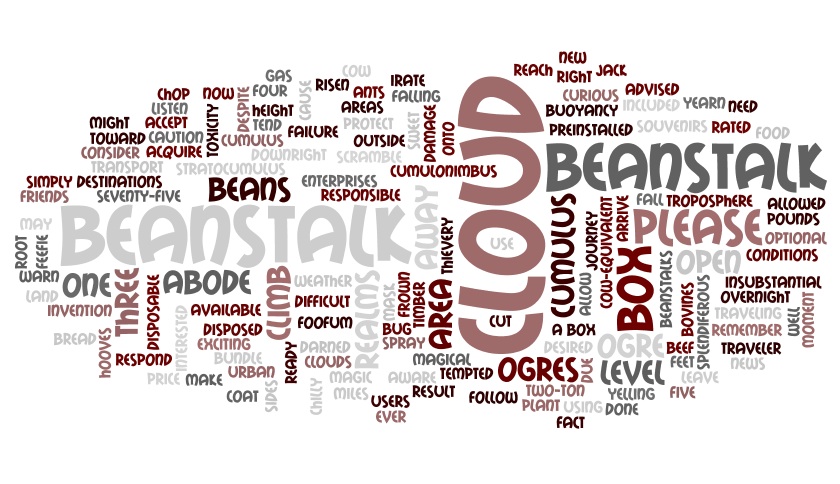
This is a flash fiction called “Beanstalk in a Box” which is a take on a reinvented fairy tale. Here beanstalks and Jack become a nineteenth century advertisement. I love that Wordle made cloud so big in a word cloud.

This is another flash fiction called “C: Terrible Consonant.” This is a surreal story about how the letter C is trying to kill me. I love how the word “ccccccCCCCCCcCCcCCCC” gets tossed at the bottom with a jaunty angle.

Give Wordle a try. So fun.

Tim Kane

Mine Your Inner Hurt

It doesn’t matter what sort of art you take up—writing, painting, music, cooking—you need to dig deep into whatever hurt you have. If not, then the art will be false and flimsy.

Salvador Dali pondering how to make himself insane in the office of Dr. Sigmund Freud from the film “The Death of Salvador Dali.”

I was watching the Next Food Network Star. On one episode, a contestant opened up about how he lived his childhood scavenging from garbage cans. This not only moved me, it showed how authentic he was. Another contestant would not open up. She obviously had some sort of hurt in the past. One that had shaped her way of thinking, yet she was afraid of going to that dark place. On that episode she was eliminated. Why? Because she didn’t connect with the viewers.

Be authentic with your art. If it doesn’t hurt, then you’re not doing it right. When you dig into your inner self, it’s like therapy. Only art comes out the other end. If you’re not willing to be brutally honest with yourself, then your work will feel false. It’s like the difference between a museum painting and a hotel painting. They both contain skill, but only one has passion.

Salvador Dali once toured a museum of paintings. After viewing them all, a reporter asked him which one he liked the most. Dali pointed at a door, freshly painted and still wet. He said there was more skill and passion in that door than any of the other paintings.

Tim Kane

The Seven and a Half Rules Writer’s Shouldn’t Need

Writing is a confusingly simple process of transcribing motives and plot points into physical form. Here are some tips.

Rule 1
You’ll need a pencil or a pen. Perhaps charcoal or crayons are your flair. Something to make the interior screams of your brain visible to the masses.

Rule 2
Paper is the choice of four out of five writers. However, don’t turn a cold shoulder to bark, bedsheets or cave walls. All excellent media.

Rule 3
Fortify yourself with stimulants. All that creativity can drain on your soul. I recommend chocolate and coffee. But that’s just me.

Rule 4
Sometimes you don’t feel like writing. You stare at the paper (or computer screen if you’re the techno-type) and nothing comes. Just pure white. Minutes slip by and your mind reels. Congratulations, you’re meditating. Some people pay big money for that kind of thing.

Rule 5
A diary or a journal can be a tremendous place to let your innermost turmoil spill on to the page. Just be sure to lock that book up. Wouldn’t want any of those secrets leaking into your writerly work.

Rule 6
Don’t forget to add characters. I hear those are important to your writing. Unless you’re genre, then ignore them and plot, plot, plot.

Rule 7
Set your story someplace interesting. Not a bathroom or a school. Maybe a jungle or the DMV waiting line. Those places are always chock full of suspense.

Rule 7 and a half
Be sure to have a compelling ending.

Write on fellow wordsmiths.

Tim Kane

Hate Club: Why I Despise Most Published Writers

I hate other writers. But let me be specific. I hate published writers. I don’t think I’m alone in this. It’s a jealousy thing. We all want that recognition. Not just ebook indie-publishing, but in the book store, everyone reading-your-book fame.

Realistically, this doesn’t happen very often. So the hate club builds members. We all channel our collective frustration at those published folks. We say, “I could do that,” or “That book isn’t so good.” When deep down, we yearn to be them.

Today I took a step closer to joining the other side. I’ve found an accomplice in the form of a literary agent. No guarantee of being published (or even selling well) but it’s invigorating to know that someone is basing their income and livelihood on your creative chops.

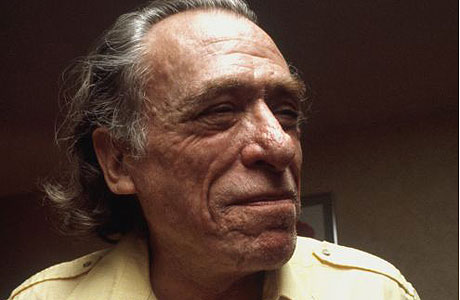
It reminds me of a Charles Bukowski poem I read once. I’ve scoured my poetry books, but can’t locate it again. It basically had Bukowski commenting on all the haters he had. Those that felt they could write a better poem.

In my search, I did run across this poem about writing. A good one for the Hate Club.

some suggestions

in addition to the envy and the rancor of some of
my peers
there is the other thing, it comes by telephone and
letter: “you are the world’s greatest living
writer.”

this doesn’t please me either because somehow
I believe that to be the world’s greatest living
writer
there must be something
terribly wrong with you.

I don’t even want to be the world’s greatest
dead writer.

just being dead would be fair
enough.

So what have we learned? Even success has it’s downsides.

Feel free to hate.

Tim Kane