I have to say, after only a day of downloading the vine app for iPhone, I am thoroughly addicted. Not heard of vine? Neither did I until I saw it in Wired Magazine. Vine is an app that lets you share 6 seconds of video on Twitter. At first I thought it might just be a video version of Instagram. But no. It’s far more.
It was the stop-motion animation aspect that brought it home for me. The interface is do simple, it’s ridiculous. Touch and hold the screen to record. Remove your finger to stop. So progressive taps will yield stop motion. Here are a few of my endeavors.
First I just wanted to animate something. I grabbed my daughter’s LPS and animated it into my coffee cup. Not terribly great, but it got the job done. Click link to see.
Next, I planned to drain my coffee cup of liquid to reveal a surprise. I call this Jaws coffee. Click link to see.
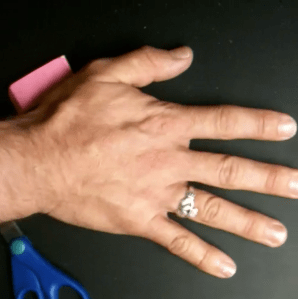
Finally, I thought about what would happen if I could turn my hand completely around. A trick I’ve always longed to do. Click link to see.
I accomplished nearly all these in about 20 minutes. Plus, now I’m constantly thinking of how I can do more. My mind’s stuck on Vine. Help, please.
Many readers know about fantasy fiction. Paranormal and supernatural tales are burning up the charts. Few people realize that there is a sister genre, nestled in the cracks of literature: Magical Realism.
Step into the Way-Back-Machine with me to my middle school. There, my Spanish teacher, a burly Brazilian bodybuilder, introduced me to the genre. It was no mistake, as the concept was born in Latin America. The concept of these stories is a perfectly normal, rational world, but with one magical element.
In magical realisms, the common and mundane are transformed into the amazing and unreal. It’s a genre of surprises. Time is fluid, pulling the reader into the unusual.
Need some examples? How about Like Water for Chocolate? The novel by Laura Esquivel shows the domestic life of women in a small town. Yet the protagonist, Tita, can’t achieve happiness because of her mother. She imbues her emotions into the food she makes. Those that partake of her delicacies, enact those emotions for her. For example, Tita suffers from forbidden love, and she infuses this emotion into a wedding cake. The guests to eat the cake, all suffer from severe longing.
Here’s a clip from Tita’s magical meal.
Another perfect example is Franz Kafka’s Metamorphosis (1912). Here an office worker awakes one day to discover that he’s been transformed into a cockroach. His family must then deal with his new insect form.
A comic adaptation of Metamorphosis that I adore.
Many movies also fall into the magical realism arena, such as: Being John Malkovich, Big Fish, Black Swan, City of Angels, Eternal Sunshine of the Spotless Mind, and It’s a Wonderful Life.
Many fantasy writers scoff at the idea that this is a unique genre, saying that magical realism is simply another name for fantasy fiction.
Gene Wolfe stated, “magic realism is fantasy written by people who speak Spanish,” and Terry Pratchett said magic realism “is like a polite way of saying you write fantasy.” Yet there are differences. Most notably the use of
antinomy, or the simultaneous presence of two conflicting codes. When you read fantasy, there’s an internal logic, rules, to the universe. In magical realism key events have no logical explanation. Why can Tita infuse food with emotion? There is no reason. She just can.
It’s this element that so fascinates me. In a world where every motivation needs to be explained and teased apart, it’s a relief to say it happened just because. Magical realism includes events that don’t fit into any world, anywhere.
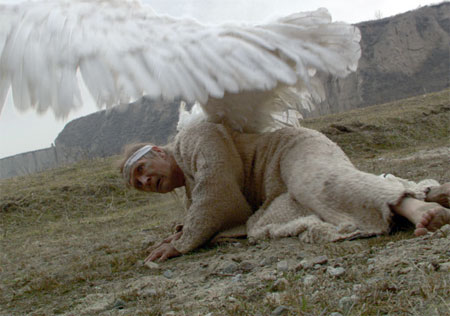
Gabriel García Márquez, a Colombian writer, uses of magical realism to blend reality and fantasy so that the reader can’t tell the difference. In his story “A Very Old Man with Enormous Wings”, an angel falls to the Earth because of a violent rainstorm. The reality of the situation is never doubted. Although the angel is a magical being, he is treated in a realistic way. Here’s the start to the story.
A Very Old Man With Enormous Wings: A Tale For Children
Gabriel Garcia Marquez
On the third day of rain they had killed so many crabs inside the house that Pelayo had to cross his drenched courtyard and throw them into the sea, because the newborn child had a temperature all night and they thought it was due to the stench. The world had been sad since Tuesday. Sea and sky were a single ash-gray thing and the sands of the beach, which on March nights glimmered like powdered light, had become a stew of mud and rotten shellfish. The light was so weak at noon that when Pelayo was coming back to the house after throwing away the crabs, it was hard for him to see what it was that was moving and groaning in the rear of the courtyard. He had to go very close to see that it was an old man, a very old man, lying face down in the mud, who, in spite of his tremendous efforts, couldn’t get up, impeded by his enormous wings.
Frightened by that nightmare, Pelayo ran to get Elisenda, his wife, who was putting compresses on the sick child, and he took her to the rear of the courtyard. They both looked at the fallen body with a mute stupor. He was dressed like a ragpicker. There were only a few faded hairs left on his bald skull and very few teeth in his mouth, and his pitiful condition of a drenched great-grandfather took away and sense of grandeur he might have had. His huge buzzard wings, dirty and half-plucked were forever entangled in the mud. They looked at him so long and so closely that Pelayo and Elisenda very soon overcame their surprise and in the end found him familiar. Then they dared speak to him, and he answered in an incomprehensible dialect with a strong sailor’s voice. That was how they skipped over the inconvenience of the wings and quite intelligently concluded that he was a lonely castaway from some foreign ship wrecked by the storm. And yet, they called in a neighbor woman who knew everything about life and death to see him, and all she needed was one look to show them their mistake.
Who says self-help needs to be serious? When you’re Will Powers, you can spout affirmations and amuse at the same time. Take a gander at a few of the nuggets that will transform you into a better person.
You are an important person. a rare individual. a unique creature. there has never been anyone just like you and never will be. you have talents and abilities no one else has. in some ways you’re superior to any other living person. the power to do anything you can imagine is within you when you discover your real self by practicing a few simple laws of success.
Curious? This song (as well as the Will Powers persona) is the brainchild of New York photographer Lynn Goldsmith. In 1983 she released an album titled “Dancing for Mental Health” with the lead song being “Adventures in Success.” The song doled out psychological advice using Lynn’s electronically tweaked voice. The goal was to make her sound androgynous. Everything was set to electronic dance music.
“I used a vo-coder to be Will. The point was to make my voice sound as if I could be either male or female – where will comes from is for both sexes,” she says. “It’s the one and only comedy self help dance record made by someone who is living proof that where there is Will, there’s a way….. take from it as you Will.”
Now, ready yourself for the full experience:
When Lynn wasn’t expounding on the virtues of self-love, she was a damn good photog. She snapped shots of everyone from the Beatles to Michael Jackson.
Ozzy Osborne
Michael Jackson
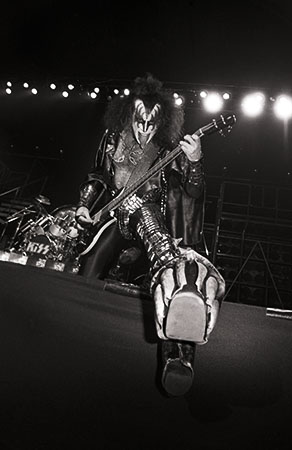
Gene Simmons from Kiss
I will always cherish the advice of Will Powers. He/she always cheers me up when the song pops up on my iPod. Under the Will Powers persona, she could give Stuart Smalley a run for his money:
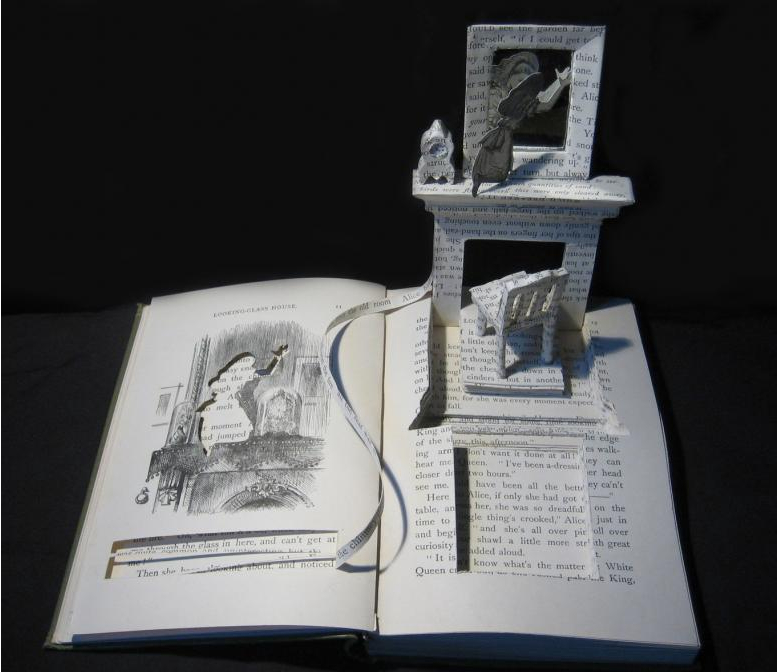
Who knew vanity could have such a backlash. I’ve always felt mirrors held another world (very Through the Looking Glass of me). As a kid I pressed my face up to the glass, wondering if I could push through.
Su Blackwell’s Book-cut Sculptures (Alice: Through the Looking Glass)
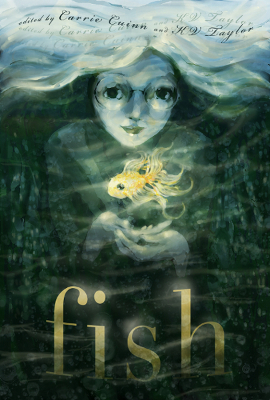
Then I chanced upon the Fish anthology, which offered a chance to realize these dreams (even if in flash fiction form). The goal of the book is creating a dream-like world where surreal and literary collide. No genre limitations, just a single theme: Fish. That’s a slippery topic.
My story concerns a gentleman who’s a little too obsessed with his own reflection, even to the point of ignoring his lovely wife. His reflections morphs, becoming fish-like. It’s intentions are not so pleasant. THe glass cracks and as the fish creature attempts to burst through.
I was inspired by a myth read in Imaginary Beings by Borges concerning how fish plan to take over the world, through mirrors. Check out this excerpt from the myth.
“Both kingdoms, the specular and the human, lived in harmony; you could come and go through mirrors. One night the mirror people invaded the earth. Their power was great, but at the end of bloody warfare the magic arts of the Yellow Emperor prevailed. He repulsed the invaders, imprisoned them in their mirrors, and forced on them the task of repeating, as though in a kind of dream, all the actions of men. He stripped them of their power and of their forms and reduced them to mere slavish reflections. Nonetheless, a day will come when the magic spell will be shaken off. The first to awaken will be the Fish.”
Want to read more? Check out the digital version. (Amazon Kindle version) But wait, this astounding anthology is also available in print version (also Amazon).
Crowds scare me. Seriously, if I had to list my top ten fears of all time, getting sucked into a crazed mob would probably rank number one. The scariest scene from the film “Natural Born Killers” isn’t all the horrors Mick and Malorie dish out. Nope. It’s when the prisoners mob the warden and tear him apart. Frightening.
Ninety-five people died in a crush at a soccer match at Hillsborough stadium, in Sheffield, England, in 1989. Taken from A NewYorker article.
Whenever I see a mob of people I get nervous. Mobs rob us of individual thought. People do things they’d never do when thinking rationally. Now, Scientists are beginning to understand why. People have known all along that collective swarms act differently.
Aristotle stated quite succinctly that “The whole is greater than the sum of it’s parts.” So then swarms of creatures function as more than just a bunch of individuals. Take the locust for example. It’s just a grasshopper. Plain and simple. But under certain conditions is transforms into the plague that is the locust.
A school of bigeye trevally in Malaysia from a NY Times article. Photo credit CARL ZIMMER Published: November 13, 2007
Iain Couzin, from the Collective Animal Behavior Lab in Princeton, recently discovered that locusts don’t work together out of a common goal. Nope. Each one wants to save its own butt. When the locusts get too close to each other, the nip at their abdomens. Unresponsive locusts become food.
It makes me wonder if human mobs react similarly. When the crowd hits critical mass (a certain density of people) folks bump and elbow you. Ultimately the individual gets pushed in the direction of the mob. Well, you get pushed or you get trampled.
Couzin discovered that three simple factors control swarms of creatures: Alignment (the desire to move in the same direction), Attraction (trying to stick together in a group), and Repulsion (even sticking together, creatures still want to maintain a certain distance).
You can see this everyday while driving on the freeway. All the cars have the same direction (of course, the road takes us the same way), yet there exist clumps of cars. Drivers are naturally attracted to other cars. If you’ve ever been tailgated you know this. The tailgater sticks close to you. If you switch lanes, the tailgater speed up to the next car. Repulsion plays a part to keep the drivers from crashing (usually).
Animal swarms do this naturally, typically as a defense. If the alignment is not that strong, the animals swim every which way. A tighter alignment, produces that doughnut shape we see in fish. The tightest alignment creates flocks of birds that veer and swoop as one. The birds aren’t a super-concious being (as some believe). Each bird is simply following the cues of the nearest dozen or so birds. Sticking close, but not too close. Amazingly, when a hawk heads toward the swarm of birds, they seem to react as one. Even the birds farthest from the hawk (that could never see it) veer away.
This amazing video shows starlings at Otmoor shifting and flying as one.
Want to learn more, check out the article from Wired.
Now, just keep to your feet in crowds, otherwise you’ll end up like the poor locusts.



 On the third day of rain they had killed so many crabs inside the house that Pelayo had to cross his drenched courtyard and throw them into the sea, because the newborn child had a temperature all night and they thought it was due to the stench. The world had been sad since Tuesday. Sea and sky were a single ash-gray thing and the sands of the beach, which on March nights glimmered like powdered light, had become a stew of mud and rotten shellfish. The light was so weak at noon that when Pelayo was coming back to the house after throwing away the crabs, it was hard for him to see what it was that was moving and groaning in the rear of the courtyard. He had to go very close to see that it was an old man, a very old man, lying face down in the mud, who, in spite of his tremendous efforts, couldn’t get up, impeded by his enormous wings.



 Tim Kane Books