Chapter 1
This is a Young Adult story tackling issues of self-harm and suicide. It is intended for teen readers or older.
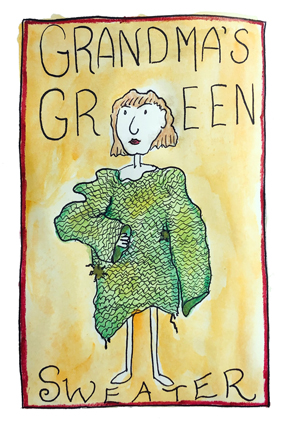
People never talked about him dying. Instead they got all weepy and switched subjects. As if avoiding the topic would somehow make everything smiles and sunshine. It didn’t. When someone disappeared, it’s like unraveling a sweater. Cut one strand, and the whole thing fell apart.
Kassandra caught a glimpse of her tangled hair in the mirror of Mom’s dresser. She looked frayed and disconnected—a lump of useless yarn who once was a girl.
Shaking her head, she scrounged through the cluttered bottles of nail polish, searching for a wadded up bill. Mom had to be good for a ten or twenty. No way was she going to borrow from Auntie Jo. Not again. Just a couple of new killer tops would make her grungy jeans work. School started tomorrow and Kassandra dreaded it. Kids never talked to the new girl. Especially the one with a lousy wardrobe.
The dresser reeked of cigarette smoke. At least if she found some money, it’d be one less dollar Mom could spend on cancer sticks. Kassandra’s fingers brushed a scrap of paper. Snatching it, her fishnet glove snagged on a bottle, sending the nail polish tumbling to the carpet with a clunk. The top popped off and red liquid oozed onto the café au lait carpet.
She scrunched her face. So not how she planned it. Kassandra eyed the crinkled paper in one hand. A lousy receipt.
Morning light shimmered off the puddle, already soaking into the carpet. Kassandra looped a blond curl over one ear and, yanking a handful of tissues from the box, dropped to the floor. Her bare knees brushed the carpet, the holes in her jeans from actual wear and tear and not fashionable rips. She so needed a new pair.
“Kassandra?” Auntie Jo’s voice glided down the hallway. “You coming, sugar?”
Kassandra’s heart kicked into high gear. She was supposed to be getting ready in her own room, not rummaging through Mom’s. “Sure, in a sec.”
The sticky bottle of nail polish went in the trash. Mom wouldn’t miss it. She had enough shades to create her own color chart at Home Depot. Kassandra dabbed at the spill with a wadded up tissue and then sat back to inspect the stain. The red blob was a stop sign smeared onto the carpet. Kassandra dumped a bottle of nail polish remover on the spot, sending up a wave of bitter fumes. The splotch, now pink, still drenched the carpet. She dragged over the throw rug by the bed and tossed it across the stain. Good enough.
Kassandra dashed down a hall lined with photos of unknown relatives and flew through her door just as Auntie Jo rounded the corner. The woman wore an Egyptian shawl draped over a wide body. Her skin was a rich brown with copper undertones. A purple scarf reigned in her tightly curled afro.
“The morning is young and thy chariot shan’t wait forever.” Auntie Jo waved one arm as if she were some kind of royalty.
It was another one of her past life kicks. This week must be the Queen of Sheba or Cleopatra. Auntie Jo was crazed for all things supernatural.
“I need to grab something.” Kassandra pointed a thumb over her shoulder.
“Very well, I shall adjourn to the veranda.” Auntie Jo whipped a corner of the shawl over one hefty shoulder. Not actually anyone’s aunt, she and Mom met in Kindergarten and had been friends forever.
Kassandra’s room used to be Auntie Jo’s den. Shelves lined the walls, each jammed with books on the occult and literature. This stranded the bed in the center. Cardboard boxes, reminders of her life in Seattle, acted as a nightstand and a small table. An oversized trunk served as a combination dust trap and makeshift closet.
She plucked a chipped tea kettle off a shelf and shook it. It made a hefty chuh-chink sound. Still filled with change. Stuffing a hand inside, Kassandra felt around until the corner of a bill teased her fingertips. Only a five. Not going to cut it. Since Mom had trashed Kassandra’s whole wardrobe back in Seattle, she needed a new everything.
Upending the kettle, she watched a waterfall of silver and copper pour into her beat up crocheted purse. Kassandra stopped midway and tested the bag. It felt like an iron had been dropped in there. The purse sagged in the center where all the coins collected. Welcome to bag lady chic.
Auntie Jo waited outside by the “chariot”—a ’73 blue Beetle. Kassandra tried to slip in, but her knees banged the glove box. The passenger seat was permanently ratcheted forward. Once she managed to sit, a spring poked her butt. At least Kassandra was teeny. Auntie Jo, built Amazon tall, sported the weight of about three or four warrior maidens. She had to shoehorn herself in.
Once inside, she eyed a picture stuck to the dash with yellow tape. Sun bleached and creased, the photo showed a young black man with a broad smile—her son Ronald. Auntie Jo kissed two fingers and touched the picture. Kassandra knew he’d died, but no one wanted to fill her in on the details.
Auntie Jo cranked the ignition. “Oh blessed mother, let us find the gear.” Ka-Chunnng! She rammed the stick shift down and the chassis vibrated. The car bucked but finally dropped into first.
“Amen.” She backed the car down the driveway.
The Beetle traveled for a grand total of four minutes. Arroyo Grove was just a blip on the California coast. Kassandra shimmied out of the car in what passed for a downtown. A salty gust blasted a curl of hair right into her eyes. In Seattle, everything had been stillness and clouds. But Arroyo Grove sat right on the Pacific Ocean. Kassandra could hear the crash of the waves, even a mile in from the beach.
Pulling the hair away, she trailed Auntie Jo. The trees along the sidewalk swayed, buffeted by the sea breeze. A tiny brown bird hopped from branch to branch, chirping at the wind.
Kassandra escaped into the Psychic Mind bookstore. Smells competed for attention—scented candles, patchouli oil, cedar boxes. She browsed, biding time until they could swing by The Retro, the only place in Arroyo Grove with a decent collection of secondhand clothing.
Meandering through the book section, her fingers brushed titles like Teen Witch—nah, she wasn’t the broom type—A Handbook of Runic Magic—that was way too German—and The Tantric Sex Guide—sadly, she had no one to get tantric with. A book of romantic poetry caught her eye. The table of contents contained mostly dribble, one step above Hallmark, but the second page listed a Keats poem. She yanked out her spiral notebook. Transcribing wasn’t stealing. Not technically. Besides, it was Keats. If he ever had a copyright, it expired a century ago.
She tossed her purse over one shoulder, but the weight of the coins swung it back. Thwack. It knocked into the bookcase, sending a display of oversized cards tumbling to the floor.
Kassandra knelt to gather up the mess of Tarot cards. She’d seen Auntie Jo use them all the time to predict the future for her clients. The whole deck lay face down, except for one card. She plucked it from the pile. The illustration showed a skeleton dancing with a scythe, one word printed on the bottom: Death.
A coppery taste filled her mouth as if she were sucking on a penny. Hot breath tickled the hairs on the back of her neck.
Then a voice whispered in her ear.
Kassandra.

 There is a place, so dominated by nativity scenes, that the you often feel like the tiny figurines are watching you. I am tormented by this idea. Irrational fear or no, it haunts me.
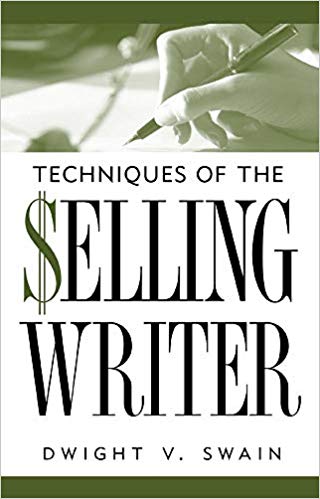 I’ve known about Dwight Swain’s work for forever. How could I not? Everywhere I turn I bump into the Goal, Conflict, Disaster model or Motivation-Reaction Units. The man knows how to explain good fiction. But when I hunkered down to finally read his book (Techniques of the Selling Writer) I was amazing no one has touted his outstanding story outline technique. All I ever see for story structure out there is the Joseph Campbell Hero’s Journey. Which is great in it’s own right. But more often than not, I write a story that doesn’t quite fit the Hero Journey model and then I’m left stranded.
 My story, Deadlock, has just been published by
  Tim Kane Books