A User’s Guide to Surviving The Comic Con Exhibition Floor

I’ve been attending the San Diego International Comic Con since it was just a local shindig that peddled actual comics. Now the convention sprawls all over the convention center, pulling more Hollywood bigwigs than actual comic collectors.

Rarely do I attend the panels. The last one I did see was for the cast of Buffy the Vampire Slayer (TV show). This was probably the second or third season. Way before they became uber-popular. The cast looked shocked when folks asked questions like: Who do you think would win in a fight: The Thing or the Hulk? (Seth Green was the only one to sport an answer).

Now, these panels are an experiment in frustration. The lines are ridiculously long and that doesn’t even guarantee a seat. Plus, everything is streamed live to the web. Why not Goggle it? You’ll get a better view and not have to wait for eight hours (no exaggeration).

Hawkeye and Ms. Marvel

I content myself with hitting the exhibition floor. What follows are some tips that may help you navigate the crowds and survive the tumult that is Comic Con.

Bring a Suitcase
If you’re like me, you come to shop. The geeker the shopper, the bulkier the purchases. (That Galactus figure won’t fit in the overhead storage compartment.) When the day is over, you’ll need to haul all this swag back to your car or hotel, which is most likely many blocks away. Did I mention that this convention happens in July in San Diego? The heat and humidity conspire to make each passing Klingon smell like an actual Klingon. So a suitcase with wheels will really come in handy.

Don’t Bring a Suitcase
Those wonderful security folk who man the doors won’t let you on the exhibition floor with your rolling suitcase. So now you’re saying: “Why the heck did you make me tote this suitcase down here anyway?” I can answer that in two words: Coat Check. There are multiple locations where you can store your suitcase for the day. They cost a few bucks (so bring some singles), but it’s well worth it. Often I return and stuff my suitcase with swag before launching back into the exhibition hall. It costs each time you pull your suitcase out, but it’s worth every penny. Just don’t lose your slip, or you won’t get your luggage back.

Deodorize
Comic Con is funky on many levels. Mostly it has the unwashed comic geek, fresh from his basement lair. And all these folks are crammed into narrow aisles. Douse yourself with something that smells nice. Seriously. I often walk through clouds of stink as I traverse the halls.

Bring Snacks
Yes, there are vendors selling food, but it’s overpriced and the lines are long. (I once saw a line that stretched fifty yards. I was convinced this was some famous person doing a signing. Nope, just the line to Starbucks.) Throw some snacks in a backpack and much as you go. When it’s lunch time, I’d forge into downtown San Diego rather than eat the convention fare. You have less crowds and better eats.

Take Plenty of Pictures
The best part of Con are the folks in costume. I once saw a group dressed exactly like the cast from Indiana Jones, The Last Crusade (they even had one fella dressed up like the old knight). Or then there was the fully functional Transformer costumes. I’ve found that the best place to see and photograph these folks are in the main hall right outside the exhibition hall. It’s less crowded there and you’re able to snap a photo. Don’t be shy. These people want to be photographed (otherwise they wouldn’t dress up). Just ask politely.
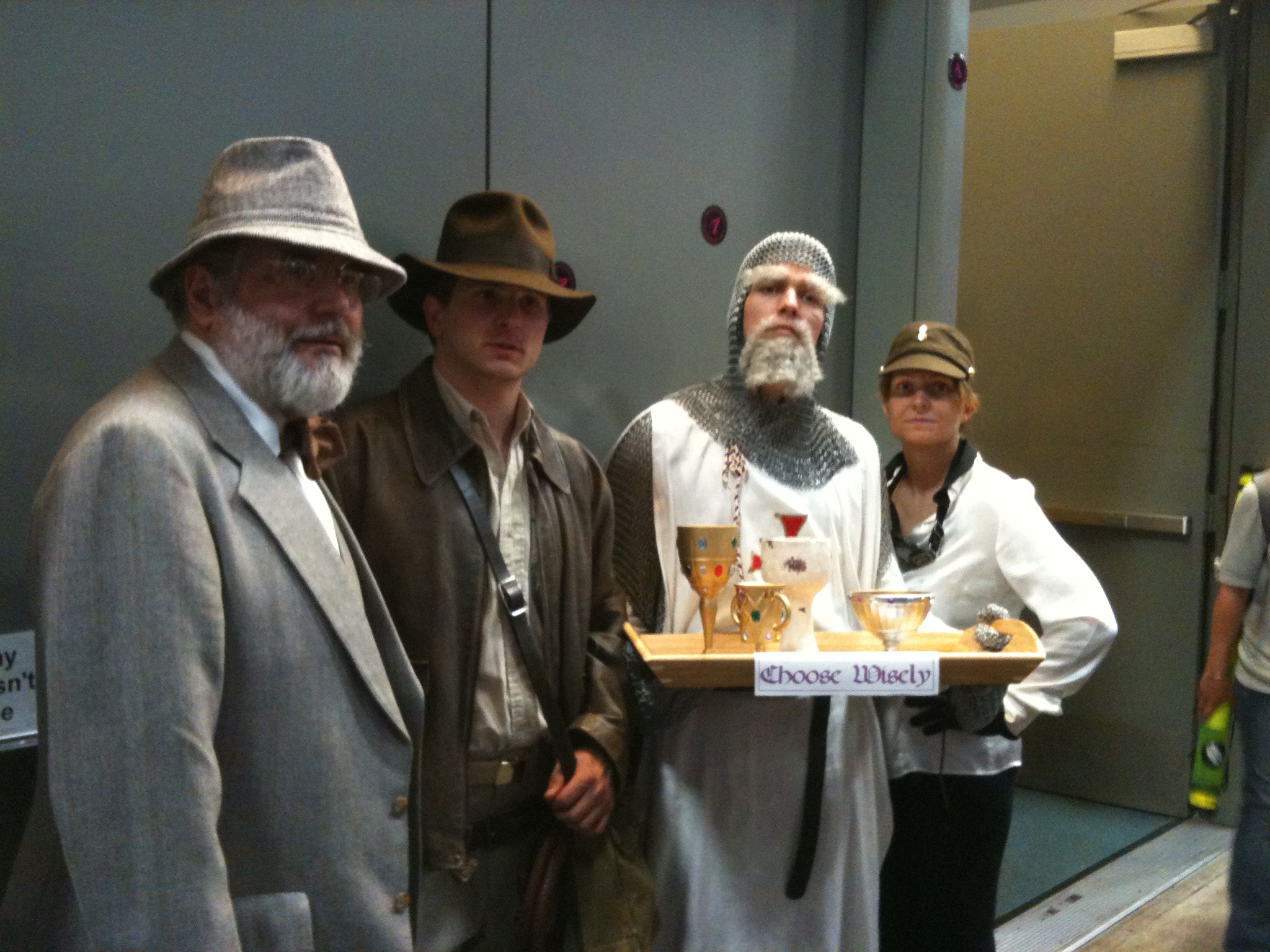
Costumes from the Last Crusade

Good luck folks and remember, your poster tube is not a lance. Please don’t stab me with it.

Tim Kane

Should Young Adult Books Be Rated for Content?

I can see the issue of rating books from two angles. As a teacher, I have to be damn careful what YA books I bring into my sixth grade classroom. Life would be a whole lot easier if I could glance at the rating and determine if it’s even worth adding. Currently, I only add books I’ve personally read and can vouch for. This takes a bit of time. I read slower than ketchup dribbles from a bottle.

Then there’s the writer in me. Would slapping labels on books act as a deterrent to some books with higher ratings (or an attractant, depending on the kid). Is this a form a censorship, as some have said? I disagree with the last point. Just labeling the product doesn’t censor it. Mostly, it limits access.

I certainly don’t think that books need to fall into the categories of movies, where readers will have to pull out an ID to purchase the novel. I would see the system more like what exists now for comic books, video games, and television. An advisory label. That doesn’t bother me too much.

One thorny issue to consider, should this new rating system come to pass, is this: what about indie writers? Would they self rate? Would some rating board come into play? Unlikely on the second count. Who would fund such a board and how could anyone rate the thousands of books that come out daily? That leaves self rating which also means that the authors could play with the rating, raising or lowering, to suit their tastes. Hey, what’s to stop an author from republishing the book with a lower rating if the sales didn’t click the first time? Nothing, really.

This, in itself, points out the ridiculousness of any rating system. In this world of instant publishing, people could circumvent it and manipulate any rating system easily. Even webpages that are supposed to have adult content only ask the user to click OK if they’re old enough. Like that stopped anybody.

What got the ball rolling on this recent round of “rate these books” is the novel Fifty Shades of Grey by E. L. James. Although this is an adult novel, it started as a fanfiction for Twilight, having Edward and Bela take up a quite different relationship than Stephanie Meyers had intended. When asked to remove the fanfiction from the fan site, James simply posted it onto her site. After reworking the book and changing the characters, she published it (to remarkable success).

The trouble is, it’s still linked to Twilight (no officially, mind you) and the novel attracts droves of young adult readers. In fact the movie will most likely garner an R rating, thus preventing many fans from seeing it. So should these fans even be reading it? Maybe not. But would a rating system really stop them?

Tim Kane

The God of the Lost

Worship me with your feet.

That’s what the God of the Lost wants. A creation of Stephen King, this deity drops down to earthly levels in the book The Girl Who Loved Tom Gordon. I have said before that this is one of my favorite books by King. Not only have I read it seven or eight times, I even wrote a paper on it for my Masters in English.

One interesting aspect of the book is King’s take on religion. The protagonist, Trisha McFarland, becomes hopelessly lost in the woods. At a clearing, she meets three gods, each offering a sort of salvation. There’s the-god-of-Tom-Gordon (the one the pitcher points to when he makes a save). This god is too busy to help a child lost in the woods.

Then there’s the sub-audible. This, according the Trisha, is a creation of her drunk father. The sub-audible is that noise just below hearing. Like the sound of the refrigerator turning on and off. People don’t notice it. But it’s there. This version of god is just behind the skin of the world. Always humming. It can’t really help because it’s too weak.

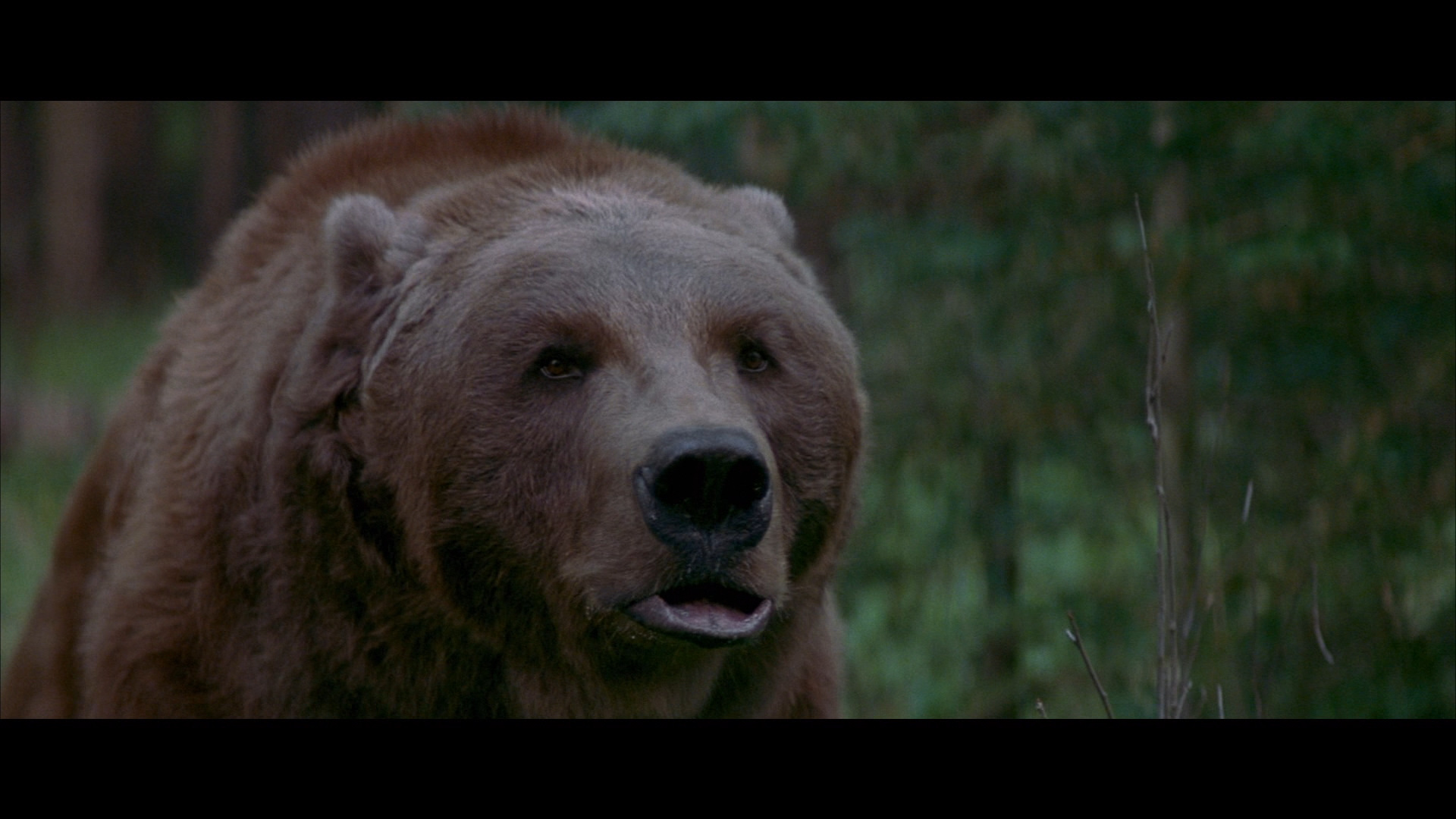
Then there’s the God of the Lost. This creature has a face composed of living wasps. Plump, ungainly poison factories. It feeds off Trisha’s fear, allowing her to live so she can ripen. Later in the novel, Trisha finds a road and is almost to safety. Then the God of the Lost appears in the form of a possessed bear.

I snatched this from the movie, The Edge, starring Anthony Hopkins. It was the first bear that popped into my head.

I like this portrayal of the monster. Rather than invent some horrific creature, the reader only glimpses the edges off it in the same way as Trisha. We know the terror that lies behind the empty eye sockets of the bear, squirming with maggots. Yet most of the image is left for us to fill in with our minds.

True monsters need to be this way. Only ten-percent written, and ninety-percent in the reader’s head.

Tim Kane

Gift Wrap the Wrapping?

I recently bought a Nook for my mom on Mother’s Day. I was pleased with the product, so I thought, why not. Mom’s an avid reader. This could bring her into the 21st century. As an impulse, I opted to also purchase the gift bag. It was a whopping one cent.

The green bag on the left was the one I ordered. It was gift wrapped, not the actual Nook.

You should know that Mom loves gift bags. It’s her wrapping of choice. Every Xmas as a kid, I was tasked with wrapping all the gifts (except my own) because I was mathematically minded about the wrapping paper. I could literally wrap anything. Mom isn’t as spatially inclined. When she wraps, it’s in a bag with tissue paper.

Now, back to the Nook. As I was checking out, I clicked the “gift wrapping” option. It cost only $3.50 and I figured it might look nice and save some time.

So get the Nook in the mail a few days later. No wrapping, but honestly I was too excited about setting it up, I hardly noticed. Then the gift bag arrived later and, you guessed it, it was gift wrapped. Really Barnes and Noble? That’s what you thought I meant by gift wrapping?

It bugged me enough that I emailed the complaint department, asking for a refund on the price of the gift wrapping. Here is their standard response.

Thanks for contacting us. You should receive a response within 12 to 24 
hours, and we appreciate your patience.

A week went by. I sent an email back asking, facetiously, if they meant 12-24 hours or days. This got an email back:

Thank you for contacting Barnes & Noble regarding the order #XXXXXXXXX. 

The order was shipped on 05/07/2012. The carrier's tracking detail shows
that it was delivered as follows: 

Delivered On:
Wednesday,  05/09/2012 at 5:36 P.M. 
Left At:
Front Door

Of course it was delivered. How else would I know that you gift wrapped the bag? Seriously. If not for the meagerness of the cost in question, I’d pursue this farther. Though being a big corporation, I doubt I’d make any traction. This is where I have to give Amazon props. A few years ago, I was given two of the same gift. I was able to successfully return one to Amazon and get a credit.

I’m still waiting for my $3.50 back on the botched gift wrap.

Tim Kane

What Alignment Are You?

I was (and probably still am) a massive Dungeons and Dragons geek. The game was a turning point in my life. I recall trekking out to a summer school class as a twelve or thirteen-year-old and tripping out on the tiny lead figures and the various multicolored dice. I even adored the various statistics and tables (these satisfied the the inner math nerd in me). Mostly, role-playing sparked a love of imagination that would eventually lead to writing. After all, most of the game took place between my ears.

One aspect of the game that stuck with me were the alignments. Anyone who’s played knows what I’m talking about: Lawful Good, Chaotic Neutral. That sort of thing. These are pretty simplistic vectors of personality, but they could easily be applied to the characters in my stories. Moreover, giving my protagonist an alignment would actually make me aware of his motivations and action in the narrative.

I created my own (quite basic) alignment system for story characters. Instead of good and evil, I opted for selfless and selfish. I feel they account for many of the same behaviors. I thought about replacing lawful and chaotic with rational and emotional, but they didn’t have the same usefulness. After all, knowing a character is chaotic means he will take far different actions than an emotional character. (Note: I base my pronouns on the manuscript I’m working on at the time. Right now it has a male protagonist. The previous one was female. Feel free to change the he’s to her’s.)

Alignments

Lawful Alignments

These alignments prefer to follow the rules. You all know these types. If there’s a stop sign, they stop. On the other hand, you might consider this to mean rational or scientific. These types of folks would break a law if they considered the law to be irrational or nonsensical.

Chaotic Alignments

This is the domain of the anarchist. The “rock and roll all night and party every day” sort. They not only break rules, they yearn to live outside conformity. They dress different. They take risks. This could also apply to overtly emotional people. The ones that see a flash of light and jump to UFO rather than weather balloon.

Selfless Alignments

The bumper sticker reads: “Save the Whales” or “Visualize World Peace.” Bleeding hearts please line up here. The degree of selflessness may vary. Perhaps it’s just picking up some trash. Maybe it’s saving animals from abuse. All the way to obliterating nuclear weapons from the world. Bottom line, these people think more of others than themselves.

Selfish Alignments

The “me” generation. These folks think about numero uno: themselves. Whatever they can do to better their lot in life. They will steal or hurt others to get what they need. However, they often have a high level of confidence because who matters most? Why themselves, of course.

Alignment Breakdown

Lawful Selfless

The perfect union of law and order. This is your basic Superman or Captain America. This type of person works hard to maintain the greater good. He trusts authorities. After all, those people reached their jobs because they were so earned it, right? Othello might have started here before he fell.

Lawful Neutral

This person is on the split between selfish and selfless. He loves rules and logic. I picture him as a scientist who’s not so much interested in helping others or himself, but fascinated by the laws and puzzles he can solve.

Lawful Selfish

The corporate tycoon who finds the loopholes in the system. Is it really breaking the law if those loopholes are there? This might also be someone who is very calculating and organized in his plans. He gets what he wants because he’s patient and meticulous. He ultimately loves rules because he can subvert and control them.

Neutral Selfless

You want to stop that new toxic waste plant from being built, but that might mean breaking a few laws. You carefully weigh all the options, choosing what you think might be the best for everyone. You can break the rules if it justifies the end and helps people.

Pure Neutral

There are two options here: Buddhist or indecisive. Either you realize that there is no self or law and you must let things be, or you simply can’t make up your mind on anything.

Neutral Selfish

This is pure selfishness. This guy only thinks about himself. He don’t want to get caught, so he heeds the law when needed, but circumvents rules if they stand in his way. It’s all about what others can do for him.

Chaotic Selfless

This is your basic vigilante. This guy wants to help, but prefers to work outside the law. Batman and Spider-man fall into this category. Both want to help people, but they realize that following the rules will only let the bad guys escape.

Chaotic Neutral

Pure chaos. An anarchist. He wants to abolish all laws and rules and just have some fun. This fella would not be a team player. In fact he probably doesn’t think much about anyone and lives totally in the present moment.

Chaotic Selfish

Your basic criminal. This guy wants it all and he wants it now. He prefers to break the rules. It’s a rush to flout the law and get away with it.

Do any of these alignments describe you? How about any characters in books you’ve read? Consider this the next time you read or write a book.

Tim Kane