Imagine a vampire as a head with gigantic ears, that soars toward victims to devour blood and inflict curses. While doing research on Camazotz, a Mayan death bat, I stumbled on one of the most bizarre vampires I’ve every heard of. The chonchon.
The legend hails from the only native people that remained independent in South America. The Mapuche not only resisted the Incan Empire, but also the Spanish. Their name derives from Mapu (of the land) and Che (people).
On version of the chonchon story has that when a person dies, the ears will grow to an enormous size, and it will year away from the body.
I found this picture a Spanish site about the Chonchon.
A more complete myth involves a kalku (a sort of mythical sorcerer that works with wicked spirits). The Kalku transformed into the chonchon only on moonless nights. The sorcerer uses a magic cream along the throat (this somehow helps separate the head from the body). This version of the creature has feathers and talons and the ears serve as wings. Only other kalkus can see the chonchon.
There are more sub-types of vampires than I care to count. Just when I think I have the list narrowed down, more pop into my brain. So, continuing along the vein of the last post, here are some other vampire options for your wish list.
The Punk Vampire
Although there are multiple vampires that touch on this category, only one truly embraces it. Spike. The bit character that exploded into the most interesting aspect of Buffy the Vampire Slayer. The attitude here is Sex Pistols meets Lestat the vampire (in the rocker sense). Spike is the sort of vamp that just wants to have fun. I recall one time where he said he wouldn’t want to kill all the humans, then there wouldn’t be anything fun to do.
Biker Vampires
A cousin of the punk vampire is the biker vampire. Here you have the painfully 80’s and stylish Lost Boys vampires led by David (Kiefer Sutherland). I mean, is there one of them that doesn’t have an earring? But they do exude a certain level of cool. The I-can-do-whatever-I-want vampire.
Bordello Vampires
Despite a bar populated by down and dirty bikers (the human variety) it’s the female vamps you have to fear. These girls will tear you apart (literally). The upshot: as this sort of vampire, you get killer looks most of the time. Downside: You get damn ugly fast in the killing spree. Check out From Dusk Till Dawn.
Mafioso Vampire
Actually, there are multiple choices here. The first is from the one season only TV show, The Kindred: The Embraced—a show that had different species of vampires all fighting for control of the city. There was one boss vampire (Prince Julian Luna) and all the other clans vied against each other. The series was based on a role playing game (and a LARP version) called The Masquerade.
As great as this series was, to see real vampire clans (both the Euro-trash suits and the enforcers) you have to turn to the Underwold series. What’s better than gun toting vampires? Gun toting vampires that duke it out with werewolves.
Ninja Vampires
These vamps sneak around in skin-tight black speedos and wield swords. They’re about as badass as you can get and still be a vampire. The nemesis of the Blade series, these ninja vamps make their appearance in Blade II (where our cuddly damphyr has to team up with them). Check it out.
That’s all so far. Plenty more vampire types out there. But that’s enough bloodletting for now.
With so many choices for vampirism these days, the decision for immortality can be a daunting one. But stay with me, curious reader, as we delve into the murky world of the fanged undead. Stroll the aisles and choose the form of blood-lust that most appeals to you.
Sparkly Vampire
Yes, this the Twilight variety. Able to saunter around in daylight (looking eternally glum in the process), this vampire has some great features to consider. Sunlight has no negative effects. Plus, you become a disco-ball in the blazing sun. Bonus. Add to that the special ability you get by going vampiric (prophecy, telepathy, tracking) and you’re a vampire that’s going places.
God-Fearing Vampires
Good old fashioned undead who shriek in the sight of the crucifix. Nothing beats the original. People often debate what happens when the cross-bearer or vampire isn’t Christian. Stop it. You’re complicating things. Just accept that crosses make the vampire flesh sizzle like bacon on a griddle.
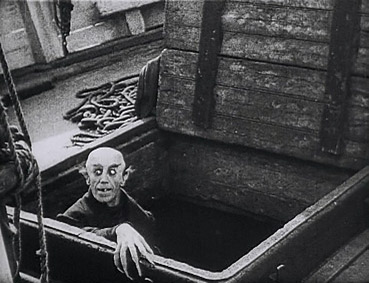
Nosferatu
Also known as the “Ugly Vampire.” These vamps often have chrome domes and pointy ears. But hey, looks aren’t everything. You get super long fingers, nifty German-Expressionist shadows, and the ability to cause disease. Who’s missing their hair now?
And now, new and improved, Nosferatu with hair. Check out the Radu model from Sub Species.
Public Vampire
Maybe you don’t want to spend eternity in the shadows. Maybe you want to party down with your blood-sucking self. Why not opt for the public vampire. One that’s been outted from the coffin.
True, there are all those fangbangers to deal with. Groupies always flock to the famous. A warning here: with fame comes certain consequences. People want to drain your blood and sell it as the drug V. Now the vampire is the victim. Go figure.
Virus Vampire
Do you want vampire friends, but don’t relish the three bite quota of most vampire conversions? Well look no further, the virus vampire is your answer. Any blood contact, bite, scratch, hangnail, can create new vampires. This variety sprouts a nasty set of teeth, bordering on shark-like.
They have the added benefit of never truly dying. Just a bit of blood is all that it takes to revive them. Take a look at the grandaddy of long-living vampires, Christopher Lee in “Dracula, Prince of Darkness.”
Go ahead, make your choice. After all, if you’re going to be stuck with immortality, you might as well get the features you want.
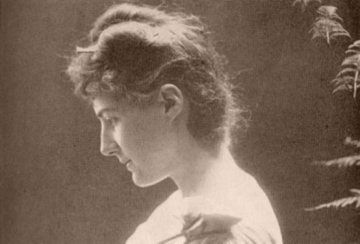
Florence Stoker, widow to Bram Stoker, did all she could to stamp out any imitators to the vampire in Dracula. She had all copies of Freidrich Willhelm Murnau’s Nosferatu, Eine Symphonie des Grauens burned. Yet Nosferatu did not stay dead. Like any good horror movie, the villain revived himself and carried on the fight. A print of the film resurfaced in 1929, playing to audiences in New York and Detroit. However preeminent Dracula scholar, David J. Skal, writes that the film “was not taken seriously” and that most audiences considered it “a boring picture”. The print was then purchased by Universal to see what had already been done in terms of a vampire movie. The film was studied by all the key creative personnel leading to the Universal production of Dracula in 1931.
The undead film continued to rise from the grave throughout the years. An abridged version was aired on television in the 1960s as part of Silents Please, and subsequently released by Entertainment films under the title Terror of Dracula, and then again by Blackhawk Films under the name Dracula. Blackhawk also released the original version to the collector’s market under the title Nosferatu the Vampire. An unabridged copy of the movie survived Florence Stoker’s death warrant and was restored and screened at Berlin’s Film Festival in 1984.
Despite its influence on the making of the 1931 Dracula, Nosferatu has few film decedents. It’s theme of vampire as a scourging plague has only been seriously taken up by two films: the 1979 remake by Werner Herzog, Nosferatu: The Vampyre.
Another film (same year) was the television miniseries of Salem’s Lot, directed by Tobe Hooper.
Perhaps if the original Nosferatu, Eine Symphonie des Grauens had been allowed regular release, this would not be the case. It remains to be seen if Nosferatu will vanish again with the daylight or if this rare film will rise again in a new form.
There is no doubt that Freidrich Willhelm Murnau’s Nosferatu, Eine Symphonie des Grauens (Symphony of Horror) is a piece of landmark cinema, both for its Expressionist filmmaking and its unique treatment of the vampire as plague. Yet few people saw this monumental film prior to 1960. Though slated for destruction by Bram Stoker’s widow, the film managed to survive, popping up in the most peculiar places.
Here is a trailer for Nosferatu (colorized, but it’s the best of the batch) that shows just how ominous Max Schrek was in this part.
Nosferatu debuted at the Marble Hall of the Berlin Zoological Gardens in 1922. The movie was the first and last product of a small art collective called Prana Films — the brainchild of artist Albin Grau (later Nosferatu’s production designer). A month later, Florence Stoker caught wind, and she started the legal machines rolling. Her only income at this point was her deceased husband’s book Dracula, and she would not let some German production company steal her meal ticket. During the 1920s, intellectual rights were a bit dodgy, so Florence paid one British pound to join the British Incorporated Society of Authors to help defend her property. Never mind that the society would also pick up the tab for the potentially huge legal bills.
Florence seemed unaware that a second vampire film, this one called Drakula, was produced by a Hungarian company in 1921. Although the title harkens back to Bram Stoker’s novel, the resemblance ends there. This film, now lost save for some stills, was more concerned with eye gouging than straight out vampirism. Nosferatu on the other hand took much of its plot from Stoker’s Dracula, changing only the names.
The film continued to be exhibited in Germany and Budapest up through 1925, though Prana was beleaguered by creditors and harassed by Florence Stoker. They tried to settle with the society, offering a cut of the film’s take in order for them to use the Dracula title in England and America. Florence would not relent.
She not only wanted Prana to halt exhibition of the film, she wanted it torched — all prints and negatives of the film destroyed. And she got her way. In 1925 Florence won her case and the destruction order went through. Nosferatu, Eine Symphonie des Grauens vanished into thin air just as Count Orlock, the vampire in the film, did when exposed to the rays of the morning sun.


 Tim Kane Books