Curse of the Slow Reader

I read slower than molasses oozes. Some of it comes from my hang up on grammar. I recall that when I first started to write, I’d make every sentence grammatically correct. No fragments. The same with reading. If there was something askew with the text, I kept reading it. Obsessed in a way. Seeking to fix the problem in my mind.

I took a speed reading class when I was younger. Interesting technique, but I’d never want to use it. It’s like eating ice cream in pill form. It sucks all the magic out of reading. Sure it works, but do you really need to read that fast?

I have gotten better (both with the grammar and the reading). Mostly it came with practice. I realized I couldn’t be an adequate writer if I didn’t read a whole heck of a lot. I started with audio books. (At the time I had a 20 minute commute). Then, as my mind adjusted to the rhythm of reading again, I tried out the paper and ink versions again.

A lot had to do with my students as well. I wanted to introduce some middle grade and young adult books to them, but I felt I should read them first to make sure they were kosher. This led to my first reading obsession: Uglies by Scott Westerfeld. I inhaled that book.

My slow reading had another curse. When I joined my online critique group, I was given three sets of 50 page manuscripts and two weeks to read them. Anxious didn’t even describe me. I took those suckers to work and read them in my spare time. I just barely made the deadline. Now I’m a bit faster. I have to be. Life is hectic and if I’m going to read at all, I have to dive in. No holding back.

So if you lament you tortoise like reading habits, worry not. You’re in good company. Keep reading though. You’ll get better and you just may enjoy the ride.

Tim Kane
Use Pinterest as a Reading List

A fellow writer of mine told me how she uses Pinterst to catalog the books she reads. Yes there are other websites out there that do the same. Goodreads comes to mind. But none have the ease and popularity of Pinterest. I already have a list of books I recommend on this blog, but not with pictures. It’s a hassle to put them in. Pinterest solves this.

I plan to pin each “good” book I read. Then I get an easy to find list of my favorite books. What could be better. Click over to see the list. There are plenty of great reads.

Masters Class on Voice

Every start reading a book and find that you simply cannot put it down? You’re hooked. Snagged. Hopelessly snared by the character unspooling the story. That, my friends, is voice. Some authors have it in spades. It’s a very tricky subject to nail down. Rather than pontificate, let’s show two amazing examples.

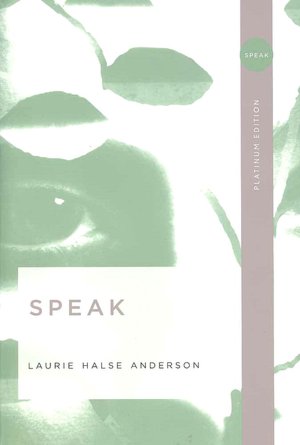
Speak, by Laurie Halse Anderson

“The musical would be easy for me. I am a good actor. I have a whole range of smiles. I use the shy, look-up-through-the-bangs smile for staff members, and the crinkly-eye smile with a quick shake of my head if a teacher asks me for an answer. If my parents want to know how school went, I flash my eyebrows upward and shrug my shoulders. When people point at me or whisper as I walk past, I wave to imaginary friends down the hall and hurry to meet them. If I drop out of high school, I could be a mime.”

You can smell the desperation on the narrator in Speak. How does Anderson make it happen? Look closely, she has the narrator’s thoughts fire away like dialogue. It helps that she uses a first-person narrator in present tense. It creates an immediacy that resonates with the reader. She also utilizes made up words and phrases to convey this girl’s distinct point of view. Check out: “look-up-through-the-bangs smile.” Everyone can picture this. It so completely describes the action, yet it also demonstrates the girl’s viewpoint. Strong verbs like “flash my eyebrows” or descriptions like “crinkly-eye smile” also paint a picture of this narrator.

How Lamar’s Bad Prank Won a Bubba-Sized Trophy, by Crystal Allen

“Since Saturday, I’ve fried Sergio like catfish, mashed him like potatoes, and creamed his corn in ten straight games of bowling. And it’s just the middle of the week. People call Wednesday “hump day,” but for Sergio, it’s “kicked-in-the-rump day.” I’m his daddy now. The maddest, baddest, most spectacular bowler ever.”

Allen uses many of the same techniques as Anderson. She works with a first-person narrator in present tense. She makes up phrases like “kicked-in-the-rump day” and “creamed his corn.” She also employs fragments to better create the feel of clipped speaking. Notice she started the second sentence with “and.” Not grammatically correct, but if she’d fixed it, the narration would have lost it’s punch.

So when scanning for a book to read, look for a narrator who lets it all hang out. Or, if you’re a writer, use these techniques to add captivating voice to your writing.

Tim Kane

The Nook Makes Me A Better Reader

While attending a young adult workshop at the SDSU Writer’s Conference, I gleaned an interesting tidbit. Someone in the audience brought up the idea of a protagonist in his early twenties at college. Our presenter nixed it. College bound folk are inundated with textbooks and studies. Often, they don’t have time to read.

That was the case for me. College killed my reading instincts. Before that, I read like a fiend. Afterward, I hardly picked up a book. Magazines drew me in, mostly because of the brevity of the articles. I remember distinctly my first serious novel that I read form cover to cover: The Alientist.

I continued to write, yet my reading suffered. Finally audiobooks came to my rescue. I read, or listened, while commuting. This worked well, but I yearned for that actual visual experience. (Try writing down a clever quote from a spoken text. Not as easy as it seems.)

Then my wife purchased an iPad for my last birthday. I checked out the ebook options. There were limitless. Trouble was, the iPad as so heavy. (I have and iPad 1, but even the iPad 2 is weighty.) Meanwhile, my reading had picked up. I am addicted to several young adult series. My latest favorite is Leviathan by Scott Westerfeld.

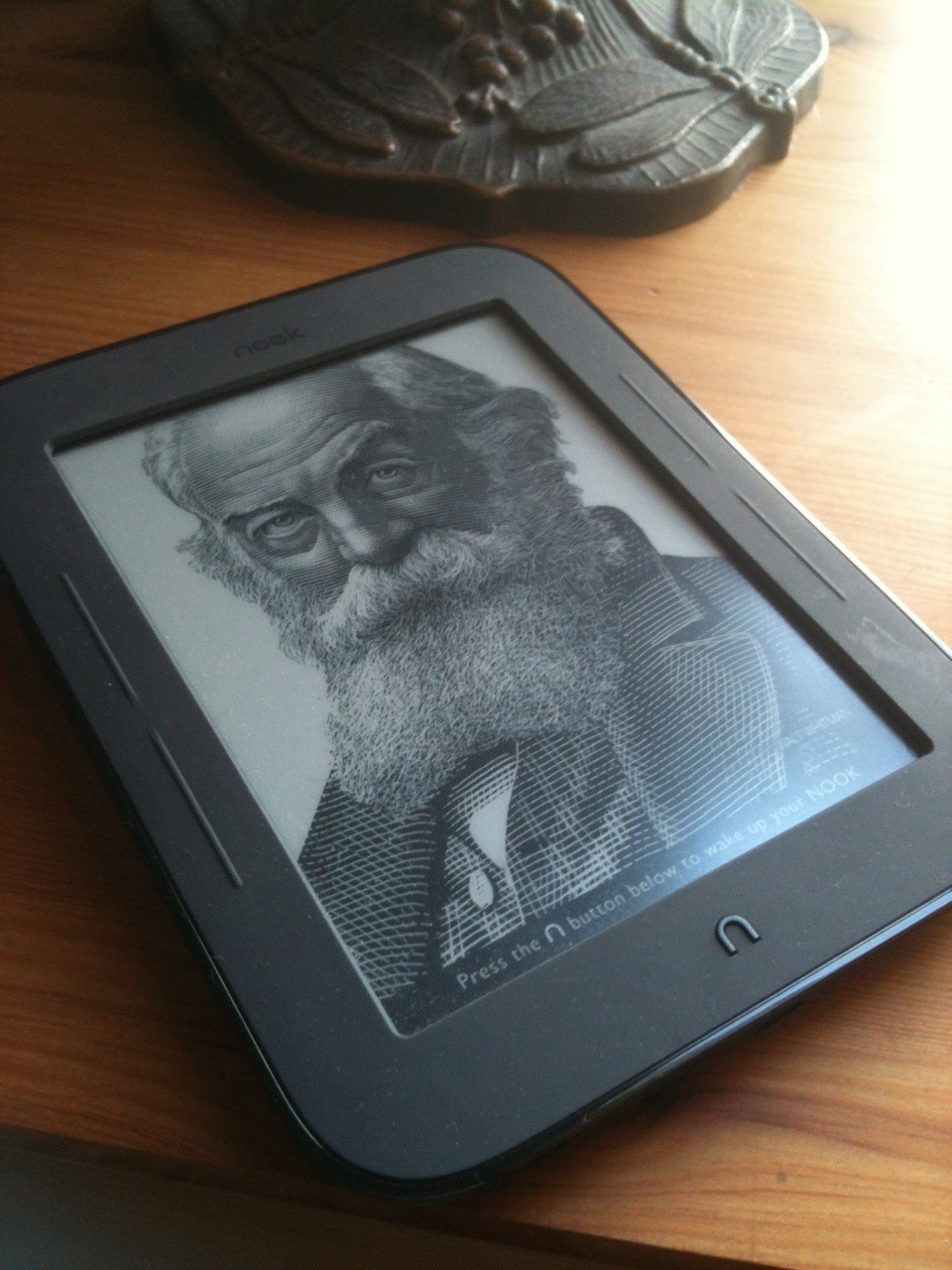
Much like other YA books, this one is a tome. Reading it makes my arms hurt. I tend to read in bed with the book held above me. So my mind drifted back to ereaders. I checked the whole spectrum. I didn’t need all the fancy web-browsing and apps. (I have an iPad, after all). What I wanted was a basic ereader that was very light. Enter the Nook.

I adore this product. The eink is amazing. It reads just like my paper book. The buttons make page turning easy and my arms never grow tired. Finally, it’s created a renaissance in reading for me. Just as the iPod revitalized my love of music, so has the Nook spurned me to be a more voracious reader.

Long live the ereader.

Tim Kane