What to Read: Three Different Categories of Fiction

You have to know yourself as a reader. Which type of fiction do you lean toward? Knowing the different kinds of fiction can certainly help. I get totally into this—my Master’s thesis being on genre studies. But I’ll save wordy for a doctoral thesis and give you the reader’s perspective.

Realistic or Literary Fiction
These are the books that deal with real life. They’re usually called literary fiction in bookstores, but I also lump in realistic fiction, because that applies better to young adult books. Basically these books focus more on characters and their personal problems over plot. There is a line that divides literary form realistic. Literary can often be very self-absorbed and even be devoid of plot. Realistic fiction typically has some semblance of a problem and resolution.

Some good examples (pulled from my favs) are:

Genre
These books are defined by their plot structures. Characters can be secondary and will sometimes follow stereotypes. Readers return to these books because we know what to expect. Certain situations and settings reoccur over and over. There are many different types of genres, such as: Science Fiction, Fantasy, Horror, Thriller, Romance, and Mystery.

Some more favs:

Genre Pastiche
This is where things get interesting. Since the 1980s, films had run the gamut of genre and began mashing them up. Books are doing the same. One of the most popular pastiches is paranormal romance (horror and romance). This allows readers who love genre, to mix things up.

Final set of favs:

  • Horror + Realistic Fiction: A Monster Calls by Patrick Ness
  • Science Fiction + Fantasy: Leviathan by Scott Westerfeld
  • Fantasy + Realistic Fiction: Life of Pi by Yann Martel

Next time you look for a good read, think about the type of read you are. Choose your book based on your tastes. If you have a writing bent, then check out how to write for each genre.

Tim Kane

Reading is a Visceral Experience

Memories constantly hijack my brain. It’s great except the timing. Like cooking, or driving, or even teaching. What’s interesting is that the memories that reappear are almost always from exciting times in my life (like vacation or pretty much all my teen years). The only other “memories” that make an appearance are those I get from reading.

Joel Robinson’s whimsical visual abstractions of the reading experience

Often, months or years later, I can recall the exact experience of reading a particular book. I know exactly where I was sitting (the bathroom floor) as I zoomed through the final pages of Miss Peregrine’s School for Peculiar Children. It’s visceral. I recall how my arm and shoulder ached from reading so long.

Is it that reading affects my imagination? Is that why? I know that the other memories (those from my real life) I recall so strongly because of the intense emotions involved. But reading? Are those same intense emotions triggered?

How about you? How many of you have had flashbacks to reading books? I just had another now. Reading the final Harry Potter book in the hallway outside my daughter’s room (this being when she was only an infant). I couldn’t turn the pages fast enough.

I wonder if this is a personal insanity or one that’s shared.

Tim Kane

How Do You Find a Good Book to Read in the eBook Age?

Some folk lament the fact that physical bookstores, with their collections of paper and glue, are vanishing. Heck, my city has only one bookstore. I relate. I love wandering the aisles of the bookstores, just picking something up and giving it a page through. But I’ll tell you a secret. Often, the books I pick up and then buy from a bookstore are not the ones I really love. I’ve been disappointed more than once.

What I do relish in bookstores are the recommendations by the employees. These people have read and loved these books and want you to read them too. Ignore the tables with the covers all facing up. The book placement there is often paid for by the publisher.

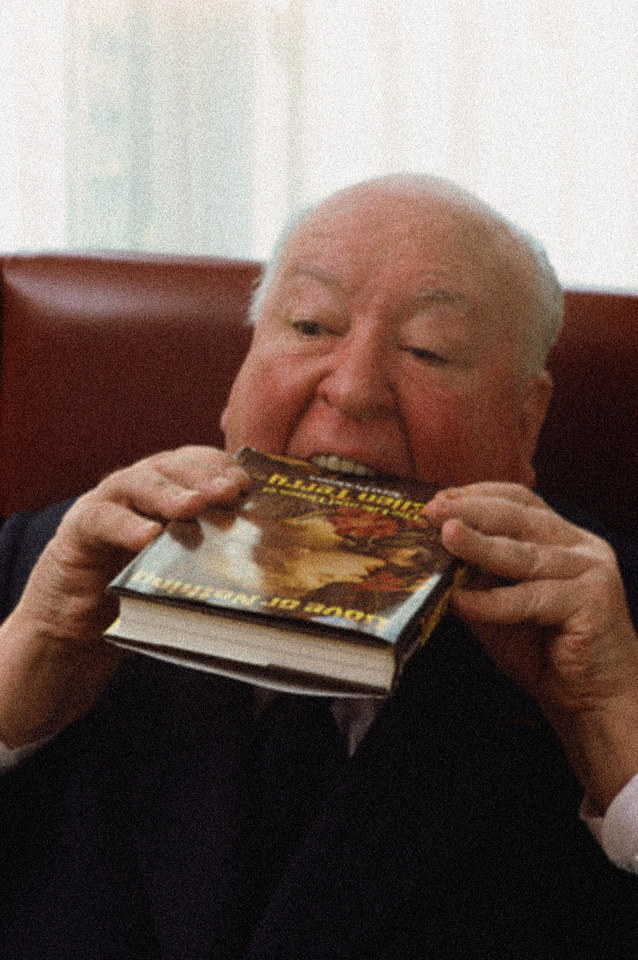
Alfred Hitchcock enjoying Tom Prideaux’s Love or Nothing: The Life and Times of Ellen Terry.

You can get that same sort of recommendation in the digital age. Often, I look up a book I’ve already read and loved on Amazon. Then I see what else the site recommends. Or I ask my reading friends (on Facebook or Twitter). The best part, I can download a sample of the ebook and read enough to get hooked (or bored).

The final resource for book hunters is book blogs. Check out these three blogs to help find your next read.

SPA Middle School Blog: This site shows recommendations from actual seventh and eight graders. Awesome to know I have similar tastes.

Young Adult Books Central Blog: This place is massive. It reviews books as well as tracks reader reviews. You can sort books in many ways with plenty to choose from.

We Need Reads Blog: A great review blog by a pair of avid readers. Their review of Speak says it all.

Tim Kane

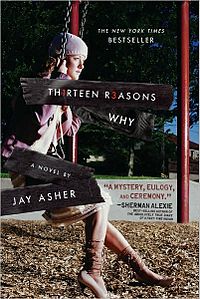
Coping With “Thirteen Reasons Why”

I just finished reading “Thirteen Reasons Why” by Jay Asher. And when I say “just finished” I mean minutes ago. I burned through the last forty pages. Breathless.

I loved the book.

More than just a typical reader would. As a school teacher, I’ve run across kids who needed similar help (not the same, thankfully). I find that school, and teaching, is a mixed bag of learning, friendship, and therapy.

First, let me give you a freeway version of the story (no spoilers, I promise). The novel follows the story of Hannah Baker, a girl who has committed suicide. We hear her words though audiotapes she left for the thirteen people connected with her suicide. Intercut with this is the first person narration of Clay. He’s listening because he’s on the tapes, somewhere. He spends the novel trying to figure out what he did to push a girl over the edge.

Every year (every year, at least since I ran across my first case of a girl cutting) I talk to the students about coping mechanisms. How to unload all that stress and anger that builds up inside. And it does. It’s like shaking up a can of soda. If you don’t know how to release the pressure, it will explode. Trust me, I know.

As I guy, mostly this comes out with hitting things. I’ve dented two car roofs (both mine) and hit the floor so hard it actually shook the house. I don’t think those were the best therapies, but they were better than the alternatives.

Basically, you need a way to get those inner demons out. Hannah (from the novel) had the right idea with poetry. Unfortunately, circumstances conspired against her. Journaling also works. This is essentially what Hannah did with her tapes. It was too late when she worked through her emotions. It’s something you need to start with.

Art is another one. I recall, as a disaffected teen, I attacked a painting with so much force, that I broke the paint brush. (Seeing a trend here?) Once, a poet visited my class (this is fast forwarding to when I was a teacher) and she told the kids something I will never forget. Poems don’t have to be about sadness or joy. Any emotion will do. Anger in fact. She encouraged my class to get angry with their muse.

Essentially, I think I became a writer as a coping mechanism. A way to pour out all the ick that lived inside. I’ve dealt with double dealing friends and some nasty gossip. I simply gave that stuff for my characters to deal with. A bit nasty on my part, but hey, it let me heal. Then I could talk to those people again and not be filled with hate.

The only thing about Jay Asher’s book that bugged me was the parents. Where were they? He had Hannah offer an excuse about the business failing, but I needed to see it more. Why? Because I want to believe that they could have helped. You see I have a little daughter. And when she struggles with her teen years, I hope I can be there for her. I know it’s possible, probably even likely, that suicidal teens don’t confide in their parents. But as a reader (and a father) I would have hoped Asher would have addressed it. Maybe he did. (I haven’t finished with the questions at the end, so maybe he addressed it there.)

I guess I feel like Clay sometimes. As a kid (I know I’m jumping around here) I had a friend who’s father killed himself. One day, at friend’s house, he just broke down, crying. Hell, I had no clue what to do. I was something like thirteen or fourteen. But I listened to him. Especially because the others in our group wouldn’t. He survived the rest of high school without any further incident. So I’m glad I did something. At the very least, I didn’t turn away.

If you ever have someone open up to you, don’t push them away. Listen. Be there for them. Do something that they can’t.

Tim Kane

Hate Club: Why I Despise Most Published Writers

I hate other writers. But let me be specific. I hate published writers. I don’t think I’m alone in this. It’s a jealousy thing. We all want that recognition. Not just ebook indie-publishing, but in the book store, everyone reading-your-book fame.

Realistically, this doesn’t happen very often. So the hate club builds members. We all channel our collective frustration at those published folks. We say, “I could do that,” or “That book isn’t so good.” When deep down, we yearn to be them.

Today I took a step closer to joining the other side. I’ve found an accomplice in the form of a literary agent. No guarantee of being published (or even selling well) but it’s invigorating to know that someone is basing their income and livelihood on your creative chops.

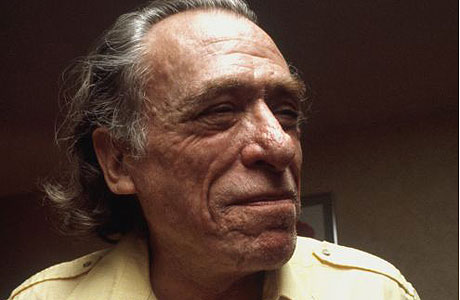
It reminds me of a Charles Bukowski poem I read once. I’ve scoured my poetry books, but can’t locate it again. It basically had Bukowski commenting on all the haters he had. Those that felt they could write a better poem.

In my search, I did run across this poem about writing. A good one for the Hate Club.

some suggestions

in addition to the envy and the rancor of some of
my peers
there is the other thing, it comes by telephone and
letter: “you are the world’s greatest living
writer.”

this doesn’t please me either because somehow
I believe that to be the world’s greatest living
writer
there must be something
terribly wrong with you.

I don’t even want to be the world’s greatest
dead writer.

just being dead would be fair
enough.

So what have we learned? Even success has it’s downsides.

Feel free to hate.

Tim Kane