A Theme Song for an eBook

Having grown up seeing images of the Beatles recording at Abbey Road, I’ve always wondered what it was like inside a recording studio. I finally got my chance. Last weekend, my musician friends abducted me to record a theme song to my new ebook: Tarot: The Magician. The results were tremendous.

The “John Lennon” of the group was Bradley Coy. This was a surreal experience for me in many ways, not the least being that I taught this young man back when he was in sixth grade. He was phenomenal musician then and even better now.

IMG_0773

Bradley Coy with Mark C. Jackson in the foreground.

He recycled an old melody he’d written to create the “theme song” for my book. Now I know what you’re thinking: books don’t have theme songs. So true. But book trailers do. I have animated a book trailer. Being that I have only enough knowledge of music to be dangerous, I wanted some sort of professional song to score the 40 seconds of animated trailer.

Given my druthers, I probably would have lifted a song, ran it backward through some filters. It wouldn’t have been good, but serviceable. Fortunately, Bradley materialized form the musical woodwork and transformed his melody into a perfect compliment to the atmosphere of the book.

We visited the recording studio of David Morgan, who has outfitted his room with more guitars and sound equipment than the average Guitar Center. He had recorded plenty of albums there for local artists, but he was curious about scoring music to a video. It turned out to more tricky than you’d think.

IMG_0632

David Morgan suggesting how to match the music to the video.

Bradley would play the melody flawlessly, but the timing to the video eluded him. Or he’d nail it, only to boff a chord near the end. Thankfully we had the guiding presence of Mark C. Jackson, a fellow musician and writer. He knew that the first dozen takes were simply warm up for the real performance. As we neared that “perfect” moment, his energy spiked. He leapt out of his seat to encourage Bradley to create the perfect mixture of melancholy and gloominess (yes, that’s the tone for the book).

IMG_0667

Mark C Jackson suggesting how to line up the music with the video.

Bradley’s whole take on the melody was one of a vintage piano with a vaudevillian touch. He and I both share a yen for the Beats and the Surrealists. It seemed natural that the music for a surrealistic novel be a riff from the 1930s.

IMG_0720

Bradley seriously contemplating the melody.

What was I doing during all this? Not a lot. Mostly I played the documenter, snapping pictures to capture the moment. Bradley finally nailed it, leaving the end of the melody dangling like an unanswered question. It might bug some people, but for me, it was simply perfect.
IMG_0669

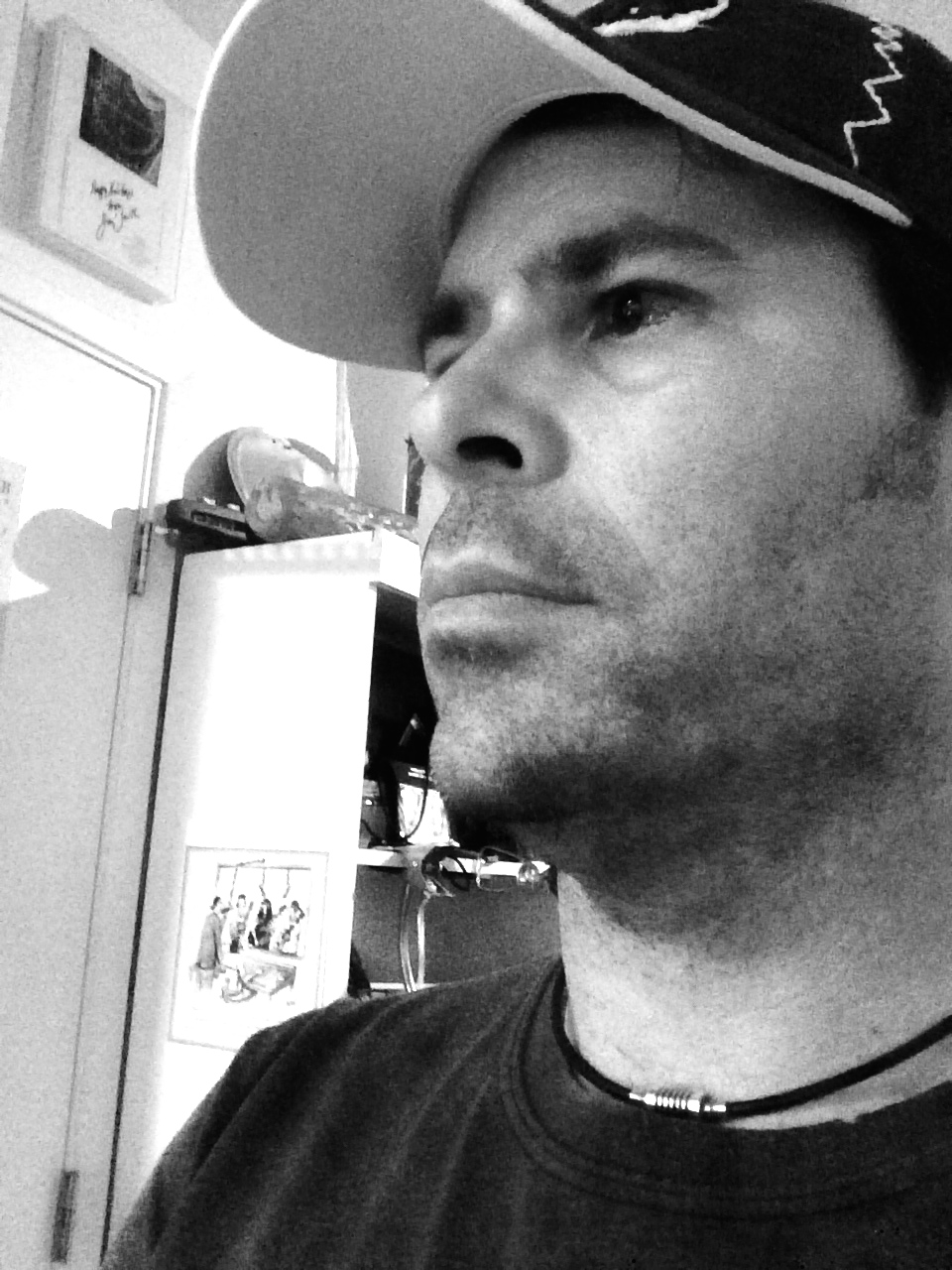
There I am, observing all of this. I get writing. But music recording baffles me.

You can listen to the track here. The full trailer will be revealed at the end of May.

Tim Kane

The Surreal Terror of Sleep Paralysis

Sleep paralysis has a logical and scientific explanation. It’s a phenomenon where you partially wake up from sleep, but your muscles still remain frozen. A biological glitch in our bodies causing one part of us to wake from the dream, while the rest of the body is on lockdown. Perfectly explainable. Yet try telling that to someone who’s lived through it.

The experience can be terrible. You’re still dreaming and the things you see appear real. But you cannot move or speak or scream.

You are frozen in terror, staring up at the monstrous creations of your subconscious.

Sleep paralysis is actually a protection mechanism designed to keep you safe while dreaming. The images and scenarios in your dream are vivid and seem real. If a tiger leaps out, you scream and run. Your muscles are locked down to prevent you from flailing about or making a large racket (that would have attracted predators back in the day).

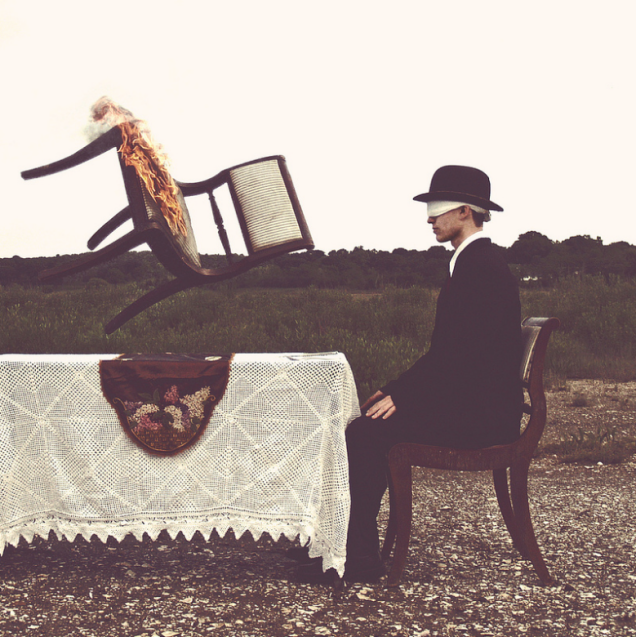
Even as we understand more about this phenomenon, there’s no denying the surreal quality it evokes—to see your dreams as real, right there before you. Photographer Nicolas Bruno has captured some of these images. He is a victim of sleep paralysis and his photos are a window into his subconscious mind.

19gef8hpvg9nzpng

Bruno began to jot down notes about his dreams. He wanted to recreate them using recurring imagery (like gas masks, bowler hats, or lanterns) and compose them the way a painter would. His photos show a haunting world that Bruno describes as  “a bittersweet homage” to his dream-world life.

19gefiqommv7upng

Often times, dreams serve as a way to work through the events of a day. But dreams aren’t logical. They are an emotional outlet. You typically see your fears come alive, such as being buried alive. The fears don’t make sense. It’s your minds way of dealing with them.

19gef8hppy7zopng


Because dreams mash up images, the result can seem surreal and downright strange. We move from place to place instantly.

The glitch of sleep paralysis has haunted humanity for thousands of years. Over that time, cultures created creatures that stalk us in the night as a way to explain the frightening sessions of paralysis. They myths center around nocturnal monsters or demons.

In the Amazon, we have the Boto, a river dolphin that transforms at night into a vaguely human creature. It wears a hat to cover it’s blowhole. In Africa, the night prowler takes the form of a bear. Known as the Tokoloshe, it slinks in at night and bites the toes off children as they sleep.

A carving of a Tokoloshe.

A carving of a Tokoloshe.

The folks at the Sleep Paralysis Project, along with director Carla MacKinnon, have created a documentary about sleep paralysis. This both serves as an explanation and a terrifying vision of the phenomenon. Be warned, if you don’t suffer from bad dreams, you will after watching this.

The film Devil in the Room depicts the grotesque creatures alongside the scientific explanation. It was meant to evoke the feeling of sleep paralysis and I say it does a damn good job.

Tim Kane

Surreal Art from Kerozen

I love fonts. Having spent almost ten years as a graphic designer, I used to possess books filled with fonts. Alas, I don’t get to use as many anymore. But when I see one that catches my eye, I have to share.

KANE flesh

This is my name written in the Kerozen font. Unlucky for all of us, they only created enough letters to create their own company name (Kerozen). I was able to imagine the R as an A and create my name.

ku-xlarge

Kerozen is a French design studio that formed these creepy letters from their own design team. Each letter represents a person, wrinkles and all. This led me to explore more of the Kerozen  portfolio.

CourtMetrange5

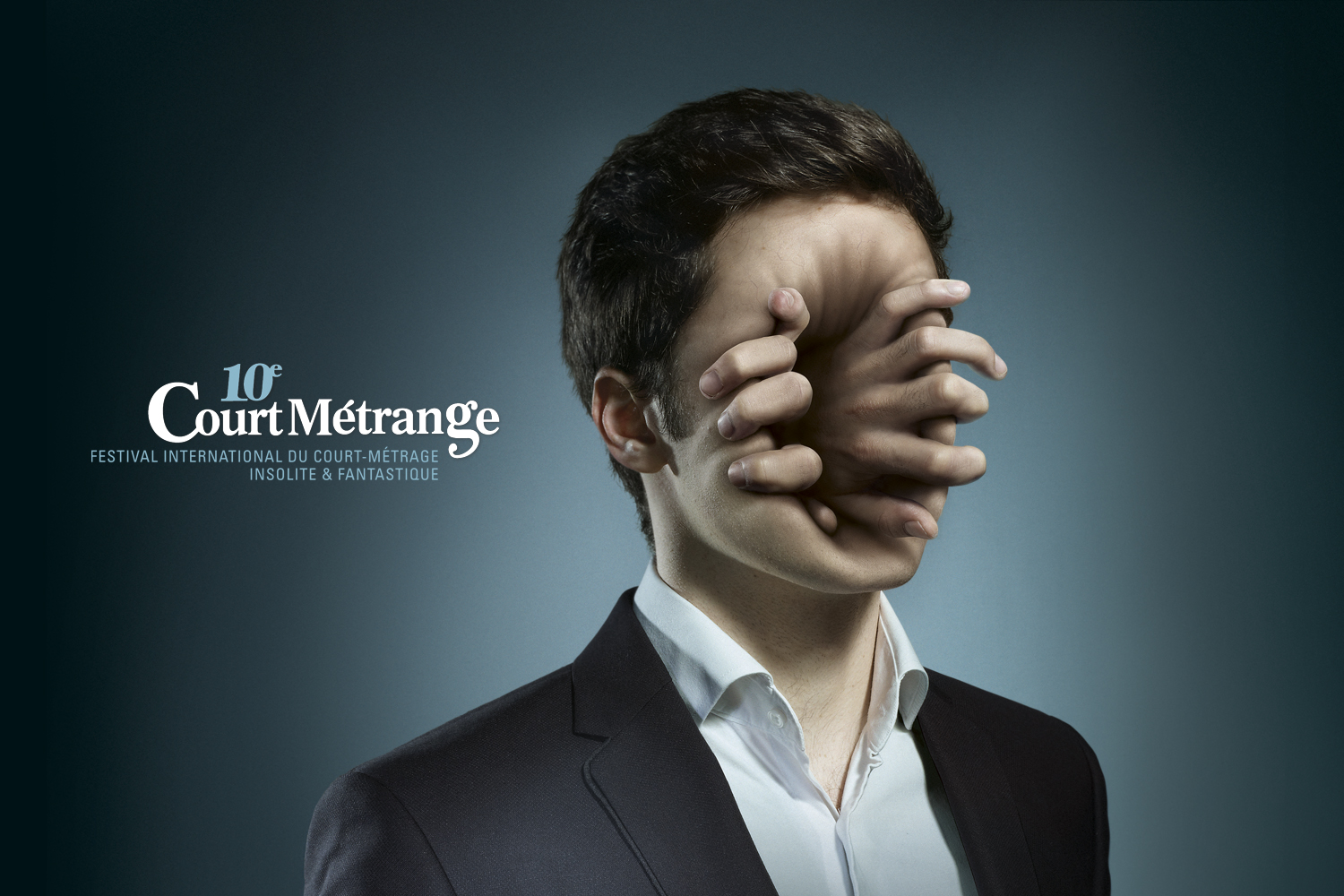
As far as I can tell, Court Métrange is an art festival discussing fiction, special effects, and visual arts. I would so want to attend this festival. It looks amazing.

CourtMetrange3

Here is another ad for Court Métrange. Notice the theme of the modified human parts. Instead of letters, here we have slices of head. This is not too far from what scientists already do with mummies. I wonder if, like the Kerozen letters, each of these represents a design member.

Le-Mensuel

This ad is for a tabloid (Le Mensuel) in France. The image is both disturbing and draws you in. I wonder if the person has a headache. Is he trying to avoid the world or does he yearn for escape?

Kerozen seems like a design firm I’d love to have lunch with. Fascinating stuff.

Tim Kane

The Surreal Banana People of Lin Shih-Yung

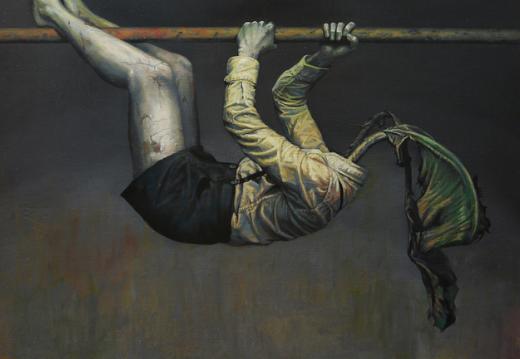
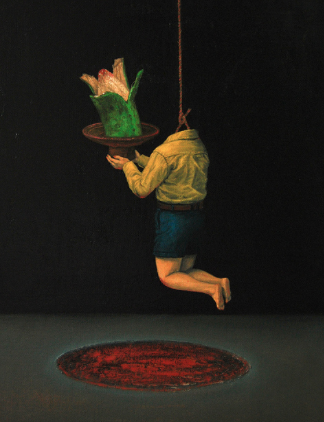
Ever wonder what it’s like to be a banana? Every night, you plant yourself in the ground. Maybe pour a little water on for growth. How difficult is it these days to raise a young banana? Lin Shih-Yung answers these questions and more you never knew you had with her surreal paintings. Take a look.

ku-bigpic

Titled “3 Newts”


Titled "Wasp" this shows a person with a wilted leaf for a head.

Titled “Wasp” this shows a person with a wilted leaf for a head.


This one is titled "6 Newts"

This one is titled “6 Newts”


Titled "Fresh" it shows a green banana committing suicide.

Titled “Fresh” it shows a green banana committing suicide.


Titled "After Taking a Paint"

Titled “After Taking a Paint”

Apparently, the banana people are called Newts. You can see more images from her Flicker site.

by Tim Kane

Magical Realism: The Forgotten Genre

Many readers know about fantasy fiction. Paranormal and supernatural tales are burning up the charts. Few people realize that there is a sister genre, nestled in the cracks of literature: Magical Realism.

Step into the Way-Back-Machine with me to my middle school. There, my Spanish teacher, a burly Brazilian bodybuilder, introduced me to the genre. It was no mistake, as the concept was born in Latin America. The concept of these stories is a perfectly normal, rational world, but with one magical element.

In magical realisms, the common and mundane are transformed into the amazing and unreal. It’s a genre of surprises. Time is fluid, pulling the reader into the unusual.
Need some examples? How about Like Water for Chocolate? The novel by Laura Esquivel shows the domestic life of women in a small town. Yet the protagonist, Tita, can’t achieve happiness because of her mother. She imbues her emotions into the food she makes. Those that partake of her delicacies, enact those emotions for her. For example, Tita suffers from forbidden love, and she infuses this emotion into a wedding cake. The guests to eat the cake, all suffer from severe longing.
Here’s a clip from Tita’s magical meal.

Another perfect example is Franz Kafka’s Metamorphosis (1912). Here an office worker awakes one day to discover that he’s been transformed into a cockroach. His family must then deal with his new insect form.

A comic adaptation of Metamorphosis that I adore.

A comic adaptation of Metamorphosis that I adore.

Many movies also fall into the magical realism arena, such as: Being John Malkovich, Big Fish, Black Swan, City of Angels, Eternal Sunshine of the Spotless Mind, and It’s a Wonderful Life.

Many fantasy writers scoff at the idea that this is a unique genre, saying that magical realism is simply another name for fantasy fiction.

Gene Wolfe stated, “magic realism is fantasy written by people who speak Spanish,” and Terry Pratchett said magic realism “is like a polite way of saying you write fantasy.” Yet there are differences. Most notably the use of

antinomy, or the simultaneous presence of two conflicting codes. When you read fantasy, there’s an internal logic, rules, to the universe. In magical realism key events have no logical explanation. Why can Tita infuse food with emotion? There is no reason. She just can.

It’s this element that so fascinates me. In a world where every motivation needs to be explained and teased apart, it’s a relief to say it happened just because. Magical realism includes events that don’t fit into any world, anywhere.

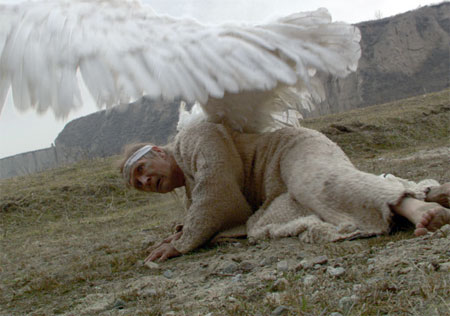
Gabriel García Márquez, a Colombian writer, uses of magical realism to blend reality and fantasy so that the reader can’t tell the difference. In his story “A Very Old Man with Enormous Wings”,  an angel falls to the Earth because of a violent rainstorm. The reality of the situation is never doubted. Although the angel is a magical being, he is treated in a realistic way. Here’s the start to the story.
WindMan-01
A Very Old Man With Enormous Wings: A Tale For Children
 
Gabriel Garcia Marquez


On the third day of rain they had killed so many crabs inside the house that Pelayo had to cross his drenched courtyard and throw them into the sea, because the newborn child had a temperature all night and they thought it was due to the stench. The world had been sad since Tuesday. Sea and sky were a single ash-gray thing and the sands of the beach, which on March nights glimmered like powdered light, had become a stew of mud and rotten shellfish. The light was so weak at noon that when Pelayo was coming back to the house after throwing away the crabs, it was hard for him to see what it was that was moving and groaning in the rear of the courtyard. He had to go very close to see that it was an old man, a very old man, lying face down in the mud, who, in spite of his tremendous efforts, couldn’t get up, impeded by his enormous wings.
 
Frightened by that nightmare, Pelayo ran to get Elisenda, his wife, who was putting compresses on the sick child, and he took her to the rear of the courtyard. They both looked at the fallen body with a mute stupor. He was dressed like a ragpicker. There were only a few faded hairs left on his bald skull and very few teeth in his mouth, and his pitiful condition of a drenched great-grandfather took away and sense of grandeur he might have had. His huge buzzard wings, dirty and half-plucked were forever entangled in the mud. They looked at him so long and so closely that Pelayo and Elisenda very soon overcame their surprise and in the end found him familiar. Then they dared speak to him, and he answered in an incomprehensible dialect with a strong sailor’s voice. That was how they skipped over the inconvenience of the wings and quite intelligently concluded that he was a lonely castaway from some foreign ship wrecked by the storm. And yet, they called in a neighbor woman who knew everything about life and death to see him, and all she needed was one look to show them their mistake.
For the full text, visit here.