The God of the Lost

Worship me with your feet.

That’s what the God of the Lost wants. A creation of Stephen King, this deity drops down to earthly levels in the book The Girl Who Loved Tom Gordon. I have said before that this is one of my favorite books by King. Not only have I read it seven or eight times, I even wrote a paper on it for my Masters in English.

One interesting aspect of the book is King’s take on religion. The protagonist, Trisha McFarland, becomes hopelessly lost in the woods. At a clearing, she meets three gods, each offering a sort of salvation. There’s the-god-of-Tom-Gordon (the one the pitcher points to when he makes a save). This god is too busy to help a child lost in the woods.

Then there’s the sub-audible. This, according the Trisha, is a creation of her drunk father. The sub-audible is that noise just below hearing. Like the sound of the refrigerator turning on and off. People don’t notice it. But it’s there. This version of god is just behind the skin of the world. Always humming. It can’t really help because it’s too weak.

Then there’s the God of the Lost. This creature has a face composed of living wasps. Plump, ungainly poison factories. It feeds off Trisha’s fear, allowing her to live so she can ripen. Later in the novel, Trisha finds a road and is almost to safety. Then the God of the Lost appears in the form of a possessed bear.
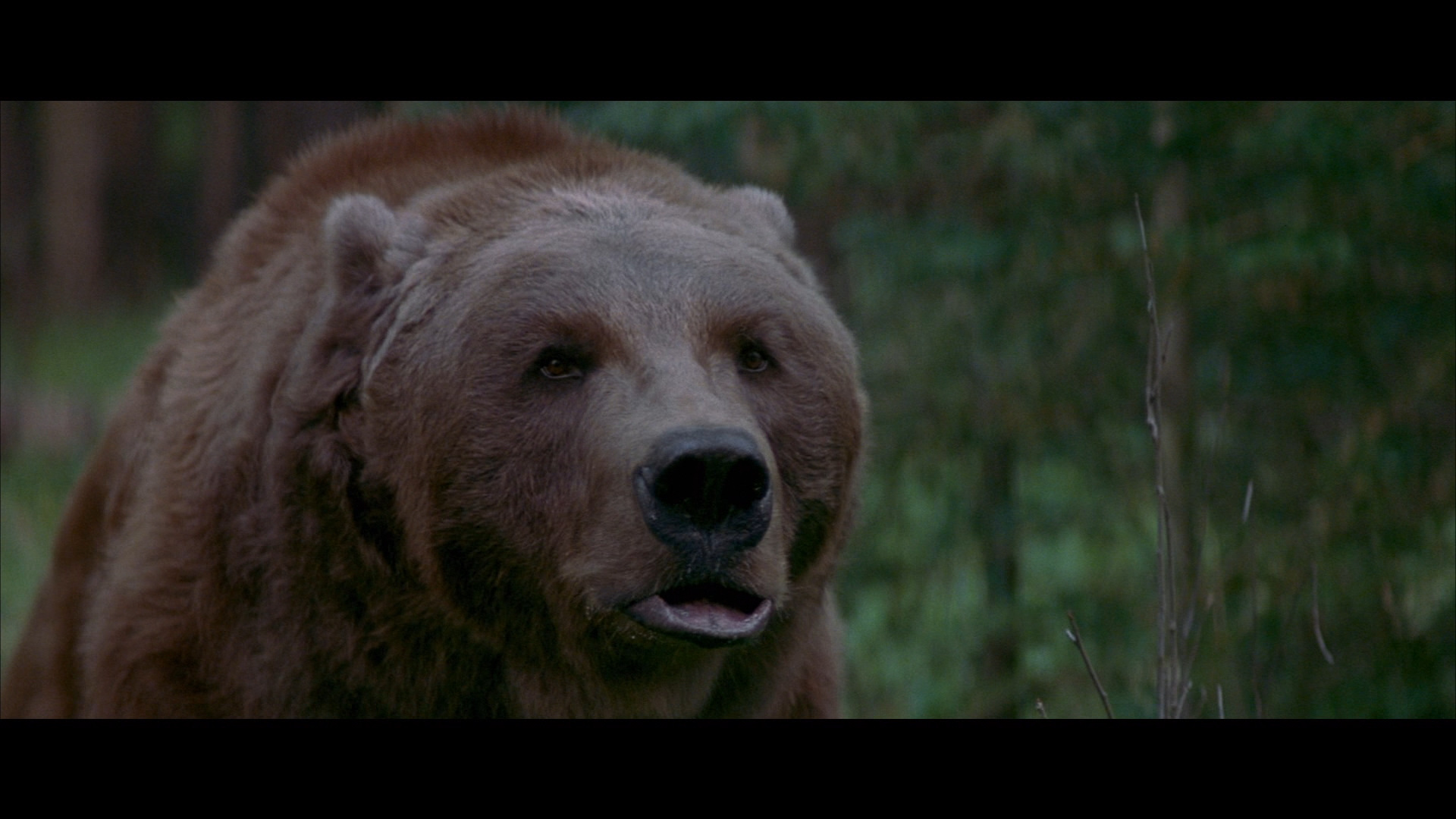
I snatched this from the movie, The Edge, starring Anthony Hopkins. It was the first bear that popped into my head.

I like this portrayal of the monster. Rather than invent some horrific creature, the reader only glimpses the edges off it in the same way as Trisha. We know the terror that lies behind the empty eye sockets of the bear, squirming with maggots. Yet most of the image is left for us to fill in with our minds.

True monsters need to be this way. Only ten-percent written, and ninety-percent in the reader’s head.

Tim Kane
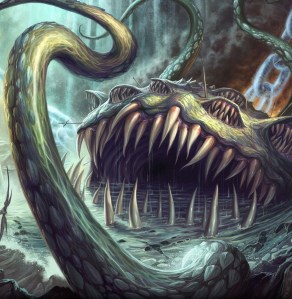
Warning: Exposure to Cthulhu Causes OCD

Monster Monday: I’m going to attempt to post about monsters (my favorite topic) each Monday. Today we’re talking the mac daddy of all monsters, Cthulhu. Not familiar? It’s hard to sum up in a few lines. He’s a mythical god, older than the pantheons of Greece or the Vikings, that lives in another dimension. He’s part of the Old Ones that ruled Earth aeons ago. They sleep now, but continually seek a way into our world again. To rule and to feed.

The brainchild of author H. P. Lovecraft, Cthulhu and other creepy netherworld critters attempted to scare the life out of various folk in his stories. A recurring theme in his work is that of madness. Imagine actually seeing a god. Coming face to face with one. Not Zeus with his fluffy white beard and lightning bolt. I mean a literal force of nature. Awe inspiring doesn’t cut it. Lovecraft felt that the human mind couldn’t handle such an experience. The typical result was madness.

As a fan of Stephen King, I’ve read two of the stories he’s written that touch on Lovecraftian ideas. One is Crouch End from Nightmares & Dreamscapes. It’s a tremendously creepy tale about a couple of Yanks getting lost on the deserted streets of London. Only one makes it back, though she has lost her sanity.

A more recent story I’ve read is N from Just After Sunset. N refers to the name of an accountant who visits a shrink. The poor fellow developed a crippling case of obsessive compulsive disorder after witnessing a thin spot in the world. Stephen King has written about this sort of thing before. Other worlds border our own and sometimes the fabric that separates the two wears thing. The character N found such a place and was infected by OCD.

Insanity has always been associated with Lovecraft, but this was the first time I’ve read about the madness manifesting as a compulsive disorder. N must count things, and the numbers must always be even. Six is a fix. Eight makes it straight. He also arranges objects in diagonals and circles. He says it’s to save the world. And in this story, he isn’t being metaphorical. Can you imagine, compelled to count and arrange to keep monstrous slimy things out of our world? This story is well worth a read. It has a surprise ending that I won’t spoil, but it’s good enough that I sought it out again to read.

I had forgotten the name and had to listen to nearly all my King audio books until finding it. That’s an obsession. Uh oh. Perhaps I’ve caught N’s compulsion. I better start counting.

(There are 458 words in this post. That’s even. A good number.)

Tim Kane