40 Days Without Coffee: Or How I stopped Worrying and Learned to Love Tea

All right, I had a lapse in reason. I admit that. To give up coffee for lent was a ridiculous endeavor. Yet here I am, nearly three weeks in, and I live in a coffee dessert.
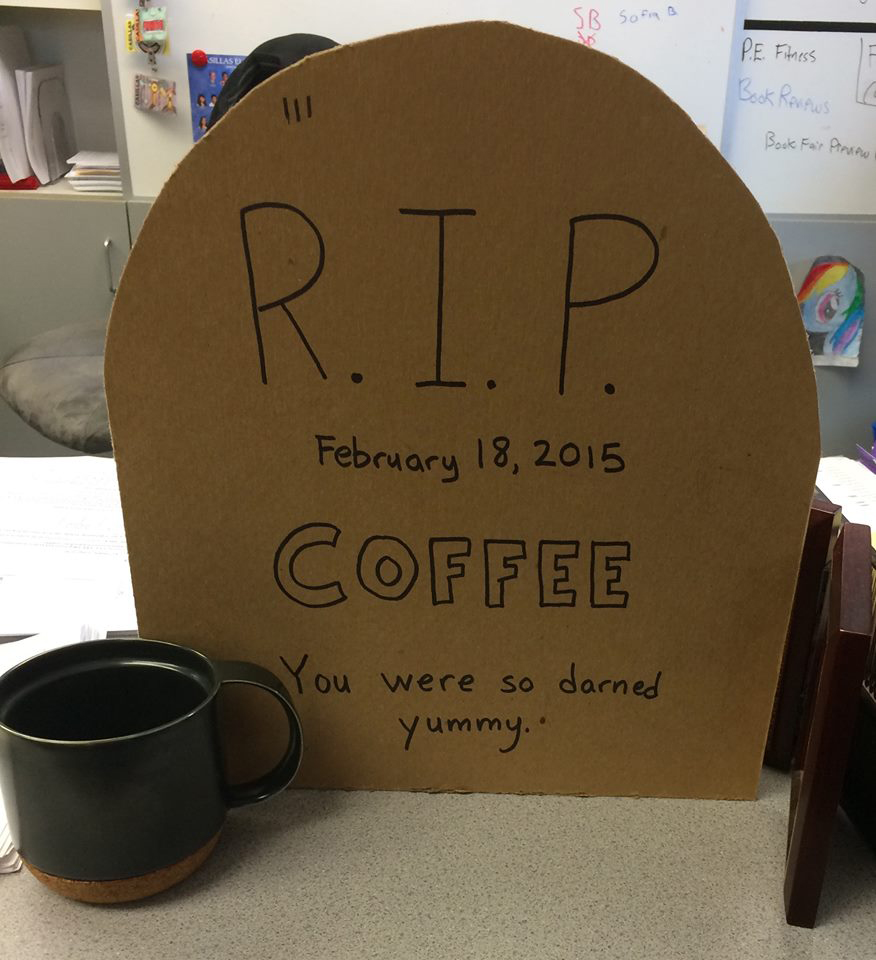
RIP coffee2

I can’t profess to be overly religious. Yet I do admire the metal vigilance needed to commit to abstaining during the season of lent. So much so that this year I set myself up for the ultimate challenge: No Coffee.

Now, if you’re a tea drinker, you probably think, what’s the big deal? Well, I’ve been java consumer since I was a wee little lad. In fact, I can recall my very first cup of coffee. Mexico City when I was sixteen. It tasted like someone stuck the whole coffee plant, dirt and all, into the cup. Horrific. Yet I stuck with it because I come from a long line of java drinkers. Many cups of espresso later, I learned to love the stuff.

I am a bit of a coffee snob, and the stuff I brew as home in my vacu-pot, is sublime. I purchase my coffee fresh from a pair of sisters in town who supply amazing beans. Why am I touting the coffee I can no longer drink? Because folks keep asking how I do it, all while clasping their Starbucks cup. It’s easy because I would sooner drink tea than slurp inferior coffee. To trouble doesn’t come from temptation, it’s the long haul.

My latest toy in the never ending battle for a better cup of coffee: The vacu-pot.

My latest toy in the never ending battle for a better cup of coffee: The vacu-pot.

Tea was a mystery to me. And I took on this forty day challenge so that I might know it better.

A week before Fat Tuesday, I visited Hessian Global Goods (my coffee connection) because they also sold loose leaf tea. The ladies were nice enough to suggest several brands? types? flavors? (I’m not sure how to classify tea). Anyway, they hooked me up with tea that would best suit someone coming from the realm of coffee. All of them black with plenty of caffeine.

I brewed single cups and started loading on the sugar and milk. It tasted god-awful. Like someone dunked a Pixie Stick in bitter liquid. I endured this saccharin concoction for over a week. Meanwhile, when I went to work, I tried tea bags. Since I teach elementary school, I couldn’t keep a supply of milk or sugar around and drank the tea black. This was even worse. The drink was insipid and weak. Oh, how I missed coffee.

Now, I did learn of a loophole in the whole lent system. Since Sundays are already a holy day, there is no need for fasting or suffering. Ergo, you can have your lented object again. And boy did I. That first Sunday, I fell upon  coffee like a military coup, devouring it one long 10 cup run. But then Monday came and the pain of losing coffee yet again. This had to stop.

After much experimentation, I finally Googled the proper way to brew a cup of tea. After all, research has helped me with coffee and writing, why not with my arch-nemesis: tea. It turns out a fellow writer inadvertently saved me. Gail Carriger, taught me the correct way to brew, and drink, tea. You might know her from the Parasol Protectorate series.

3GailCarrigerCream

Success. With her help, I was able to brew a cup of tea that was not only drinkable, but also satisfying. I’m not sure, but I believe it’s the ritual that helped. You see, I have all these ritualistic behaviors associated with brewing coffee. They are so strong, that I still visit the scene of the crime (so to speak) even on the many days I am forbidden to touch java.

It turns out there are plenty of “rules” about brewing a proper pot of English tea and these jive well with my psyche. In fact (I hesitate to even admit this) but on the following Sunday, something bizarre happened. Yes, I indulged in coffee in the morning (as was my right). Yet I yearned for a cup of tea. Yes TEA!. I brewed a pot that afternoon, despite being able to make more coffee.

Now, I am certainly not going to eschew coffee for tea. The sky will crack open and rain stars before that happens. Yet, I have grown to appreciate tea. Something that would never have happened without my coffee abstinence.

So in the true spirit of a newly-born tea drinker, I say: Long Live Mr. Tea.
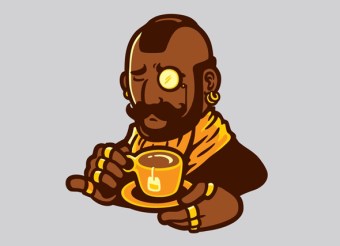
Art for "Gentleman T" created by the folks at Foodiggity. Check them out.

Art for “Gentleman T” created by the folks at Foodiggity. Check them out.

Tim Kane


Moonrise Over Junk Food (Your Monthly Ticket to Weirdness)

For this month we explore landscapes created with junk food, insane Steampunk calculators, and a vampire hunting kit.

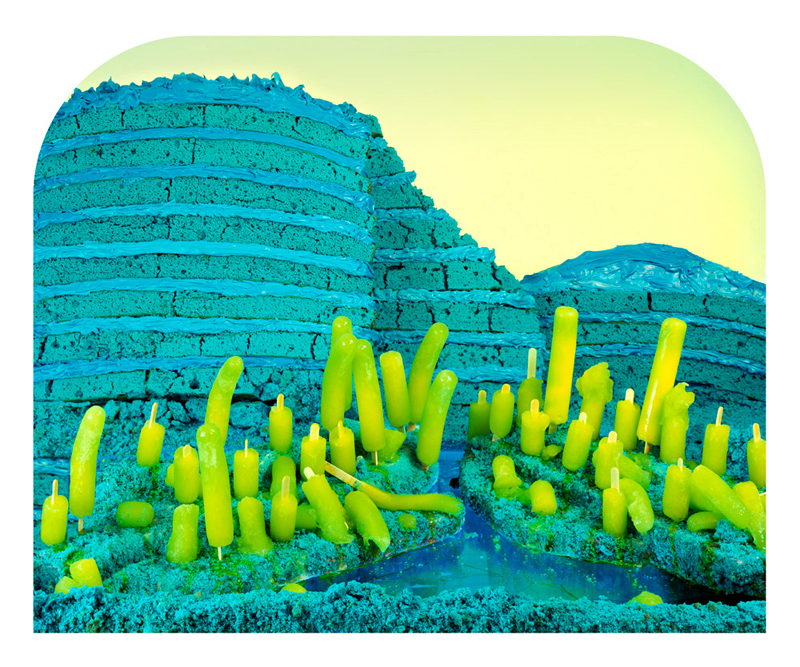
Blue Dye #1 Precipice from the series Processed Views 2014

Blue Dye #1 Precipice from the series Processed Views 2014


Junk Food Landscapes

Always on the look out for the latest and most surreal items this world has to offer, I was stunned by how  artists Barbara Ciurej and Lindsay Lochman used junk food to recreate classic photographs by Carleton Watkins. Look at how the food artists recreated a 1869 photograph of the Farallon Islands photographs.

WatkinsSugarloaf

And now the Ciurej/Lochman version, titled Cola Sea (from the series Processed Views 2013).

SugarloafTest2psd

The artists use processed food to point out just how far our food has diverged from nature. They state: “As we move further away from the sources of our food, we head into uncharted territory replete with unintended consequences for the environment and for our health.”

Stempunk Calculators

Most of use think of calculators are objects from the computer age. Who can blame us when adding apps are available on smartphones or even Google.

idbsrlvxwnzbpjs9u4or

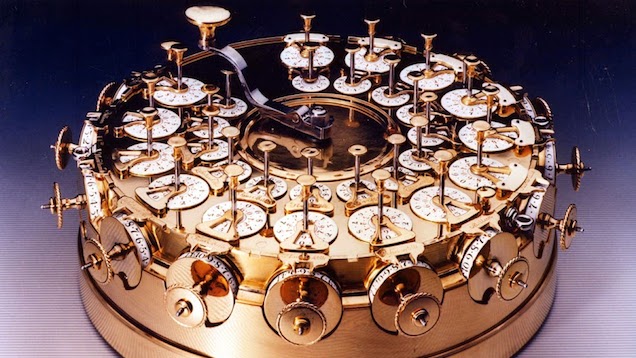
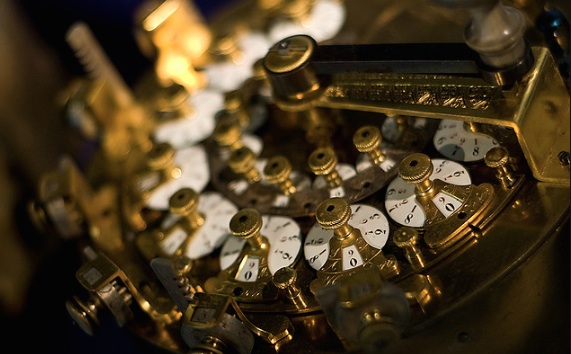
Check out these truly gorgeous beauties from an age where objects were crafted by hand. The calculator, built by Johann Helfrich Müller in 1784, evokes stempunk passion with it’s brass knobs and dials. Check out this close up the workings:

Calc

To view more of these marvelous mechanical wonders, visit this site.

A Love Story Through Coffee

Although this short film features a food product, and thus might fall under the category of propaganda, it’s so charming that it captures my heart. The characters, a boy and a girl, are dusted onto the tops of 1000 cups of cappuccino. The story shows their courtship, love, and family. The commercial is for Ajinomoto General Foods’ Maxim Stick drink flavoring. Watch and enjoy.

Tim Kane

Do You Want Your Fashion to Interact with the World?

Imagine a dress that would react to people around you. Lash out if you felt threatened. Light up if you were happy? Sound like something from Bladerunner? Think again. These dresses have become reality, thanks to Dutch fashiontech designer Anouk Wipprecht.

Spider_dress

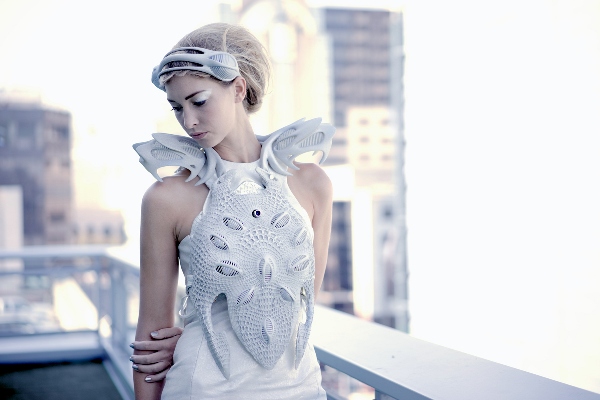
This is Anouk’s Spider Dress 2.0. The spider leg epaulettes on each shoulder are actually tiny robots. They link to proximity sensors and a respiration sensor. This means that if someone moves aggressively towards you, and you don’t like it, your increase in respiration will trigger the mechanical legs to move up and into an attack position. Additionally the black LED shells stationed along the garment, meant to  resemble spider eyes, automatically flash in warning when someone gets near you.

Robotic Spider Dress [Intel Edison based] // 2015 teaser from Anouk Wipprecht on Vimeo.

Anouk’s original Spider Dress (designed in collaboration with engineer Daniel Schatzmayr) shows the sinister robotic spider legs. These legs also extend, but won’t react to the proximity of others. It was simply meant as a performance art piece about personal space.

spiderdress03

Although the Spider Dress is Anouk’s most recent project, he has experimented with interactive clothing for a while. Take the Smoke Dress, which covers the wearer with fog as soon as people approach. The Smoke Dress functions as a protective shield, the designer says, “just like an octopus in self-defense” envelops itself in clouds of ink.”

img_20130911_111120


Interactive Smoke Dress @ AUTODESK Gallery pop up Paris from Anouk Wipprecht on Vimeo.

Anouk also created her Synapse Dress which reads the wear’s thoughts. When the person is excited about something, this triggers the LED lights in the dress to glow. It creates a sense of vulnerability because everyone around you will know what you are thinking.

JASONPERRY_DSC2623_small


Much of the interactivity in Anouk’s fashion are thanks to an Intel chip called Edison. Watch the micro-documentary about how the chip helps the clothes sense the users thoughts.

Interactive Intel-Edison based Synapse dress by Dutch fashion-tech designer reveals wearers metal states from Anouk Wipprecht on Vimeo.

One of Anouk’s earliest fashion and tech mashups looks like it came straight out of a Steampunk novel. The Faraday Dress lights up when exposed to the power of high-voltage, low-current, high-frequency, alternating-current electricity. That forking lightning you see in the picture is real. 94 metal panels comprised the outfit, cut out of a sheet of metal using the water jet.

makerfaire_02


In this making of video you can see a hesitant model wearing the dress as the faraday device launches arcs of electricity at the dress.

Anouk Wipprecht lives and works in San Francisco. She strives to create fashion that will connect the body and the clothing. She began combining fashion and technology three years ago. A one year sting to Sweden offered her a chance to study “body, fashion & technology” at the Malmo university. There she worked on Arduino-based application possibilities and smart fabric concepting.

leadImage_preview


Tim Kane

Do You Dream of Monsters?

The world is filled with monsters. We only have to see them for what they are. Every culture around the globe has its fair share of creatures that lurk under the bed or slink through the shadows. Rarely do we cast a light on the denizens of our nightmares.

IMG_3510

Often monsters are a product of our own overworked imagination. Take the work of the Linares family and the “Alebrije”, which translates to woodcarving. In 1936, an artist named Pedro Linares succumbed to a high fever, causing him to hallucinate. In these fever dreams, he saw a forest with rocks and clouds, each transforming into wild and multicolored creatures with wings, horns, tails and fierce teeth. After he recovered, Pedro created the creatures he saw, using papier-mâché and cardboard. The Linares family kept this art form alive. The Alebrije pictured above was created by Miguel Linares.

Looking back through history, it’s easy to see similar nightmarish figures sprung from out imagination. Take the Singha for example.

IMG_3498

Not all monsters need to be bad. The Singha is a temple guardian in Thailand. Half-man and half-lion, it guards temple entrances such as Wat Benchamabophit in Bangkok. The name derives from the Sanskrit “simha” meaning lion.

IMG_3497

The Fen Huang is another guardian monster, though this one heralds prosperous times. The Fen Huang only appears to mark the beginning of a new era—the birth of a virtuous ruler. During peaceful times, the bird will nest, but if trouble or war arises, it vanishes to its celestial abode.

The Chinese compound term Fèng Huáng means Phoenix. The Feng Huang controlled the five tones of traditional Chinese music, representing the Confucian virtues of loyalty, honesty, decorum and justice. Artifacts show that the the Phoenix (female) as associated with the Dragon (male). The two are mortal enemies or blissful lovers. When shown together, the two creatures symbolize conflict and wedded bliss, and are a common design  in many parts of Asia.

鳳 = Fèng, Male Phoenix    凰 = Huáng, Female Phoenix


IMG_3500 copy

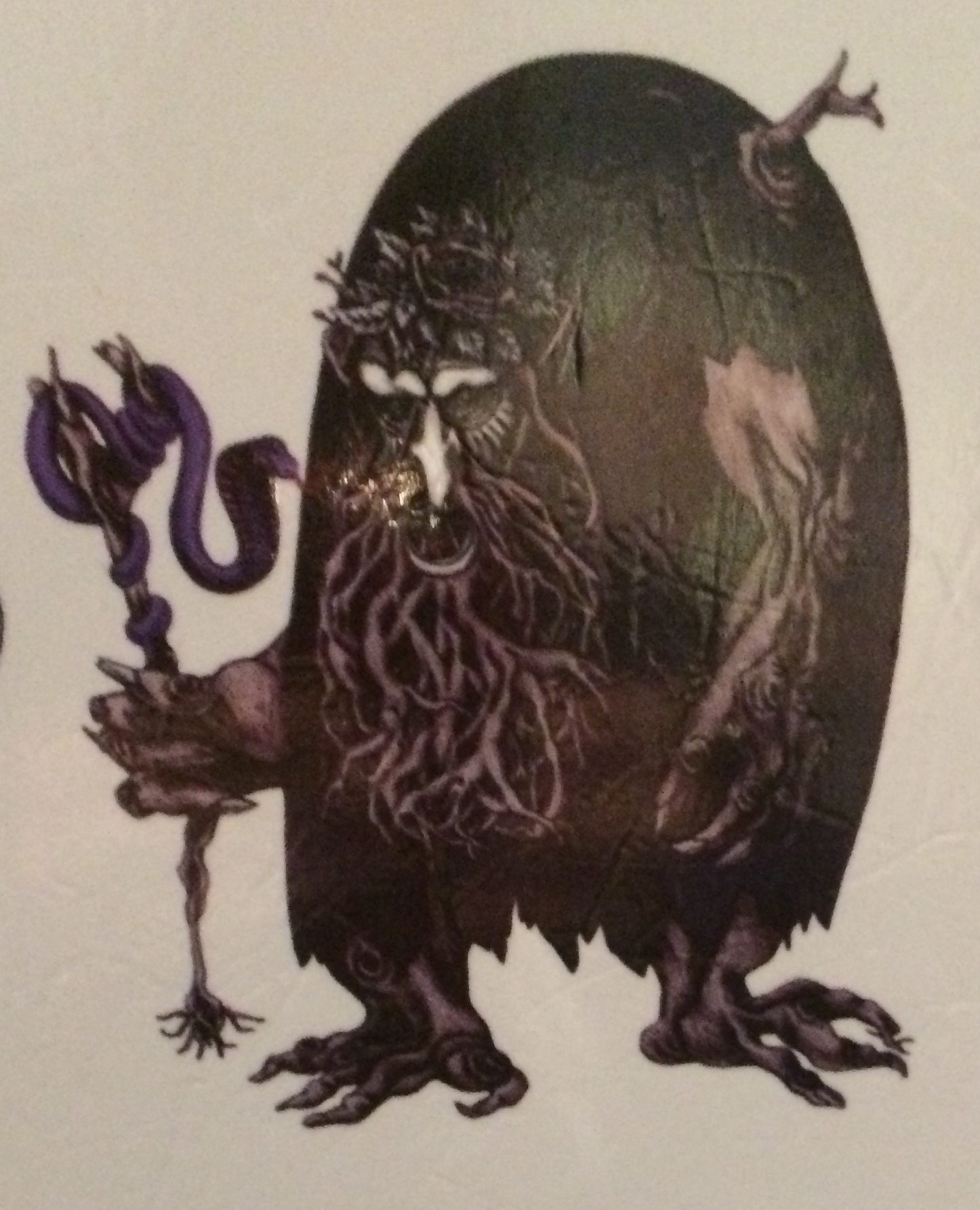
The Leshy is another guardian spirit, though you’d never guess it by looking at its fearsome appearance. This creature lives in the forests of Eastern Europe, specifically near the Slavic countries like Bulgaria and Czech. The Leshy’s hair and beard are made of leaves and grasses. It protects wild animals and will play tricks on any who wanter into the forest.

IMG_3502

Look at this skull. What do you see? A monstrous cyclops? Then your imagination would be on par with the ancient people of the Mediterranean. The big round space in the center of the skull, which looks like an eye socket, is actually the nose hole of for a mastodon. We so want to see monsters, that sometimes our mind creates them where they don’t exist.

What sorts of monsters inhabit your dreams? Are they there for protection or to haunt you?

Tim Kane