How I Used Power Writing Sessions to Multiply My Manuscript Output

Even though I’m quite satisfied with where I am as a writer, I can’t help by envy those folk who seem to pump out page after page of writing each day. Now I know I don’t have the luxury of writing everyday, all day. I do have a job. Plus, when I get the opportunity, I spend time with my family first. That’s what it’s about.

Yet, I am a writer. And I commit myself to this endeavor daily. Why the heck else would I wake up every day at 4:45? Certainly not for the perks. No, I trudge to my computer in a crepuscular haze to indulge my joy of writing.

That was me last week. Then everything changed.

On Friday I ran across this article: 10,000 words in one day? No way…WAY! I read it and felt mesmerized. I instantly knew it was possible. The author, PD Martin, broke down the day. It consisted of four two-hour blocks, with tiny, fifteen-minute breaks in between.  I knew a whole day wasn’t feasible. I think writers who do this don’t have kids. My five-year-old girl is incredibly patient, but this would break the bank for waiting.

So an all day writing session was out. But I could shoot for one of the two-hour blocks. I’ve certainly written for this length of time before without any earth-shattering word outputs. But the way the author described the technique was similar to the outlining method I’d used before (see Write the Way Vermeer Paints).

Additionally, the author spoke of having no breaks whatsoever. Shutting of the Internet. Muting the phone. Etcetera. (Actually, the Internet is rarely a problem, but I do journey downstairs for coffee refills and stretches.)

I was intrigued. I wanted to try it, and soon. Saturday morning I found another article How to Write a Book in Three Days: Lessons from Michael Moorcock which details another writer using a speed method to shortcut his way to a novel. In these snippets of an interview with Moorcock, he admits to using a formula. Also, he supposed his form would work best for epic and fantasy fiction.

The gist of both systems was to write and without looking back. Don’t worry about formatting, dialogue tags, spelling or punctuation. Just write. And I’ve done this before, but only for forty-five minutes at a time. And it was rather draining.

The first hurtle I came up against was one of planning. This style of writing—pedal to the metal, damn the torpedoes—suits those who write with no end in sight. The type of author who has little notion where a book will go from page to page. That’s not me. I like structure and to know where my manuscript is headed.

Typically, I do what I call scene building. I map out scenes based on the character’s goals, complications, and frustrations. Often these change as I write the actual chapter, but having a direction helps me get over those spots where the inner critic stomps all over my creativity. (Even Moorcock recommends having a plan.)

My solution was to take a day (Saturday morning, in fact) and map out as far as I could go. I jotted down three pages of notes.

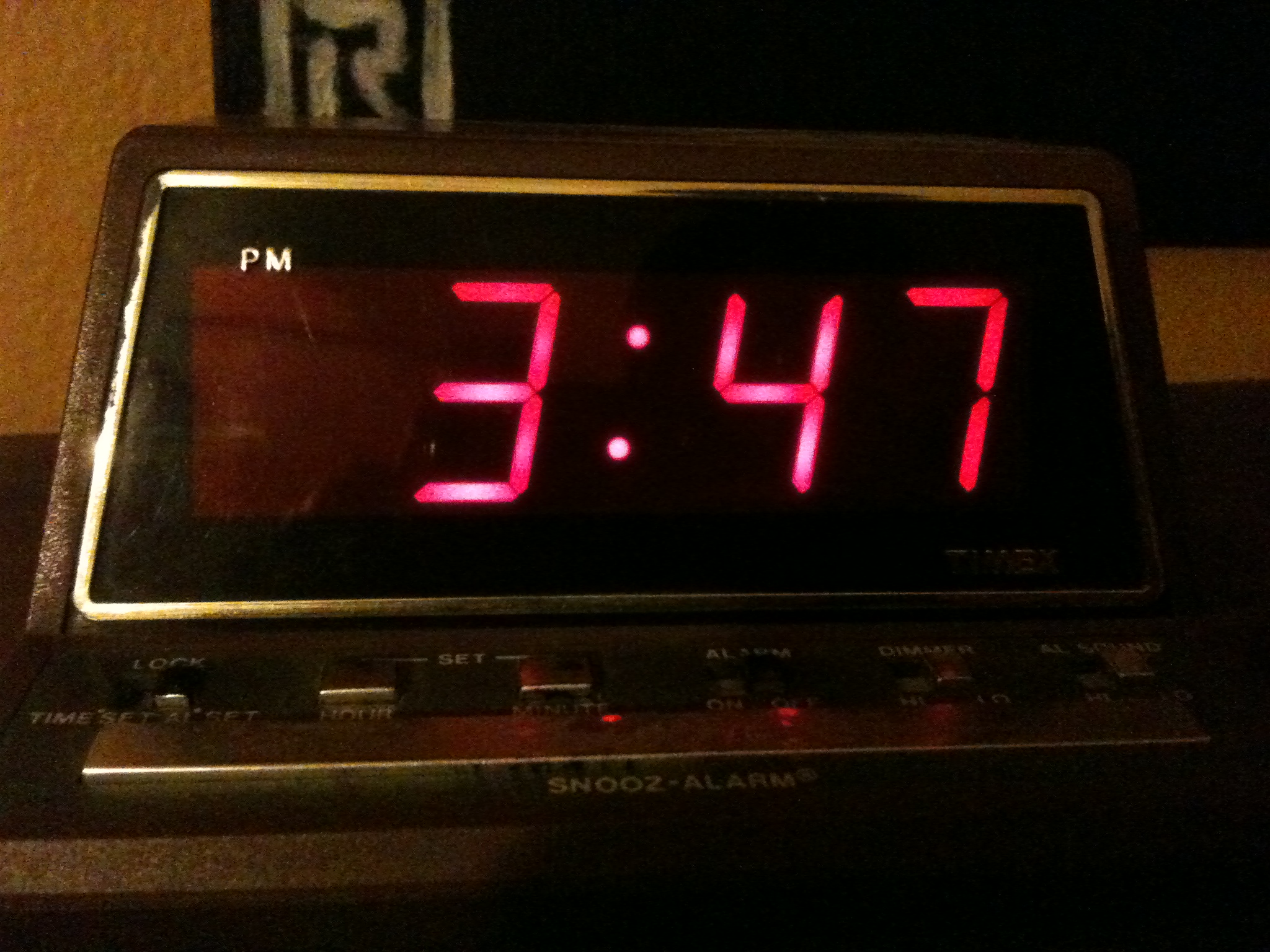
Sunday arrived and the alarm rang at 3:47 in the morning. (I have something of a fixation for numbers. Evens are bad and odds are good. Prime numbers are the best. They just feel right.) I bypassed the snooze and got the coffee on. I knew, that in order to have a solid two-hours, I needed to start no later than 4:15. This is because my daughter usually rouses between 6:15 and 6:25.

I actually got to the keyboard at 4:17. (I scarfed down a bowl of cereal.) To avoid extra breaks, I brought up my thermos of coffee. Then I went to work.

Using the print out of the scene mapping I did the day before, I crashed through the first hour with little problem. Then the distractions nudged at me. My brain began asking questions.

What time is it?
How many words have you written so far?
Should I take a break?

I should explain that I set my word processor (Pages) to full-screen mode, so I can’t see the time or menus or anything but the page. Yet for the next ten to fifteen minutes my gaze wandered everywhere. My body wasn’t used to this sort of output past the one-hour mark.

Yet I persevered. Once I got over the hump, I plowed through another hour of writing. I actually found a reasonable stopping point right around 6:20 (my daughter slept till 6:24 this morning).

In order to keep up the pace, I blew past anything that even hinted at stalling. I would simply write the word “description” for new people or rooms. I wrote dialogue closer to theater-style, with only a name and a colon, no quotes. Sometimes I skipped any indication of a speaker when it was obvious.

I’ve always found that dialogue comes out much better this way. To get the flow correct, you can’t pause. You must have it match the natural rhythm of a real conversation. I add the word “beat” when I want a pause in the speaking. I know, when I go back to edit, that I’ll add in plenty of  details.

My final output, for two hours, was 2550 words spread over 14 pages. Typically I write between 300 and 500 words, so this was about a week’s worth in one day. Of course it was pretty rough on y body. I yearned for a nap all day. And the words I did write are fairly rough. They need some serious editing and revision.

But still, I took my output and quintupled it. At least. Any further revisions will only add to the word count.

Power Writing may not be for everyone. But the rewards are amazing. You get words on the page. Your mind finally snaps free of the inner critic.

Try it. You’ll be amazed at the results.

Tim Kane
How Paper and Glue Books Might Lead to Your Next Best Idea

I admit that more often than not, I used the computer to answer my questions. I have a nifty widget that pops up and becomes an instant thesaurus and dictionary. But there are some times that I need to yank that old paper and glue tome off its bookshelf and turn some pages.

A few weeks ago I had an experience that reminded me what writing was like before the Internet and widgets and apps and all those time saving devices. I was doing some world building and needed some specific words to describe people and magic. I wanted the words to be special and my computer widget came up dry.

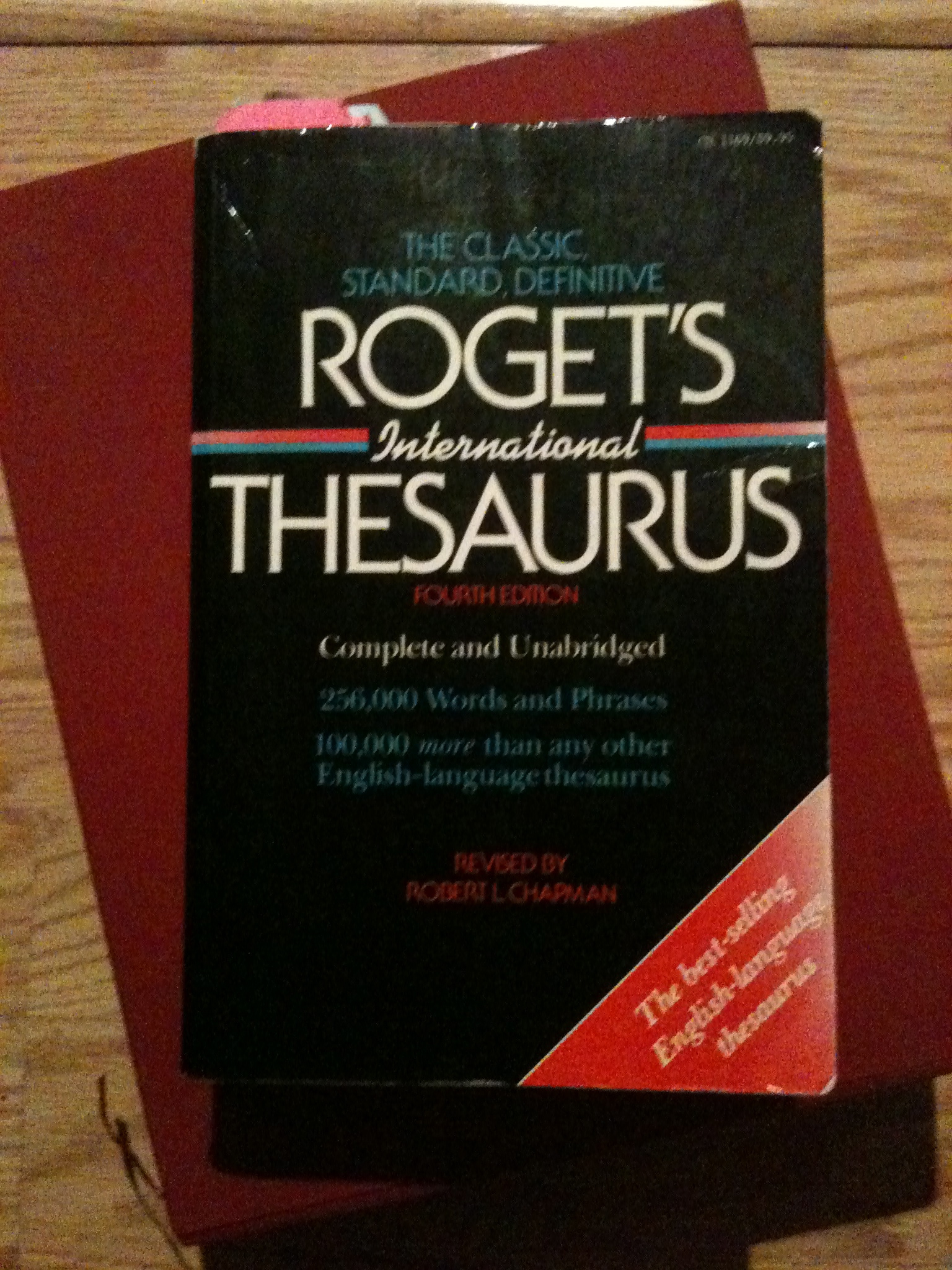
So I pushed the keyboard back, clunked down the books and started researching. My most favorite book ever, and the one that I turn to when I need some great words: Roget’s International Thesaurus Fourth Edition.

Now, I’ve searched and searched for a digital version of this. I did find a website where you can page through a virtual copy of the book (which takes much longer than the actual book). But no app or other copy of Roget’s Thesaurus has what the fourth addition has.

Most Roget’s Thesauruses are organized like your typical dictionary—alphabetical. Instead of definitions, like the dictionary, you get a string of basic synonyms and antonyms. Useful, but easily replaced by all those fancy apps.

The Roget’s Fourth Edition words differently. It’s organized by subject. This means that to look something up, you have to search twice. Let’s say you want another work for walk. First I look walk up in the index at the back (which is alphabetical). This gives me a series of options for nouns (amble, arena, circuit, gait, path, race, region, route, slowness, sphere of work, vocation) and verb (ambulate, go slow).

Already the beauty of this book reveals itself. It shoots your brain in different directions. What the heck is “sphere of work”? (I looked it up. Walk related to a cop’s beat.)

Next, you look up a number related to the shade of meaning you want. Let’s shoot for race (796.12). This comes under the heading “Contention.” The subsection 12 deals with contests of speed.

But since this Thesaurus is arranged by topic, you can look at the sections around. Section 797 is “Warfare.” The previous section is “Disaccord.” All these lead to new ideas, which is pretty much what this creativity thing is all about.

And these are ideas without distractions. You take a saunter through the Internet to look up words and before you know it, you’re searching for news reports, or checking your Twitter feed, or anything but what you intended to do.

Paper and glue books don’t have an on/off switch. You can’t go off track. So if I’m saying anything here, it’s try to unplug once in a while. Pick up a real thesaurus or dictionary and actually search for something. The time it takes to flip those pages might actually trigger an idea you didn’t even know you wanted.

Tim Kane

Fantastic Four Characteristics to Make You a Better Writer

Ok, I’m a comic book geek through and through. Out of the current 594 issues of Fantastic Four, I own 576. So needless to say, a lot of my thought processes get filtered through the comic book viewpoint.

Two recent events got me thinking about the Fantastic Four again. The first was starting school. Last week, 31 new students began their sixth grade career with me as their teacher. I always conduct a team building exercise to highlight important character traits. You know, honesty, organization—things that will help them in life.

The other event (that always seems to occur the same week as school) was the San Diego Comic Con. I haven’t gone every year, but I’ve certainly racked up my share. Plus, I started attending in the 1970s back when it was still relatively dinky. I do know my way around an exhibition hall.

My mind went to work to link these two concepts together—instilling good character in pre-teens and a convention floor crammed with 150,000 pop culture nerds (like me). The resulting pastiche was an idea to base character traits on the Fantastic Four.

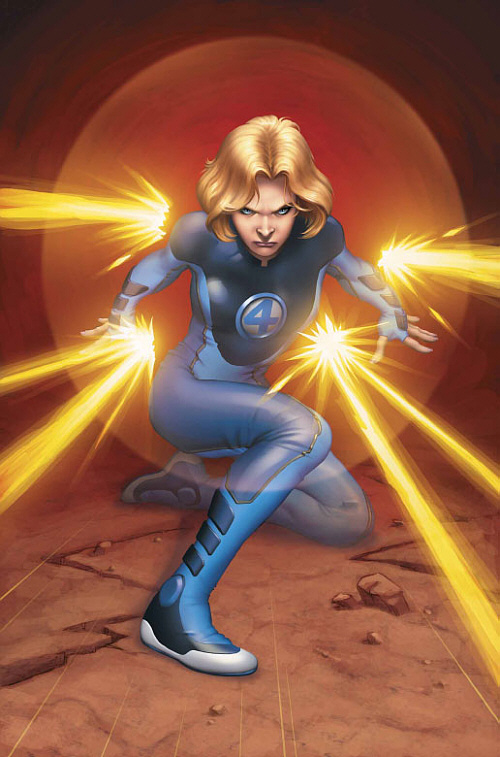
Invisible Woman
She represents teamwork. Think about it. She turns invisible. No one knows where she’ll be. If she doesn’t stick to the plan, her teammates will bash into her or knock her down.

As a writer, teamwork is crucial to success. Only recently did I join professional writing groups. Before that, I pretty much wrote in isolation. It was natural for me. I was an only child and was used to working alone.

A professional critique group raised me up to a whole different level of writing. But you can’t approach this venture selfishly. A critique group is reciprocal process. You have to put everything in. You can’t always be thinking about your own work. I often find I learn how to be a better writer by striving to improve the work of my fellow scribblers. And that’s the essence of teamwork.

The Human Torch
Definitely courage. This is a no-brainer. Johnny Storm is a hot head. He often rushes into the fray without thinking. Yet, he never holds back. A trait that wins many battles. But is also got him killed in issue 587. (Maybe he’s dead. Nothing is permanent in comics.)

This is a quality every writer needs. When you put together that manuscript, don’t hold back. Peel back your soul and dredge up every bit of nasty that lurks inside. Take a risk. That’s the only way to write deadly honest prose.

Mr. Fantastic
The epitome of Reason. Yes he has the power of super stretchiness. However, most of the time he defeats his villains through a well conceived plan (which often includes building a machine).

As a writer, organization is key. Plan your scenes before you write. Set up a character bible so you get the details right throughout the story.

But reason is more than simply thinking ahead. Mr. Fantastic can stretch to attack an opponent from any direction. Working on those tough points in your manuscript are the same. Bashing your head against a blank computer screen will get you nowhere. Think. How you can get at the story from a different direction? Maybe take a break. Switch locales. Go old school with a notepad and a pen. Whatever works to crack that blank page open and get the words flowing again.

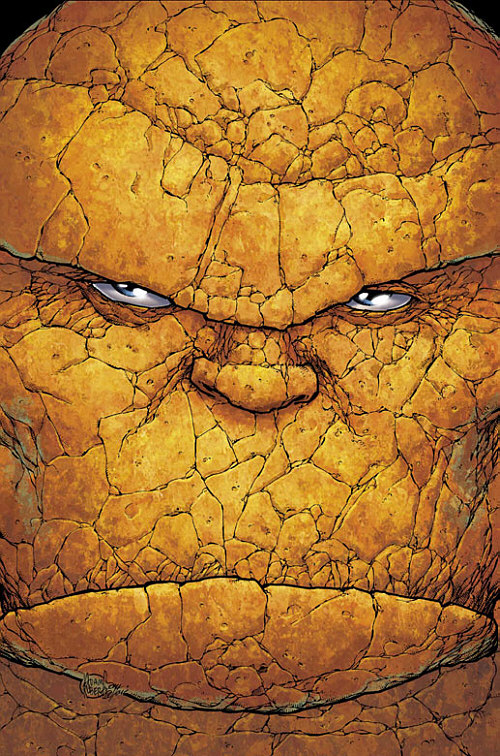
The Thing
Persistence. Period.
This is my all time, favorite character. No other super hero personifies persistence like this man. I mean he gets stuck with the ugliest mug in all of comicdom, yet he never gives up. Yes, the Hulk outclasses him in strength every time. This won’t stop Ben Grimm. He keeps up the fight until there’s nothing left.

Persistence is every writer’s secret weapon. I mean we aren’t actors or models who will lose our good looks. Or athletes that have to worry about strained muscles and the ravages of time. We can write until the Grim Reaper knocks on our door. Take my good friend, Chet Cunningham. He’s written 400 plus books. His eyes are going, so he has to use a magnifying glass to see his computer screen. Yet he still churns out the books (usually two or three a year).

Yes you’ll get more rejections than acceptances as a writer. Your critique group, though helpful, won’t be all smiles and sunshine. If they’re good, they’ll tear your sentences apart.

But you need to keep going.

This is what separates wannabes from real writers. Butt to chair. Keep writing. No matter what.

Nuff Said.

Tim Kane

Must See Booths at the San Diego Comic Con

Every year the Comic Con hits town, I head down to the Exhibition floor to check out the vendors. Yes there are the mega-sized corporate booths like Lucasfilm and Marvel, but unless you sprint to them directly after the doors open, they’re mobbed. (In fact, I’m often amazed at how there are already lengthy lines when I arrive directly after opening hour.) I prefer to frequent some lesser known vendors.

Urban Vinyl
My first stop is the Urban Vinyl Toys area. This is always located in the upper left corner of the massive floor (find the map PDF here). If you’re not familiar with Urban Vinyl, it means toys that you’re not meant to play with. I know what you’re thinking. Huh? Why shouldn’t I play with them. This is an offshoot of the action-figure-in-original-package set. Only here, these toys are designed to be looked at, not played with.

Take Funko (booth 4829). Last year I bought a Thing bobble head. Sure I wiggle it once in a while, but most of the time it sits on my desk looking nifty and admired by my students. Yes I disagree that all Urban Vinyl toys need to be no touch items.

My absolute favorite is Conduct Happiness (booth 4832), creator of such slogans as “The Pea Pea Dance,” and “Pea in the Pool.” My daughter loves their Go Pea Go book. If I could, I’d buy everything at their booth. One of their neighbors is also a fav or mine: Mr. Toast (booth 4831). They make plush toys of unusual items, like toast and bacon. Basically, you can have your own plushy breakfast. (A bit like those ads at drive ins with the dancing hamburger and soda cup).

Cthulhu
Ok, I’m a sucker for anything old gods. Mostly I like the aesthetic, the tentacles and creepy vibe. For a general smorgasbord of items look no further than Adventure Retail (booth 4423, catty-corner to Urban Vinyl). They have plenty of stuffed old gods (we have a Nyarlathotep) and they even carry Cthulhu slippers (have these too). I’ve also picked up some Lovecraft audio books produced by Audio Realms.

All the way on the other side of the exhibition hall (quite a trek), you’ll find Badali Jewelry (booth 530 right next to the ZDN Zombie Defense Network). They have the most amazing Cthulhu jewelry. I own the Miskatonic class ring. This year they will reveal a new Necronomicon necklace.

Steampunk
Okay, last year I found an aisle that had three or four great steampunk vendors (I want to say there were on the fringes—far right or left of the floor), but seeing as the Comic Con hasn’t designated any stempunk section, I’ll have to hunt for it again. One vendor that is easy to find is Weta’s Dr. Grordbort (Booth 2615 sharing with Dark Horse). If you’ve never experienced Dr. Grordbort’s awesome ray guns, then you are not a true steampunker. These guns make you want to shed the internet for some steam and brass. So far I’ve picked up the tiny models of each gun (I still can’t afford the full sized ones).

That’s pretty much it. I wander around, looking for eye catchers. If I can afford it, I’ll try to extend my Fantastic Four collection. But seeing as one issue in this range starts at a Ben Franklin, I often can’t afford these pleasures.

Enjoy the Comic Con and remember, pace yourself. That’s a big convention center.

Tim Kane

Force That Inner Whiner to Grow Up and Get Writing

No one likes a whiny writer.

Lately I’ve been struggling with my inner whiner. If you’re a writer of any consistency, you’ll know what I’m talking about. It’s the voice in your head that complains about critiques. It grouses about revising. Basically, it’s the one that holds you back.

I’ve learned to beat this inner whiner back, but it never stays down. Just recently I received feedback on the final revised chapters of my manuscript. In my mind, I was ready to send the novel out to agents. Get the ball moving. Etc.

But then the critiques came back. Not what you think. Mostly positive, confirming that the story was ready for an audience. Then, inches from the finish line, one writer saw that I didn’t have enough closure for a key character.

Then came my inner whiner. “Good enough,” it said. “Just ignore it and send the manuscript out.” But when a second critiquer nailed me on the same issue, I couldn’t ignore it. I either had to face up to the fact that I was willingly going to let this novel continue in a substandard state, or I had to get to work.

This got me thinking about the various ways your inner whiner tries to subvert you to produce less than astounding work. I came up with two versions.

The “I Wrote It So It Must Be Good” Syndrome
This inner writer tells you that everything you create is golden. It urges you to rush toward publication like a kid stuffing his hand in a Fritos bag. It doesn’t trifle with revisions and it cringes at the mere suggestion that the writing isn’t ready.

This was me for the better part of my writing career. I had few real writers to bounce ideas off of. No critique groups. It was just me and the computer screen. That, I think, is what breeds this syndrome. Isolation. After only a year with the San Diego Professional Writer’s group, these delusions were slapped out of me.

The “Good Enough” Writer
This is the next step up. Here your inner whiner accepts that you need to do some revision because that’s part of the writing bargain. But there are whispers, at the back of your head. “You’ve done enough. This writing hits all the marks. It’s ready.” It implores you to move on. Finish and submit.

I hate to admit, but this is where I’ve been the last few months. I struggle to resist the call to submit. Just end the constant revision and get the whole thing over with.

A great writing friend of mine, Crystal Allen, pointed out that critique groups aren’t just there to judge and improve your work. They should call you on your foibles. And push you.

There are two types of writing:

  • Good enough
  • The best I can do

The goal of a good critique group is to push the writer toward that second goal—the best possible writing you can accomplish.

The answer to silencing that pesky inner whiner is camaraderie. You need other people, professional writers, who will nail you when you’re being lazy. This requires a level of honesty and trust that is hard to come by. But you’ll need it to grow as a writer.

Tim Kane