The Un-History of the Undead Part 1: Zombie Folklore

Don't bury me. I'm not dead!

Imagine that a zombie knocked on your door—a real, true to life (or death) zombie. You open the door and find a black man, looking every bit normal and alive, except for the listless expression and glazed eyes. No shambling carcass of rotting flesh and bones. It does not salivate for your intestines or brains.

The word zombie signifies a member of the undead—those creatures that come back to haunt the living. However, the image that comes to mind for this creature has been greatly shaped by popular media, such as literature and film. In the example above, the first description comes from folklore, while the second is influenced by fiction. How did our perception of these creatures change over the years?

Lafcadio Hearn introduced English speakers to the word zombie through his brief article, “The Country of the Comers-Back”, which appeared in Harper’s Magazine in 1889. (Although the OED dates zombie back to 1819, it was Hearn’s article that circulated widely enough to catch the public’s attention.) Hearn had traveled to Martinique in 1887 to study local customs and folklore for a series of articles on the Caribbean. It was there that he heard talk of zombies.

While it’s true that Hearn discovered the zombie, it was left to American adventurer William Seabrook to capitalize on it. Arriving in Haiti in 1928, he left no stone unturned in his quest for the corps cadavers (walking dead). This led to his autobiographical travelogue The Magic Island, which became an immediate bestseller.

A Haitian farmer by the name of Polynice introduced Seabrook to some real live zombies. The farmer brought the adventurer to the middle of a plantation and pointed out three zombies and the man controlling them. Seabrook went up to each of the zombies in turn, and found them to be little more than dumb brutes, working mindlessly. The eyes were dead, unfocused and vacant.

A central precept of Voodoo, a hybrid of African animism and Catholicism, is the possession of a body by the loa. The loa is usually translated as god or divinity, but it is closer to a genie, demon, or spirit. A person was believed to have two souls, the gros-bon-age (the big good angel), and the ti-bon-age (the little good angel). Each soul served a purpose. The gros-bon-age served to give the body life, while the ti-bon-age gave the person their personality. During a Voodoo ceremony, the loa would displace the ti-bon-age, and thus control the person’s body.

A Voodoo sorcerer, called a bòkò, had the ability to transform any person into a zombie. The bòkò would sprinkle a powder on the doorstep, and when the intended victim stepped on it, the magic entered through the soles of the feet. The person died soon after. Within three days the bòkò snuck into the graveyard, recited a magical chant, and called the victim’s name several times. The zombie had no choice but to answer and come out of the ground. The bòkò then beat the body with a whip to keep the ti-bon-age from returning. Often the bòkò kept the ti-bon-age in a jar. This was called a zombie astral, while the body that walked around, soulless, was called a zombie cadavre.

Every member of society shunned the zombie. This fear did not center on what the creature might do physically. Zombies were entirely docile. It was becoming a zombie that so horrified the islanders. This represented a return to slavery, as the creature must literally do whatever its master bids. Even after death, you might return to work in servitude. Canadian ethnobiologist Wade Davis spent several years researching the zombie powder. He commented, “Given the availability of cheap labor and the physical condition of the zombie, there is no economic incentive to create a force of indentured labor” (American Scientist, 1987).

In order to prevent loved ones from becoming zombies, Haitians took precautions similar to what the Serbians did for vampires. The body was often killed again, either by poison, strangulation, stabbing, a shot to the head or decapitation. Measures were also taken to prevent the zombie from rising. A wealthy family would bury their loved one in a solid tomb, while the less off would inter the body under a piece of heavy masonry. In order to prevent the zombie from answering this call, precautions were made. The mouth might be sewn up or tied shut using a strip of cloth fastened over the head and under the chin. Finally, a zombie might be distracted so that he might not hear the bòkò calling his name. There were two types of distractions. First the body would be buried with an eyeless needle so the corpse would spend eternity trying to thread it. The other method involved scattering seeds in the coffin, and the zombie was forced to count them all, one by one.

Becoming a zombie was not necessarily a permanent condition. There were several cases of people who died, only to be discovered many years later seemingly normal. One Clairvius Narcisse died in 1962 after complaining of sickness and coughing up blood. Eighteen years later his sister, Angelina, discovered him in the l’Estere marketplace. His speech was slurred and his muscles were weak, but he knew that he was no longer a zombie. Apparently, after being dug up and beaten by the bòkò, he had worked on a farm with other zombies. Only when one of the zombies killed the zombie master did they all become free.
Another way to cure an individual of the zombie curse was with salt. If a zombie consumed even a grain of salt, the fog that swirled around his brain would lift, and he would become filled with an unspeakable rage. He would first turn on the one who controlled him, killing the zombie master and destroying his property. The released zombie would then go in search of his tomb, claw at the dirt, and collapse onto his empty grave.

Seabrook’s 1929 publication of Magic Island touched off interest in the zombie and the Caribbean. Unlike Dracula or Frankenstein, the zombie wasn’t under copyright, since Seabrook was essentially reporting on fact. This led to the production of Universal’s 1932 White Zombie, with Bela Lugosi as the zombie master. (The film was preceded by a dreary play, Zombie, penned by Kenneth Webb. The production opened and closed in 1932 after only twenty performances.) The film cemented the Haitian myth of the zombie as a soulless body accepting any order. However the Voodoo version of the zombie would quickly be forgotten in the 60s when an independent filmmaker from Pittsburg got a hold of the concept.
Part 2 will examine what Romero has done to the zombie mythology.

By Tim Kane

I brought this article back from the dead in recognition of the digital release of Stories in the Ether. This has my story, Moth and Rust, which is my take on the zombie story that involves a weary husband who does his wife’s chores for years, only to drop dead. Yet, she still insists he work his butt off. No rest for the dead. Don’t worry, the young nephew has some ideas how to solve this undead problem.

Check out Stories in the Ether in Kindle or Lulu.

What James Patterson and Michelangelo Have in Common (Not in a Good Way)

Michelangelo looking contemplative

It all started when I visited the National Gallery in London. I took the art tour with a curator, who diligently explained what all those famous paintings were about. When we came to a rather room-engulfing Michelangelo, the curator explained that only the sketch was done by the master himself. All the detail painting was done by his studio of apprentices and students.

Apparently, the Renaissance artist functioned more as a modern day advertising agency, providing all sorts of custom services to the patrons. Want a marble statue? He can do that? How about a mural in your foyer? No problem. Leonardo da Vinci advertised no fewer than 60 services he could provide.

So that famous work of art with the equally famous signature might have been composed by underpaid grunts hoping to break into the big leagues.

Then we shoot forward five-hundred years to brand name publishing and James Patterson. Just like Michelangelo, the author has saturated the market. Last year he made $84 million, twice his nearest competitor and more than J K Rowling or Stephen King. He released, on average, a book every two months. Last year is was ten books.

Patterson admits that he runs his publishing empire on the Henry Ford model, assembly-line style. He provides ghost writers with a detailed outline and lets them do all the heavy lifting. Then he reads through the finished manuscript, edits it, and collects the check.

Patterson claims that he is more skilled at writing a plot than the crafting of sentence after sentence. Excuse me, but isn’t that what writing is about? The writing?

Now, it’s true that the ghost writers do get credit on the book, far more than Michelangelo gave them. Yet in the art world, the Renaissance artists were only starting to gain reputations as individuals. Most were simply skilled artisans employed by guilds. Only two-hundred years before Giotto was the first to become a household name.

In this age of Internet and personal celebrity, individual artistic work should be rewarded. Yes, there’s no human way any author can churn out that much fiction. But why dominate the cover with your name when you’re only the idea man? The answer, of course, is money. The publishers make more off of brand-name authors than unknowns. And readers don’t seem to care.

It’s a pity. I know that when I pick up a Stephen King or a J K Rowling, I want to read their words on the page. It’s in the trenches of sentences, paragraphs, and chapters that the true novel is written.

Just today, my critique group questioned the direction my novel was going. I stood back and had a serious look at the chapters I’d written. Yes. It did need to change. The outline I had diligently put together had to be thrown out and reworked. Yet I was only fifty pages into the work. I could fix that.

Somehow, given the schedule pushed by the large publishers, I doubt that the edits made by James Patterson are ever major enough to cause a complete rewrite of the story. If the story sticks to the original outline, then it gets published.

I simply cringe. I mean I know that thrillers are churned off at a fast pace to satisfy avid readers, but I’d much rather wait for one or two quality books by an author than have eight or ten a year. If I need more to read, I can strike out and find a new writer.

It’s not like fast book production can’t be done. Chet Cunningham writes three to four books a year, and he needs a magnifying glass to see the words on the screen. He once told me a wrote a 50,000 page book in a week.

I guess is goes back to that old adage: You’ll never find me selling out, until someone offers. Perhaps if I had the opportunity to pull down $84 million, I’d wrangle some ghostwriters. But until then, let me write the words, thank you.

Tim Kane

Regenerate Willpower Through Downtime

The myth of the author has him (or her) hunkered down in front of the keyboard, toiling away on the great American novel, working hours on end. A pile of crumpled paper accumulating around the trash can.

The reality is a bit more like Jack Torrance from The Shining. That author, embodied by Jack Nicholson, became so engrossed in his work that he typed the same thing over and over again. And we all know how that story turned out.

An author needs a deep well of willpower to shove aside distractions like Twitter and email and carve out time to write. What few writers realize is that the supply of willpower is not infinite.

A study by Princeton neuroscientist, Dr. Wang, found that willpower can be drained and regenerated. Tasks that require a lot of mental effort, like exercising or paying bills, can leave you drained.

Have you ever sat down to write only to find yourself ready to give up before you even start? The problem might be a sapped willpower.

Dr. Wang illustrated his point with “The Radish Experiment.” A group of college students were presented impossible puzzles to solve. Beforehand, one third were given radishes to eat. The second third were given cookies. The last third were given nothing to eat. The radish group gave up after 8 minutes. The other two groups lasted twice as long. Why? Because eating a cookie, or even eating nothing, required no willpower. They arrived at the puzzles with a fully charged battery.

Apparently, eating radishes eats up a big chunk of your fortitude.

The Oreo Method
Here’s the trick to maximizing your willpower: Oreo. Do some challenging work, then play and relax, and then get back to work. So what this means is that little stint on Twitter you’re beating yourself up about, might actually be beneficial. My favorite willpower rebuilders are my daughter and my dog. Nothing relaxes the mind more than creating a Lego tower or petting a dog with it’s head nested in your lap. As tempting as it is to grab my mobile phone and squeeze a little work in, I resist. I need this downtime to recharge.

If you do plan on an extended writing session, don’t do a mentally taxing activity directly beforehand. And don’t confuse fun with easy. Running or exercise usually requires willpower because you have to get off your ass to make it happen.

Likewise, those so-called guilty pleasures require no willpower to do (on the contrary, they suck up the willpower to stay away). So indulge in a cookie or a little Starbucks. It just might be the boost you need to go that extra mile with your writing.

After all, you don’t want to end up like Jack…

All work and no play makes Jack a dull boy.

Tim Kane

The Five Most Common Misconceptions About Classic Movie Monsters

I am a monster nut. I’ll own that. My first published book dealt with vampires in film and television. I grew up on the Toho crew. I have action figures for nearly every major Universal monster (including the second Creature from the Black Lagoon, The Creature Walks Among Us).

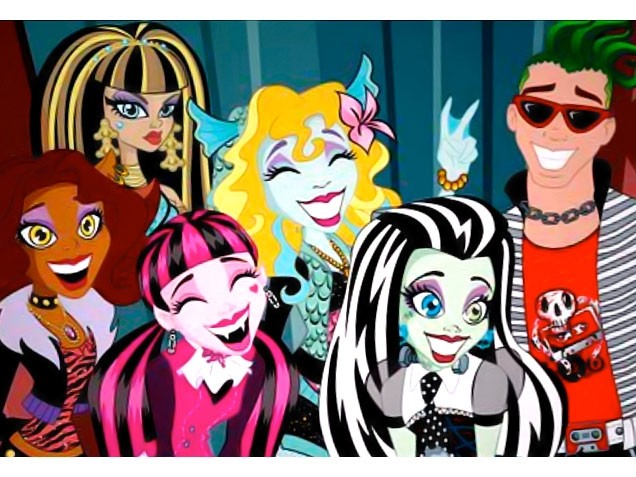
So it shouldn’t come as a surprise that my four-year-old daughter has taken a liking to the classic monsters. By this I mean the big five: the four Universal monsters (Dracula, Frankenstein, The Mummy, and the Woflman) and also zombies. Recently, while watching the Hex Girls on Youtube, my wife stumbled upon the Monster High videos. My daughter was hooked. But this got me thinking. The cartoon/merchandise features the big five monsters, all with the familiar quirks akin to each one. But I knew that many of these were off base from the true legends of these creatures.

The five classic monsters (plus a gorgon)

So after hours of research, I present to you the five most egregious errors we make about classic movie monsters.

5 Werewolf

Lon Chaney, Jr. as the Wolf Man

I admit, after looking through countless books, I found that most of the traditional legends line up with our common associations. The link of werewolves to the moon dates back to 1214 where Gervaise of Tillbury reported cases in Auvergne of men turning into wolves during the full moon. There is some controversy about the silver bullet. Some believe it was all made up by Universal for the Wolf Man movie. But historians know that in 1767, the Beast of Le Gevaudan was killed with bullets from a melted silver chalice.

The only thing I can say that most likely not part of original folklore is the pentagram on the hand as a mark of the werewolf. This was probably concocted by the Universal folk for the film. A pentagram has traditionally served as a symbol of protection (even from werewolves).

4 The Mummy

Boris Karloff as the Mummy

Mummies are a staple for monster themed parties and kids playing with rolls of toilet paper. But not all mummies are bandaged and scribbled over in hieroglyphics. There are mummies all over the world. Basically any place extremely dry will create a mummy. And for the sake of argument, we’ll define a mummy as something with most of the internal organs still present. Those are the squishy bits that tend to dissolve during decomposition.

The strangest mummies I found were the Incan mud mummies. These date back to 5000 BC, rivaling Egypt as the first to mummify. Basically, the Incans would disassemble the body, organs and all. They used heat to dry the skin. Then the body was reformed using feathers, clay and glass. Everything was covered in a white ash paste. Finally, the skin was refitted on the body.

Then there are the bog mummies. This type of mummification might have been accidental (oops, I fell into a peat bog) or a form of sacrifice (slipping a deceased relative into the bog to bring him or her closer to the gods). Either way, the body became preserved in the frigid stagnant water loaded with tannic acid. Sometimes not everything survived the years in the bog. Take the bodies found in Florida. Here only the brain was preserved (along with the skeleton) from bodies 7000 to 8000 years old.

Finally, we have the Chinese mummies. Western China is basically one ginormous desert. In addition to the sand, heat, and wind you get bonus pits of salt. These were used a cemeteries as well as areas of sacrifice. One young woman was found partially dismembered with her eyes gouged out. There was also a baby boy, apparently buried alive.

The strangest finds have come from the Takla Maken Desert. Over the past thirty years, archeologists have found many mummies, but all of them have been caucasian, not Chinese. And these shriveled folk had a thing for clothes, many being buried with multiple outfits. The most famous mummy is “The Man with Ten Hats.” You guessed it, he was buried with ten hats.

3 Zombie

A Voodoo zombie

Real zombies don’t eat people. In fact they don’t do very much at all. Lafcadio Hearn introduced English speakers to the word zombie through his brief article, “The Country of the Comers-Back”, which appeared in Harper’s Magazine in 1889. Most were little more than slaves working on sugar plantations in Haiti. They were dumb brutes, working mindlessly. The eyes were dead, unfocused and vacant.

A central precept of Voodoo, a hybrid of African animism and Catholicism, is the possession of a body by the loa. A person was believed to have two souls, the gros-bon-age (the big good angel), and the ti-bon-age (the little good angel). Each soul served a purpose. The gros-bon-age served to give the body life, while the ti-bon-age gave the person their personality. During a Voodoo ceremony, the loa would displace the ti-bon-age, and thus control the person’s body.

It was George Romero’s film, Night of the Living Dead, released on October 2, 1968, that forever changed the image of the zombie. Romero never refers to his walking dead by the word zombie. Instead each of his films calls them the living dead. Despite this technicality, modern moviegoers made the connection. When Romero’s second film, Dawn of the Dead, was released in 1978, it was distributed internationally as Zombie (or Zombi).

2 Vampire

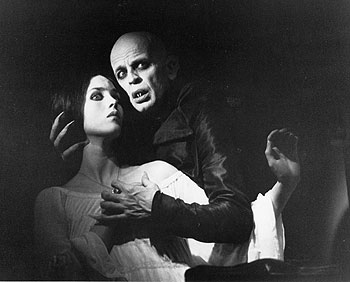
From the 1979 Nosferatu the Vampyre

Traditionally, vampires looked nothing like Edward Cullen or Lestat. A more apt description would be a ruddy-faced overweight man with long fingernails, his mouth and left eye open, with a linen shroud as clothing. (Not really going to sweep you off your feet, is he?) The biggest transformation to this myth came with the 1931 film version of Dracula staring Bela Legosi. Here the monster is shown as debonaire and charming. Much of this depiction came from Bela Lugosi’s performance and the original stage play.

Additionally, Bram Stoker’s Dracula could walk in daylight (although he prefers night). It was left to two subsequent movies to introduce death by sunlight. In Son of Dracula (1943), Lon Chaney, Jr. Plays Count Alucard (Dracula spelled backward). He simply fades away when struck with the sun’s rays. In Return of Dracula (released in 1944, only a few months after Chaney’s performance), Lugosi returns as Armand Tesla. In the end, he dissolves in the sunlight.

For more information on vampires, check out my article on vampire apotropaics.

1 Frankenstein

Frankenstein’s Monster

The problem most people make with this monster is his name. Frankenstein is the doctor. The tall green guy with bolts in his neck is simply “The Monster.” In the Mary Shelley novel, Frankenstein; or, The Modern Prometheus, she called the creation Adam. In one of the play adaptations of the novel, the creature is billed as simply “________, played by Mr T. Cooke.”

This time we can’t completely blame the Universal picture for the confusion over the monster’s name. This happened in Shelley’s time. (It’s what you get for not naming a central character, writer’s take note). Yet once Universal cast Karloff as the “Unnamed Monster”, the audience stuck the monster with the doctor’s name. This is despite the fact that in the opening credits, it’s Karloff who is unnamed, appearing as a question mark.

Opening credits for Frankenstein

I hope all this has cleared up some misconceptions about our favorite monsters. It doesn’t change how these creatures have evolved. It’s natural to think of vampires dissolving in the sun, zombies eating brains, and that hulking monosyllabic fellow as Frankenstein.

Tim Kane

A Clean and Darkened Place—When to Drink Whisky

Current Whisky Collection

I was watching James May Drinks Britain, the episode where he tries some ridiculously strong Scotch whisky that should make him blind. James made a comment about how drinking whisky took him to a dark place.

Now if you’re like me, you might be confused about how to spell this drink. I know that it’s sometimes whiskey and other times whisky. Apparently, this is an issue of great debate. The Scottish take the spelling of their honored drink pretty seriously. They omit the e, making it just whisky. American bourbon, and other like spirits, are whiskey.

I believe whisky to be a noble drink, right up there with the finest of wines. Apparently fresh distilled whisky is clear and very similar to vodka. It’s the aging in wood casks that gives the drink the amber color and distinct flavor.

That got me thinking. When would you really drink whisky?

If it really were just an aged vodka, you could toss it into any old concoction and have yourself a fine cocktail. But it’s not that easy. If you frequent pubs, I imagine whisky might be one of the many drinks in your arsenal, along with the various beers and liquors. Yet if you live in Southern California, and in my case, southern Southern California, then you really have few pub options. I think there are only three or four real pubs, and they’re about 30 miles north. Typically, Corona and Budweiser engage in a never ending war for converts.

I don’t imagine you’d order a glass of whisky with your average meal. It’s not that kind of drink. It requires commitment and a degree of reflection. I think this is what James May was after when he spoke of dark places. A good whisky will close in around you like a warm blanket, leaving you only with your thoughts. You wouldn’t interrupt this with a side of fries and a burger, would you?

But what about the Manhattan, you say? That has whiskey in it (notice the spelling). Yes. And also bitters and vermouth. It’s a standard cocktail. I really don’t think you’ve be mixing single malt with anything but water.

Okay, a quick aside. If you’re confused by single malt, this means that the whisky comes from only one distillery and is not mixed with any other whiskies (called a blended whisky). Single malts come in fancy corked bottles with those Scottish or Irish names that just roll off the tongue, like Caol Ila and Te Bheag (Kool Eela and Chay Vek respectively). The prices start at about fifty a bottle and easily shoot up to the two-hundred range.

So back to the Manhattan. Yes, you mix whiskey into the drink, but it’s a blended whiskey at best. Single malts are for solo drinking. And that leaves late at night, in the dark, where your thoughts can unravel into lumps of yarn and lose fabric.

My current list of single malts include the following:

Dalwhinnie 15 years
This is the first bottle I ever bought. I still have it.

Macallan 10 years
I haven’t had a Macallan I didn’t love. So sweet. Devoured almost all of this bottle.

Balvenie 21 years (Portwood)
Bought this after finishing my first middle grade novel. Great mix of peat and sweetness. Nearly drained after two years.

Ardbeg 10 years from Islay
From one of the islands off the coast of Scottland. Islay produces a very peaty bunch of whiskies. First I didn’t think I’d like the peat. But I’ve warmed to it. Bought this after finishing Tarot novel.

Caol Ila 18 years also from Islay
Bought this on my last trip through London, about six years ago. Most is still in the bottle. Super peaty.

As you can see, I tend to purchase bottles to commemorate finishing first drafts of novels. I admit that I rarely imbibe. That’s how some bottles stay around for so long. The reason is as I detailed above. Add to that the fact that I can fall asleep anywhere, anytime. I’ve even fallen asleep while reading. Out loud. So I typically drink caffeinated coffee right before I go to sleep. (No trouble going out. Head hits pillow and I’m gone.)

Only the occasional late nights, when I’m wide awake enough to last the drink, do I partake of whisky. When I do take the opportunity, the lights are dimmed and I sit in the dark with a small glass of amber liquid. Then the thoughts simply flow, clean and pure.

Tim Kane