Force That Inner Whiner to Grow Up and Get Writing

No one likes a whiny writer.

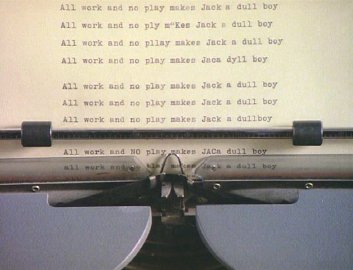
Lately I’ve been struggling with my inner whiner. If you’re a writer of any consistency, you’ll know what I’m talking about. It’s the voice in your head that complains about critiques. It grouses about revising. Basically, it’s the one that holds you back.

I’ve learned to beat this inner whiner back, but it never stays down. Just recently I received feedback on the final revised chapters of my manuscript. In my mind, I was ready to send the novel out to agents. Get the ball moving. Etc.

But then the critiques came back. Not what you think. Mostly positive, confirming that the story was ready for an audience. Then, inches from the finish line, one writer saw that I didn’t have enough closure for a key character.

Then came my inner whiner. “Good enough,” it said. “Just ignore it and send the manuscript out.” But when a second critiquer nailed me on the same issue, I couldn’t ignore it. I either had to face up to the fact that I was willingly going to let this novel continue in a substandard state, or I had to get to work.

This got me thinking about the various ways your inner whiner tries to subvert you to produce less than astounding work. I came up with two versions.

The “I Wrote It So It Must Be Good” Syndrome
This inner writer tells you that everything you create is golden. It urges you to rush toward publication like a kid stuffing his hand in a Fritos bag. It doesn’t trifle with revisions and it cringes at the mere suggestion that the writing isn’t ready.

This was me for the better part of my writing career. I had few real writers to bounce ideas off of. No critique groups. It was just me and the computer screen. That, I think, is what breeds this syndrome. Isolation. After only a year with the San Diego Professional Writer’s group, these delusions were slapped out of me.

The “Good Enough” Writer
This is the next step up. Here your inner whiner accepts that you need to do some revision because that’s part of the writing bargain. But there are whispers, at the back of your head. “You’ve done enough. This writing hits all the marks. It’s ready.” It implores you to move on. Finish and submit.

I hate to admit, but this is where I’ve been the last few months. I struggle to resist the call to submit. Just end the constant revision and get the whole thing over with.

A great writing friend of mine, Crystal Allen, pointed out that critique groups aren’t just there to judge and improve your work. They should call you on your foibles. And push you.

There are two types of writing:

  • Good enough
  • The best I can do

The goal of a good critique group is to push the writer toward that second goal—the best possible writing you can accomplish.

The answer to silencing that pesky inner whiner is camaraderie. You need other people, professional writers, who will nail you when you’re being lazy. This requires a level of honesty and trust that is hard to come by. But you’ll need it to grow as a writer.

Tim Kane

Have a Blue Fish Day (Using Surrealism in Your Writing)

When I was younger, sometimes I would declare that such and such a day was a blue fish day, meaning it had that ethereal quality as if waking from a dream.

What I later learned, was that I was utilizing the the paranoiac-critical method to unlock my unconscious mind. It might just sound like I made those words up. I didn’t. Salvador Dalí did. He was fascinated by the unconscious mind and dreams. (He plagued Freud with letters begging for an audience).

Paranoiac-Critical Method
Typically we’re taught to associate rational cause and effect explanations to events in our lives. Dalí wanted the reverse. A sort of stream of consciousness where irrational thoughts could be attached to events. He described the paranoiac-critical method as a “spontaneous method of irrational knowledge based on the critical and systematic objectivity of the associations and interpretations of delirious phenomena.”

Ballerina in a Death's Head is an example of the paranoiac-critical method. Do you see a skull or a ballerina?

In short, this is the ability of the viewer to perceive multiple images within the same configuration. All of us practice the paranoiac-critical method each time we gaze up at clouds in the sky and imagine different shapes. In fact all those sighting of Jesus on a slice of toast or a stucco wall are simply the Paranoid Critical Method in action.

A great introduction to Dalí and the whole surrealist world comes in the short film “The Death of Salvador Dalí.”

But you don’t have to sit idly by to create these associations. There are certain games you can play to help activate this irrational side of your brain.

Exquisite Corpse
This is a game played often by the Surrealists. In this, each person writes part of a sentence, and then folds the paper over so that the next person has no idea what was written. In this fashion, a collage of words creates a bizarre sentence. The name derives from the first playing of the game: “Le cadavre exquis boira le vin nouveau.” (“The exquisite corpse will drink the new wine.”)

The game was also played with pictures. One person might draw the head and then fold the paper over so that only a few connecting lines could be seen. This would continue until a total figure had been created.

4-part Corpse drawing; Man Ray, Yves Tanguy, Joan Miro, Max Morise

Cut Ups
It seems the surrealists did have their limit as to what they’d accept. At a surrealist rally in the 1920s Tristan Tzara built a poem from scratch by pulling words out of a hat. A riot broke out and wrecked the theater. Andrè Breton expelled Tristan Tzara from the movement.

Not until forty years later did this technique reemerge. Brion Gysin, a painter and writer, noticed that he’d sliced though the New York Herald Tribune on his cutting board. The cut sections lined up and could be read across. He loved the idea so much that he fashioned and essay called, Minutes to Go. Here’s an excerpt.

“Sickle moon terror nails replica in tin ginsberg. Replicas of Squareville — grey piebald pigeons — pointedly questioned, mimic each other.”

I used this technique to write the opening line to my first published short story. I was stuck and wanted a jarring image to pull the reader in. Sitting in a coffee shop, I picked up the newspaper and started tearing (I didn’t have scissors). I had to do two or three tries until something decent came up, but I think you’ll agree, the technique works.

Unfamiliar puddles of light lurked in the crevices like cancer.

So the next time you’re stuck with a scene or a character or even an idea, turn to the Surrealists for help. As your rational brain gets stuck in rut, unwilling to deliver words on the page, kick it in the but by unlocking your irrational side. Make your day a blue fish day and see what happens.

Tim Kane

Did the Greek Gods Eat Mini Marshmallows?

Ambrosia. The word either inspires dread or joy from the coconut and marshmallow concoction. But the origin of this word leads to a recipe for immortality.

Now, why the interest in the snack food of a defunct pantheon? Besides the fact that mythology is plain cool, I’m doing research for a new novel. What better way than to blog about it. Now, I’ve really dug how Rick Riordan handled the Greek gods in Lightning Thief. But I feel he could have done more with ambrosia and nectar. (Maybe he has in subsequent books). So, I’m here to explore these mythical foods, as well as what makes a god immortal.

It seems that the Greeks interchanged ambrosia and nectar. Ambrosia could be eaten or drunk. Nectar was mostly drunk, but sometimes eaten. Me, I always thought of ambrosia as the food (maybe because of the fruit salad) and nectar as the drink.

There’s little information on how ambrosia and nectar are made. Apparently doves carried the food to the gods on Olympus. Ambrosia is described as being nine times sweeter than honey and its fragrance guards against disagreeable speech. I take this last part to mean that arguments won’t break out over the dinner table—good idea when you’re dealing with the Olympian family dynamic. (My guess, they weren’t serving Ambrosia when Eris plunked her golden apple on the table.)

What is clear is that eating the stuff makes you a god. Right after Apollo had been born, he climbed up to mount Olympus (a stunning feat for a newborn) where he received ambrosia and nectar to make him immortal.

A version of the Tantalus myth has the fellow dining at the table of the gods. Tantalus slips some nectar and ambrosia in his toga, and then shares the stuff with his friends on Earth. Not a cool move. Sure you get immortality, but is that really going to help you when Zeus hurls a thunderbolt at your butt?

My first exposure to the stuff (not literally, but in literature) was with the 1904 novel The Food of the Gods and How it Came to Earth by H. G. Wells. In this story these scientists, Bensington and Redwood, create a new chemical food called Herakleophorbia IV, which makes things grow to ginormous size. Being responsible nineteenth century scientists, they feed this stuff to their kids and the result is 40 foot babies. Kind of a weird story, but it falls in line with the Greek myths. The gods and titans were supposed to be gigantic.

The interesting thing I stumbled on was the gods’ blood, or lack thereof. It seems that the Greek gods bleed ichor. I only knew this stuff from Dungeons and Dragons and H. P. Lovecraft, so in my mind, I saw this black oily liquid. However, the ichor of the gods is a golden and resplendent. The theory goes that since the gods do not eat mortal food (food that rots and dies) neither do they. After all, the word ambrosia derives from the root of mbrotos, meaning mortal. Add the prefix “a” prefix to get “not mortal”. The food won’t rot, so neither will the consumer.

So what happens when these immortal gods don’t get their food fix? Well, they can’t die. Instead, the godly ones lie down, breathless, and sleep. They loose all power until they get more ambrosia and nectar.

Now eating (or drinking) ambrosia changes mortals. I’m assuming a human’s blood would transmute to ichor. I don’t know how much you need to ingest. Did Tantalus eat enough? Who’s to say.  After Achilles died, Thetis anointed him with ambrosia to destroy the human side he inherited from his mortal father, Peleus. This implies that simply rubbing the stuff on your skin transforms you, killing your mortality.

Bottom line, you start sipping from the nectar cup, there might be no turning back. It’s like the forbidden apple. One taste is too much. No wonder the gods were irked when someone stole the stuff. There were too many bickering brothers and sisters in Olympus already. Why add a few interlopers?

Ambrosia serves as the ultimate class division between mortals and immortals. Gods have it. Men yearn for it. And no, the recipe for immortality does not include marshmallows.

Tim Kane

Writer’s Paradox: The Less Time You Have, The Better You Write (Or How Writer’s Are Like Grape Vines)

Wannabe writers often bemoan that they can’t find the time to write. It’s not going to happen, they say. They’re too busy.

This reminds me of an adage I once heard: Want something done, ask someone who’s busy. On the surface, this doesn’t make sense. Busy people shouldn’t have time to get something done. But that’s exactly it. Busy people get things done.

Okay, I have to segue to the wine thing. What in the blue blazes does wine have to do with writing? (Other than it can sometimes help loosen the fingers for typing.) Glad you asked. It goes back to something a winemaker stuck in my head years ago. That is: stressed vines produce better grapes.

Here’s the science of it in a nutshell. A vine, like any other plant, wants to flourish. Give it plenty of water and rich soil and it will grow vigorously. Yet it’s fruit will be lackluster. This is because the vine is happy. Why put much effort into reproducing when everything’s so peachy.

Now put that same vine in rocky soil and cut down it’s water to a dribble. The vine will still live, but it’s freaked out now. It’s thinking, I need to find a better place to live. Alas, plants don’t have feet. So the best solution is to produce fruit that birds can eat. The seeds are spread, and the plant hopes to flourish on better soil. The worse the environment, the more the vine will want to search out better sites through reproduction.

The same applies to writing. Imagine you’re a writer with an easy life. You’re like those vineyards where the vines are laid out on flat, level plains with plenty of moisture. Heck, you can even use a machine to pick the grapes. This sort of writer doesn’t have a strong desire to produce work because life is so good.

Now the stressed writer only has a few precious hours a day to get the writing accomplished. No time to dilly dally about. You either write, or it doesn’t get done. Period.

I can’t say I wanted to choose the path of the stressed writer. Economics did it for me. Now, for any wannabe who still claims they have no time, let me illustrate my schedule. First off, I’m a school teacher. A damn good one. I don’t goof off at school. I commit myself to my students. And this takes a good chunk of my time. I get home around 3:30 or 4:00 each day. Then I switch to my family. My daughter usually hits the sack around 7:30, so the hours in between belong to her and my wife.

After that I get to write, correct? Not really. I have a second job (third if you count writing). This is creating test questions for various standardized tests. Remember those word problems about trains barreling toward each other on the SAT? I’m the chap who writes them. This takes usually two hours of my night, which puts me at about 9:30.

Something you need to know about me. I sleep easily. I can fall asleep driving, or reading, or even talking. No, I’m not narcoleptic, but my body shuts down when my brain isn’t stimulated. On long drives, I have my wife read me trivia questions to keep my brain functioning (so I won’t crash the car).

Thus by 9:30 I’m already winding down. I used to write during this time, but I found that I fell asleep on my keyboard after maybe thirty minutes. I still do a bit of writing, but it’s mostly blogging like this or critique work from my writing groups.

That leaves the morning. I set the alarm for 4:11 (What can I say? I like prime numbers). I hit the snooze at least once. But I’m usually up and caffeinated by five am. This gives me a solid hour to work. By six, my daughter is usually stirring and I have to get ready for teaching.

That’s not a lot of time. But I do it every day. Rain or shine. Sick or well. I’m able to produce about 75,000 words (typical novel length) of polished material in one year. Plus, I take weekends off (sort of) and write short stories.

So if you claim to have no time to write, ask yourself this: When will you have time? Stop thinking about what you will do someday, and get it done today. Right now.

Writing is my passion. My mind would starve without it.

Tim Kane

Why Twitter Should Scare the Pants Off All Writers

My wife once worked in a casting office for a local theater. Sorting head shots and arranging casting calls for upcoming plays.

(Uh, Tim. What the heck does this have to do with writing?)

I’m getting to that.

I had to help her sort the head shots one time. There were stacks of them. Some so dusty they’d been there since Shakespeare was a midshipman. She once commented that all wannabe actors should work in a casting office for at least a month. It would show them just how many other talented performers were out there. Schlepping just like they were.

I tried to imagine it. I did. But it never really clicked. I didn’t want to act. So mostly I tucked that comment in the back of my brain as a nifty academic novelty.

Then I logged onto Twitter.

Okay, I’d been there before. Created the account way back in 2008. But only recently did I really try to use the service. Well, now I get what the hypothetical actors must have felt.

Thousands of other writers out there. Not just in other genres, but the exact same thing I write. Lots of them are published. Many aren’t. It scared me.

Sure. I always knew I wasn’t alone. It’s not like my query letters were the only ones agents received. I’d been to conferences. Heck, even a walk through a book store made it obvious how difficult this field is.

But it all still seemed academic. Those writers, after all, weren’t trying to write what I wrote. But on Twitter, I keep running into writer after writer doing the same sorts of things I’m doing. Struggling with the same issues on the page. It freaked me out a little.

Then I rallied.

The scary part about all these people is also the blessing. They’re a community. Their problems are also my problems. There are literally hundreds of writers, all at different points in the publishing process. Some copy editing their galleys. Some attempting to just get that first sale. Either way, they all have something meaningful to say.

So yes, it was a bit intimidating at first. Certainly a wake up call. But hey, writing is something you just do. If you have that bug in you, you’re not going to let it go just cause a few other people got infected too. Man up and accept the fact that it’s a steep hill to climb. It just makes getting to the top that much sweeter.

Tim Kane