Night Write: switching from morning writing to night writing

Today I made a tremendous leap back in time. Up till about a year ago I always wrote in the evening. But, as my schedule grew more hectic (work and raising a pre-school child) I found myself falling asleep at the keyboard. So, I shifted gears to morning writes. I loved it. No worries and I felt more productive. (Although close examination of my word counts shows I wrote more at night than in the day time).

However, I seem to have paid the price in lack of sleep. A three month bout of flu in the spring. Currently, I’ve been battling something equally wicked for the past month. Clearly my body’s worn out. I had to give up the morning writes, but I couldn’t abandon writing. That’d be like cutting off an arm. So, here I am again, clicking away at night. At least I’m not snoozing on my keyboard. I’ll get more sleep and see how it goes.

How Teachers Have Killed Generations of Writers

First off let me admit that I am a teacher. I teach every subject: from math to reading. Yet, I’m also a writer. These shouldn’t be mutually exclusive, yet somehow they are.

Let me explain. I hated creative writing in school. From my third grade book project, where I got a C because of my atrocious spelling, up through high school and some off the wall assignments, my writing accomplishments were few and far between.

What repulsed me so about creative writing was The Prompt—that teacher generated idea that completely sucks the life out of any creativity students have.

Need some examples? Takes some of these:

  • Imagine you’re a snowflake.
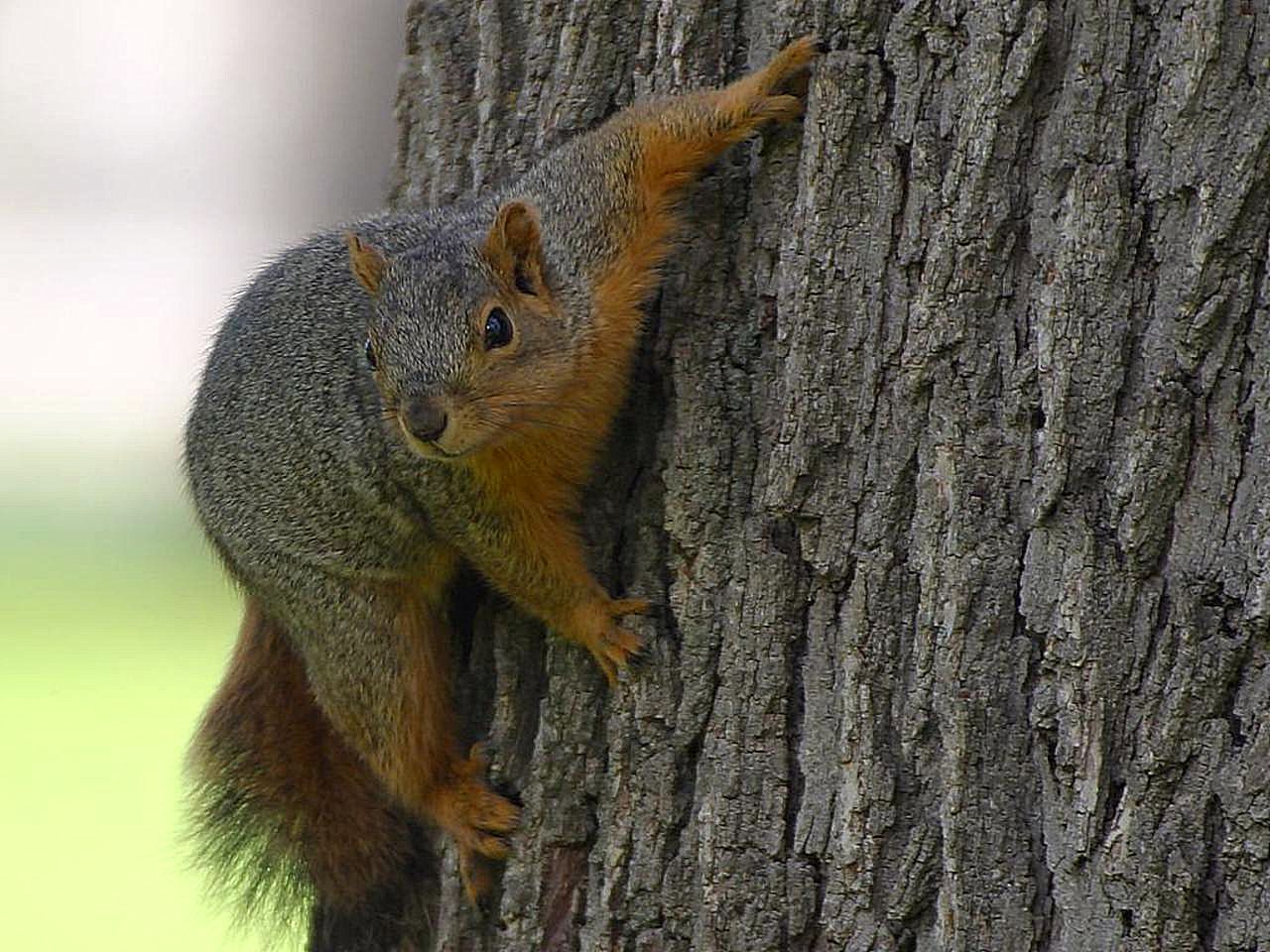
  • What would a day as a squirrel be like?
  • Write about your most memorable day.
  • Write about one of your challenges.

And the list goes on. I mean, really? That’s the best the teacher could think up? Though the truth is somewhat sadder. Most of these ideas have been generated years ago and simply persist, like viruses, ready to infect the creative writing spirit in new hosts.

Let’s explore these narrative nuggets, shall we?

Imagine you’re a snowflake.
Sure. I fall. It’s cold. I land. I melt. Story over. Maybe, if I’m really creative, I’ll land on some kid’s sticky tongue and melt.

What would a day as a squirrel be like?
I don’t know. Boring? I collect some nuts. Climb a tree. Twitch my nose. A whole lot of nothing.

The problem with these two prompts is that most kids will write pretty much what I have. Then the teacher will glance at it and ask for more. Then the kid will sit in his or her desk and look busy for the next twenty minutes, frustrated that no more ideas come. Hey, at least these prompts give you a few sentences to jot down. Let’s look at the next two.

Write about your most memorable day.
Write about one of your challenges.
Even one of these is enough to cripple even the brightest student. I’ve seen it before. The kid sits there, for twenty or thirty minutes, wondering what to write about. Even starting is hard because first you must pick your “memorable” event. Or decide what has “challenged” you. These are the sorts of prompts colleges dream up as submission guidelines. That’s fine. Colleges are meant to challenge you. But a sixth grader could use more help.

Eleven years of this sort of torture might have obliterated my writing spirits, had it not been for one teacher. In my senior year at high school, I lucked into a new course by Susan Vreeland called “Writer’s Workshop”. Her writing prompts were entirely different.

She’d show us a photo of a barn and then ask us to describe it in 100 words or less. However, we couldn’t use the words: barn, red, paint, or hay.

Although there was some head scratching at first, these seemingly strict limitations actually freed me. I had the picture to start with, so I wasn’t stuck dreaming up what to write about. Yet with the word limitations, I couldn’t phone it in by describing the red barn with peeling paint and stacks of hay.

I recall that students came up with all sorts of stories. One guy had a murder in the bard. Another talked about the animals inside. I can’t even recall what I wrote. All I knew was the words flowed.

So is there a solution? Yes, as a teacher, I want to give my students some guidance—a direction—to write. Then I want to step back and let them create. I don’t want a prompt so arbitrary and restrictive that it makes it impossible for anyone to write.

Yes, there are certainly those kids who can and will write about their memorable day as a squirrel. I’ll let those kids go for it. For the rest of us, let’s try something that will kindle our imaginations rather than douse the fire.

Tim Kane

How Calculus, Latin, and Chemistry Led to a Writing Career

I didn’t start out life wanting to be a writer. In high school, I set my sights on engineering. I was on track until two events caused me to alter course. I’ll tackle them in reverse order.

My first semester at UCSD was horrific. Not the classes, per se, but the finals. You see, I had written down when I thought they would fall. I had my honors chemistry final on Monday, the calculus final on Thursday, and the Latin final on Saturday (the very fact that this was on a weekend should have tipped me off). Well I got some super strain of nasty flu the Friday before and was sick the whole weekend. I’d called the chemistry professor to see if I could take the test a few days later, but she told me it was a new exam and she couldn’t write a new one in such short time.

So Monday morning, I slogged in and stared at the pages. I was over the flu, but only barely. My body was wrecked. I managed a passing grade, but I think the professor might have rounded up a bit.

I decided to take the next few days off. Sleep in. Let my body rest up. I mean, I had till Thursday for calculus, and I was pretty good at math. I was rocking an A so far in class.

Wednesday morning rolled around and I decided, just for fun, that I would recheck the times of my finals. Okay, so my chemistry was on Monday. Did that. And Latin was on Tuesday. Holy Peanuts. I missed it. I actually missed my final.

My heart was racing. You have to understand. I was the sort of kid that lived for tests. I always did the bonus problem or the extra credit. The one time in life that I ever cheated (and this event sticks with me like a cancer) was solely to keep my top position, not to pass a test. In my seventh grade science class, I had the top score. How did I know? The teacher posted all the student scores. Then, a girl surpassed me. Don’t ask me why, but I had to recapture the top spot. Later, the teacher let us grade our own tests, and yes, I gifted myself a few points. Sad, but true. But I did reclaim the top spot.

So there I was, one final missed. I looked further to double check on my calculus final. The good news: I hadn’t missed the day. The bad news: The test was that day, Wednesday. And it was already finishing. There was no way I could race to the university and take the test. Impossible.

My mind crashed. You could literally see that little mac bomb on my forehead. I considered my options. I could withdrawal (meaning I’d have to take the whole class again.) Or I could contact the teacher. Which I tried to do for about an hour. Finally, I decided to drive down there and see if I could catch the man in the hallways. If I couldn’t, then withdrawal it was.

Luck was on my side. I located my calculus teacher carrying the pile of finals. He wondered why I hadn’t shown that morning. His offer was this: take the final right now. What could I say? I did it. I locked myself in a little room and sweated through integrals and derivatives. I butchered it. My grade dropped from a high A to a low B.

Then there was Latin. That teacher had been awesome all year. When I finally contacted him, he said he’d be in town Friday night. All I needed to do was translate a certain passage and drop it off to him. Done.

Thus ended my first semester at UCSD. That January, I changed my major from engineering to creative writing. Latin had been the only course I had enjoyed (even the final). I simply could not take more courses along the lines of calculus or chemistry (at least I got out before the dreaded organic chemistry).

Now, I’d said there was one other factor. This happened in my senior year in high school. I was lucky enough to run across Susan Vreeland. That very year, she started a writer’s workshop class designed to teach creative writing. If you recognize the name that’s because she went on to write some chart topping books.

That’s it. Fate intervened and switched my train from the engineering and science track to the writing rails. I then spent far too much time slumming around poetry for anyone’s good, but that’s another story.

Tim Kane

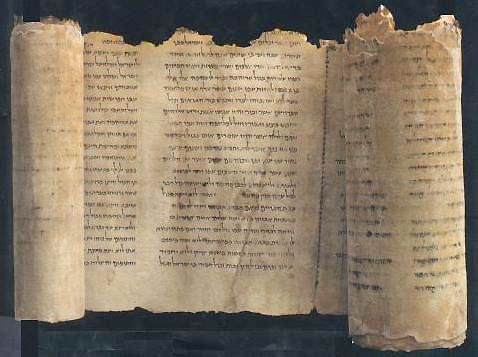
Will the Codex Lead to the Demise of our Precious Scrolls and Reading?

I’m sure you’ve all heard of this new invention: the folding book. Recently certain sects have developed this new format where, instead of our beautiful papyrus scroll, the text is scribbled onto tiny pages. One after the other. Plus, these people write in recto and verso, on both sides of the paper!

Personally, I love strolling through the library and choosing just the right scroll from the stacks. I know where to start reading and where to stop. The scroll is simple. You unroll as you read. Need to take a break? Then simply leave the scroll at the point you stopped.

You can’t do this with to codex. Instead you need some sort of tool to mark your position. Additionally, readers can skip around the text, going from the middle to the start and then to the end. Insanity. The author did not intend for that sort of haphazard reading. You might as well cut up scrolls and toss them on the floor.

Obviously, reading will decline. Scholars shall not tolerate these hard bound, page flipping codices. Our precious knowledge, stored up for centuries on scrolls, will slip away. Readers attention will decrease, tempted as they are by the ability to skip to the end of the story.

I say we do whatever we can to halt the codex in its tracks. Bring back fine papyrus scroll work—the only method to publish a scholarly work.

Think this is absurd? Look closely at what’s happening today with books. Manuscripts have survived from scrolls, to codices, to paper books. Words are ideas that cannot die, no matter the publication format.

Tim Kane

Mad Mary (Why We Love to Be Scared)

Children love to be scared. Heck, we all do. This Halloween, a colleague and plan to host a Scary Story night at our elementary school. In past years, I tried to read the classics, excerpts of Poe and Stoker. Mostly the kids were bored. I think they only stayed out of respect. And the candy. (Mostly the candy).

Then I got smart. I started asking kids what they liked in scary stories. Started recalling all those creepy stories I’d heard as a kid. I discovered two things: kids like gross plus a little bit of humor.

I dug up a story I hear while I was at a summer camp in the mountains (Camp Marston). The actual story had very little detail. At least that I can recall. I remember hearing about the cattle mutilations. There was mention of a wild girl with ultra long fingernails and crazed eyes. Of course I heard the story over a campfire under a night sky. Very spooky. The camp even had a tree with the manacles still bolted in. That was the best part. Scared the crap out of me.

Obviously, the camp had to take them down. None of the existing counselors remembered Mad Mary. I did a search for her, but came up with nothing.

I decided to write my own version of the story, taming it down a bit for the kids. Here’s what follows:

When I was in sixth grade, I went to Camp Marston, and the counselors there told me the story of Mad Mary.

It seemed there was a girl named Mary. As she grew up, she became more and more insane. Her parents were very old and didn’t want to send her to a mental hospital. They kept her at home away from any other people.

But Mary grew worse. She would growl like a wild animal and gnaw on the furniture like a dog. One day she attacked her mom. Bit her in the arm. Blood was everywhere.

Her father yanked Mary away, but didn’t have the heart to call the police. You see, he still loved her. But she was out of control.

He chained her arms to a tree. He brought her food and water every day, but never unchained her. There she stayed for a whole year.

Now, I told you that her parents were very old. They both passed away suddenly one night, leaving Mary totally alone. She cried all day and all night, calling their names. No one answered. They were dead.

But Mary was still chained to the tree. Unable to get food or water.

For several days she screamed for help, but the house was high up in the Julian hills. There was no one around for miles.

Finally, insane with hunger, she snatched a squirrel off a branch and ate it. Whole. The blood reminded her of when she bit her mother’s arm.

For the next few years, this was how Mary survived. She ate animals that strayed too close. She sucked the dew off grass. All that time she was chained to the tree. Her hair grew down below her bottom. Her fingernails grew long and sharp. She used them like knives to catch her food. And her eyes showed a growing madness.

Finally, the bolts that attached the chain to the tree pulled loose. Mad Mary was free. She scampered off into the woods, dragging the chains behind her.

Every few years after that, farmers would find a that a cow had been killed at night. The animal was sliced open along the gut. Mary had used her long sharp fingernails. And the insides were chewed up.

Now, Marston still had camp for sixth graders every year. One year, a little before I went to camp, a boy named Chris came up with his sixth grade class. Chris was a very forgetful little boy. He had his camp list, but seemed to forget everything.

He forgot his flashlight, his camera, his Chapstick, and his pillow. He remembered his shoes, thank goodness, but even the things he brought he would leave in his cabin.

One day, he was going on a day hike. He brought his jacket because it was chilly in the morning. By afternoon, it had warmed up, so he took it off. That evening it cooled down again, but he couldn’t remember where he left it. The weather turned cold and he shivered.

This was the skit night, and all the students were gathered in the main cabin with the stage for the show. There was a lot of noise with people laughing and clapping.

Chris needed to go to the bathroom. Now normally, he would go with a buddy. But he was embarrassed that he had lost his jacket. So he snuck out of the skit night and headed down to the bathrooms.

It was a clear night with the stars twinkling in the sky. The shadows seemed impossibly dark. By the time he reached the bathrooms his heart pounded hard inside his chest.

Then he heard a noise. It sounded like someone dragging something. The clinking of chains. It was Mad Mary.

Clink. Clink. Clink.

Chris froze. The sound was coming from the field between the bathrooms and the skit night. He couldn’t get back the main cabin.

He cried for help, but of course no one heard him. They were all enjoying the show. If he had brought a buddy, he might have been all right. But Chris was alone.

He dashed for his cabin. All along the way he heard the drag – clink, drag – clink of Mad Mary following him.

He made it to the door, rushed inside, and jumped into bed. He threw the covers over his head.

Outside her heard drag – clink, drag – clink.

Then, along the wall outside the cabin, Mary scraped her long fingernails.

Scraaaaatch. Scraaaaatch.

Then she reached the door. Chris heard the click, click, click of her fingernails on the wood. Then the handle turned and the door squeaked open.

The sounds of the chains drew closer—drag – clink, drag – clink—until they were right by his bed. Then Mad Mary spoke.

“I’ve been looking for you.”

She snatched the covers away. Chris saw two beady eyes peering through the long tangled hair. She held the sheet between her long sharp fingernails.

“You forgot…your…jacket!”

Earlier, on one of my first visits to Camp Marston as a sixth grade teacher, I dropped hints about Mad Mary to many of the kids. We arrived at camp on a Monday and left on a Friday. For several days I got little to no response. I had pointed out a tree that looked like it had been clawed by Mary. Everything changed on Wednesday.

At lunch recess, two contractors were repairing a door. I casually told the students that Mad Mary had ripped it off. They went to ask the contractors, who, going along with the gag, said that she had.

Within a few minutes, students were seeing Mad Mary everywhere. In the trees. In the shadows. I had to start backpedaling, saying that the story was made up. I did some damage control.

Usually on Wednesday, we teachers drive into town for dinner, skipping the meal with the kids. Big mistake. A student from a different school had been nervous about life at camp. For the past few days he had not defecated, scared of the walk to the bathroom outside his cabin. That night, the constipation had reached breaking point, so to speak, and he passed out. Immediately, students spread the rumor that somehow Mad Mary had done the deed.

I was reprimanded for spreading the story. The student recuperated at the hospital. Everything went pretty much back to normal. But I remembered the incident. I was amazed at how much a single story could affect people.

Tim Kane