Guava Pacing

As a teacher, I have to suffer through some God awful meetings. However, in the one I attended today, a spark of light burst in my brain that simply would not go out. I’ve long struggled with how to define “pacing”. I certainly know when it’s bad. But how would you define it, and then teach it to others?

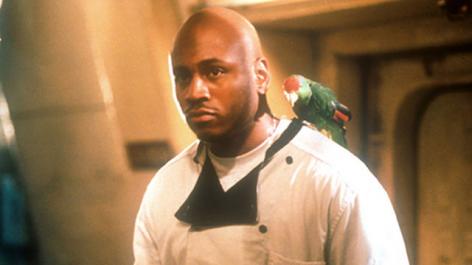
Pacing is time manipulation. The best line to describe this come from the movie Deep Blue Sea. L L Cool J’s character is trying to describe Einstein’s theory of relativity.

“Grab hold of a hot pan, second can seem like an hour. Put your hands on a hot woman, an hour can seem like a second. It’s all relative.”
That ability to slow down or speed up time is what good writers, and directors do. The story below is a perfect piece to demonstrate how well pacing can twist time.

Enjoy.

How to Eat a Guava

By Esmeralda Santiago
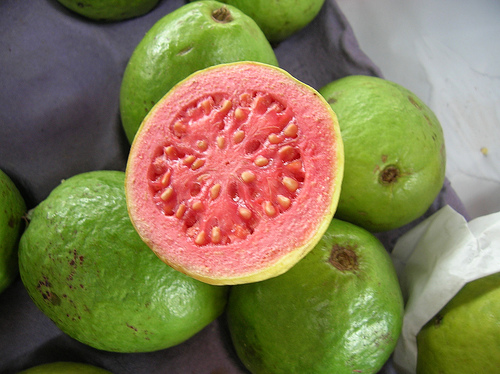
There are guavas at the Shop & Save. I pick one the size of a tennis ball and finger the prickly stem end. It feels familiarly bumpy and firm. The guava is not quite ripe; the skin is still a dark green. I smell it and imagine a pale pink center, the seeds tightly embedded in the flesh.

A ripe guava is yellow, although some varieties have a pink tinge. The skin is thick, firm, and sweet. Its heart is bright pink and almost solid with seeds. The most delicious part of the guava surrounds the tiny seeds. The most delicious part of the guava surrounds the tiny seeds. If you don’t know how to eat a guava, the seeds end up in the crevices between your teeth.

When you bite into a ripe guava, your teeth must grip the bumpy surface and sink into the thick edible skin without hitting the center. It takes experience to do this, as it’s quite tricky to determine how far beyond the skin the seeds begin.

Some years ago, when the rains have been plentiful and the nights cool, you can bite into a guava and not find many seeds. The guava bushes grow close to the ground, their branches laden with green then yellow fruit that seem to ripen overnight. These guavas are large and juicy, almost seedless, their roundness enticing you to have one more, just one more, because next year the rains may not come.

As children, we didn’t always wait for the fruit to ripen. We raided the bushes as soon as the guavas were large enough to bend the branch.

A green guava is sour and hard. You bite into it at its widest point, because it’s easier to grasp with your teeth. You hear the skin, meat, and seeds crunching inside your head, while the inside of your mouth explodes in little spurts of sour.

You grimace, your eyes water, and your cheeks disappear as your lips purse into a tight O. But you have another and then another, enjoying the crunchy sounds, the acid taste, the gritty texture of the unripe center. At night, your mother makes you drink castor oil, which she says tastes better than a green guava. That’s when you know for sure that you’re a child and she has stopped being one.

I had my last guava the day we left Puerto Rico. It was large and juicy, almost red in the center, and so fragrant that I didn’t want to eat it because I would lose the smell. All the way to the airport I scratched at it with my teeth, making little dents in the skin, chewing small pieces with my front teeth, so that I could feel the texture against my tongue, the tiny pink pellets of sweet.

Today, I stand before a stack of dark green guavas, each perfectly round and hard, each $1.59. The one in my hand is tempting. It smells faintly of late summer afternoons and hopscotch under the mango tree. But this is autumn in New York, and I’m no longer a child.

The guava joins its sisters under the harsh fluorescent lights of the exotic fruit display. I push my cart away, toward the apples and pears of my adulthood, their nearly seedless ripeness predicable and bittersweet.

****

Think, how much time has actually elapsed? It might have been only a few seconds, but it feels so much longer. That’s because the space within is filled with memories and emotions. Also, consider her movement. She stands still pretty much the whole time.

Amazing writing. Now I’ll have to go and read the book.

Tim Kane

Artists Need to Specialize

When I was younger, I delved into all sorts of artistic endeavors: painting, music, poetry. Yet I couldn’t get any traction and create authentic art unless I picked one and committed. The more you spread your time over different projects or media types, the less you can focus on one. For me, it’s writing.

I’m often tempted to jump art forms. Pick up the paintbrush or compose a song. However, I’m well versed enough to understand these distractions for what they are. It’s a subtle form of writer’s block. My brain, forced with creating, would rather sidetrack to another creative venue. It’s the same temptation that makes me want to switch novels rather than complete the one I’m on.

You have to stay firm and commit for the long haul. Finish what you started. If you want to switch to another art form, do it when you’re between projects.

Tim Kane

Keep Your Distance

Nothing is worse for an artist than taking critiques personally. I know that for myself, when folks tell me I need to change some of my manuscript, I get these little squirmy worms in my chest that wiggle around. I don’t want to change anything. But then I sit back and think. Give it some time to sink in. That’s when I know that the changes will only make the writing stronger.

Think about those artists who were given total control. Few can deliver. For example, the reason why the first three Star Wars movies (IV, V, and VI) were so great was that Lucas had to answer to the producers. The greatest Han Solo line of all time (I know) was an ad lib. Lucas would have cut it, but the producers saw gold and kept it in. Yet when Lucas made the prequels (I, II, and III) they lacked the spontaneity of the older films. They were too controlled. Sure, they followed his vision, but had no spark.

Then there are the Beatles. I’ve a big fan and always find it obvious which songs were written mostly by Lennon and which were by McCartney. Yet the credits always say Lennon and McCartney. Even though one of them must have taken the lead, the other probably played the Devils advocate—critiquing and adding.Even by there last recorded album (Abbey Road) when they were pretty much working independently, the songs still have that collaborative effort. When they split, both John and Paul had their own hits, but none rose to the level of earlier Beatles songs. They had no alter-ego critiquing.

The message: Let people read and critique your work. Only make sure that these people are professionals. You can gain nothing by reading sour reviews. Don’t go there.

Tim Kane

Where Do Ideas Come From?

Recently, I was lucky enough to speak to some middle school students about writing (specifically High Tech Middle Media Arts). The experience was exhilarating. The kids really knew their stuff, asking a ton of good questions. Then one came up that I hadn’t considered: Where do your ideas come from? Sensible query, especially from a kid’s point of view. After all, they are required, by force of curriculum, to generate creative ideas on the spot.

My answer in class was a knee jerk reaction. Given some time to think, I’ve come up with a laundry list of places that ideas come from. Mostly it’s a set of connections. One thing relates to another and then bang. Idea. I’ve started a book based on the results of a presidential election. (Not even a political thriller. The book was about monsters.) Another idea came from a Poly Sci class in High School. One of my best ideas sprang up while watching an episode of Scooby Doo.

Mostly the idea of a story starts as a “what if” scenario. I find a detail from some article or snippet of a commercial and then think, what would happen if…? You need to give your mind time to daydream, otherwise the ideas (the good ones at least) won’t come.

So where do your ideas come from?

Tim Kane

Creative Starvation

I recently read an article on io9 about how the body can survive up to 70 days without food. It goes through several stages where the body cannibalizes muscle and bone to keep the brain alive. As a writer, I wondered if this process could happen creatively.

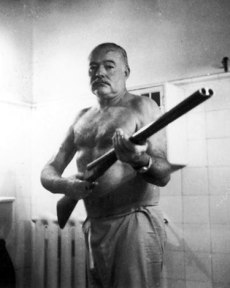
Somehow dying creativity made me think of Hemingway and his shotgun.

I just exited a two month funk. I had just finished edits on a manuscript, but wasn’t due to hear from my agent for a while. (I’m a deadline person. Without one, I’m lost.) I worked up a new novel idea, but the routine of churning out pages each day wasn’t there. I felt starved.

Here’s how I think creative starvation might work on anyone art-minded.

1-2 days after finishing a project
You feel that high that seems to never go away. It’s like creative adrenaline. You feel pumped.

3-7 days after finishing a project
This is the hot spot. You either start something new (I mean just dive in) or you don’t. In physical starvation, the brain takes 25% of the body’s energy. In creative types, imagination takes the largest share. During this time, it’s spinning out of control because it doesn’t have a clear direction. It’s a wet paintbrush searching for a canvas.

1-3 weeks after finishing a project
This is when your imagination starts to cannibalize other ideas. You might find the novel you’re reading an incredible inspiration. Maybe you could mimic it somehow. Or perhaps you dive into blog writing. You convince yourself that it’s also creative and just the same as fiction writing. Yet all these endeavors further drain and weaken your creative spirit.

Onward past 3 weeks
There are a few options here. Unless a deadline or some event propels you back into writing, your imagination might perish. Without the fresh nourishment of routine and a clear project to work on, it starves.

Treatment: Take one chair. Apply butt. Type.

That’s it. Even if garbage comes it. Because it probably will. You need to type. Wake up the creative muse that’s comatose inside you.

Write on.

Tim Kane