Genetically Engineered Animals for the Future

Scientists will always tinker. While they mostly seek to improve the world, some scientists stray into Frankenstein category. Now that the genome has been hacked open, also sorts of possibilities pop up, from the useful to the ridiculous.

Say you often can’t find your cat when she wanders around the house at night. Problem solved. Get a glow in the dark cat.

cats_0

Yes, it’s true. South Korean scientists meshed a cat’s DNA with a red fluorescent protein. Why did they want glowing kitties? Just because.

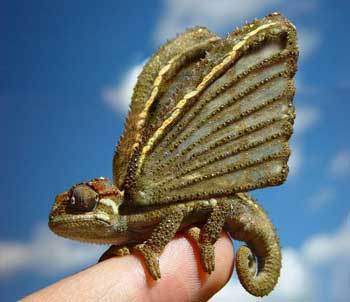
Although some of the genetic engineering works around possibility for science’s sake. Not everyone needs a glowing cat. But what about a dinosaur? Look at a modified Umbuku Lizard.

umbukulizard

Those wings aren’t glued on. They were dormant in the lizard’s genes. A little tinkering brought them out. Scientists believe that this lizard is a descendent of the Pterodactyl, which lost its ability to fly some millions of years ago. To date only 6 of these flying Umbuku have been produced and they are kept seperate from the natural Umbuku due the risk of cross breeding.

Some genetic tinkering can produce results we can all use. Consider the fact that nearly all paper comes from wood pulp. However, you have to kill the tree to make the paper. What if you didn’t? Trees produce leaves every season. A Swiss-based company saw the possibilities. They engineered a tree whose leaves look like sheets of paper. That’s right. Just pluck a sheet and get writing. Bonus, the tree lives.

papertree

Up to this point, scientists have combined like items (plant with plant or animal with animal). Here comes the fern spider.

fernspider

This is one of the first animal/plant hybrids. The Italian Wolf spider (Lycosa tarantula) was crossed with a ponga fern (Cyathea dealbata) to test the survival rates of creatures with camouflage.

Finally, this tinkering can be simply for the purpose of beauty.

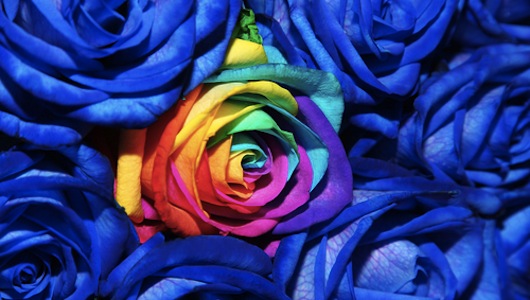
shutterstock_63328546

The Japanese company, Suntory, managed to create a blue rose called “Applause.” Blue roses don’t exist in nature. Many horticulturalists strive for this coveted goal. The company mixed rose genes (Old Garden ‘Cardinal de Richelieu’) with a delphinidin-producing gene from a pansy.

The future certainly looks strange. I don’t know how I’ll use my glowing cat, but at least I can pull a sheet of paper from my tree. Alas, if only it grew money.
Tim Kane

Evolution Gone Awry (The Disturbing Art of Patricia Piccinini)

If you’ve never seen Patricia Piccinini’s sculptures, then you have missed out on a whole world of weirdness. Take a look at the photo below from “The Fitzroy Series” (2012). Look at the mix of an actual environment and the sculpted creatures. The boy sleeping in the bed? He’s probably a sculpture too.

70Bedroom,10.30pm

She uses a combination of  silicone, fibreglass and human hair to create her sculptures. Often she pairs her bizarre beings with imagined future beings.

She also offers a series of sculptures that cause the viewer to question whether this is a creature that once lived or possibly a result of laboratory tinkering. Take a look at “Offering” (2009). Is this a dog? Perhaps a werewolf cub? It certainly evokes a warm babyish feeling.

offering 2009

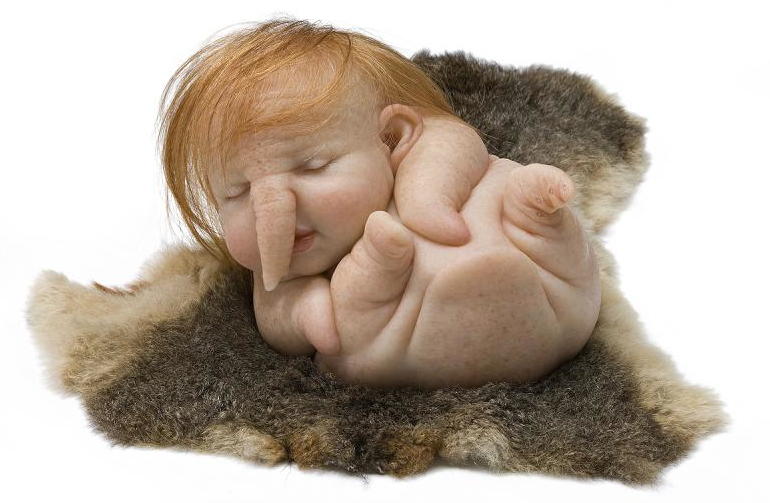
Now take a look at “Newborn” (2010). Perhaps this is the offering grown a little larger?

newborn 2010

This little guy looks comforting yet disturbing at the same time. Are those arms? Fingers? Tentacles? I’m not sure. Does it have a trunk?

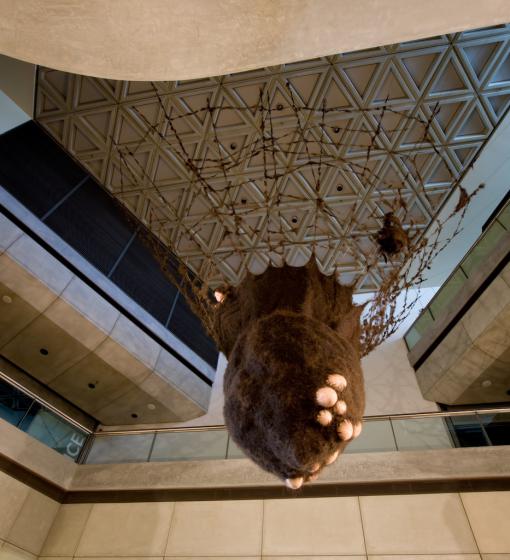
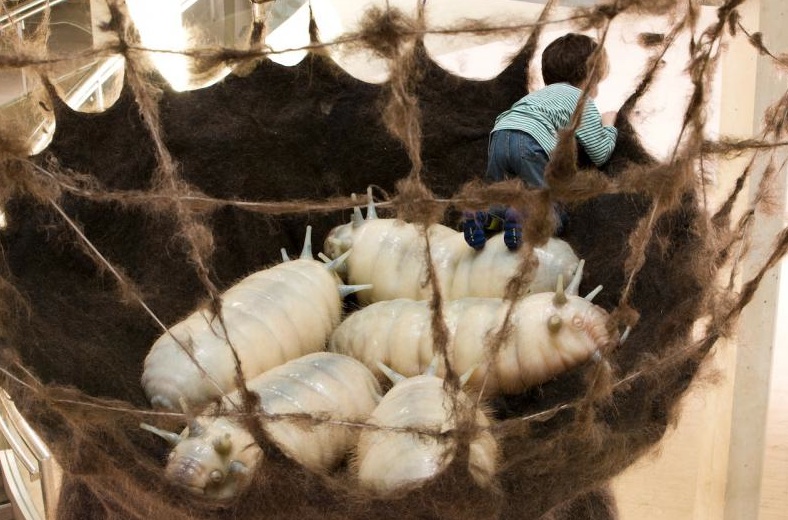
In her series “Aloft” (2010) she shows an ominous nest dangling above viewers’s heads.

12Aloft

From the second story, viewers can see inside the nest. Note that the boy didn’t craw in there. He’s sculpted.

larva

Yes, disturbing is this artist’s middle name. I don’t know what worries me more, the giant larval creatures or the kid about to tumble to the floor.

Finally, look at one of her most recent projects “Welcome Guest” (2011). Here we have more full grown creature paired with a child.

Welcome Guest

As always in Piccinini’s sculptures, the children look happy and calm when faced with the bizarre or unusual. This piece makes me wonder what the welcome guest evolved from. Those claws are disturbing.

To see more of Piccinini’s sculptures, visit her website.

Tim Kane

Creepy Critters and Insect Transformations

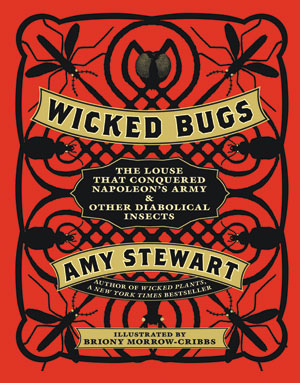
My life seems to be dominated by bugs. (Thankfully with no current infestations, though I could be jinxing myself.) It all started with a book: Wicked Bugs by Amy Stewart. I was pulled to it like flies to dung. I’d already read her previous book, Wicked Plants, and it was astounding.

Wicked-Bugs

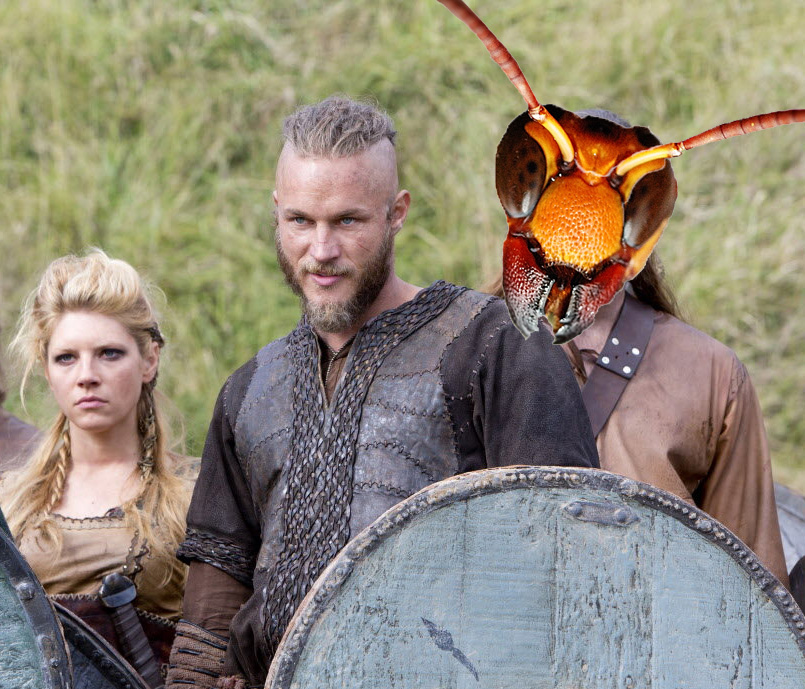
I’m only halfway through, but the descriptions of bed bugs kept me up at night (glancing around the room for possibly critters). One of the most intriguing insects so far is the Asian Giant Hornet. Not only is this creature gigantic (50 mm), it raids bee hives the way Vikings pillaged English towns.

viking wasp

One wasp will reconnoiter the hive, tearing off the heads of bees and bringing them back to its young. Then it smears pheromones and attracts a massive wasp raid. All the bees are destroyed, the larva and honey stolen away.

What really takes this to the next level is the defense that the bees mount. Too small to fight the wasp directly, they team up. The bees know that if they can dispose of the first wasp, the others won’t come. They lure the scout wasp inside the hive. The bees then proceed to flap their wings furiously, raising the temperature to a blistering 116 degrees. This cooks the wasp. The danger is that if the temperature kicks up a few more notches, it kills the bees.

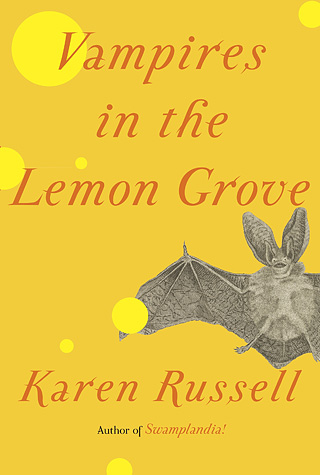
Vampires-in-Lemon-Grove

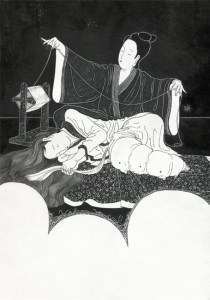
This isn’t the only literary insect encounter. I’m also currently reading Vampires in the Lemon Grove by Karen Russell. The second story, Reeling for the Empire, is both repulsive and alluring at the same time. It centers around Japanese women stuck in a modernizing nation (mid-nineteenth century). To compete with Western silk spinning machines, the Japanese alter their women to transform them into silk worm. They grow fuzzy body hair and rip off their fingernails to pull out the silk that builds in their bellies.

This is an illustration created by moonasi for the New York Times. Click to see the original.

This is an illustration created by moonasi for the New York Times. Click to see the original.

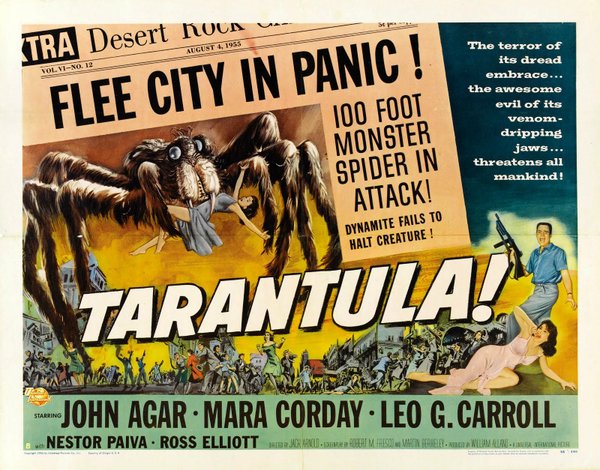
Cap all this off with the fact that my local museum, The San Diego Natural History Museum, has a bug exhibit  (Dr. Entomo’s Palace of Exotic Wonders) featuring glowing scorpions, millipedes, bird eating tarantulas, and vinegaroons.

tarantula_poster_03_t600

It’s enough to make you twitch and glance over your shoulder for bugs. At least I’m not degrading to the status of Upston Pratt from Creep Show. Not familiar? In the story, titled “They’re Creeping You Out”, a cranky tycoon has “bug-proofed” his penthouse (Howard Hughes has nothing on this guy). Suffice it to say, roaches find their way in, both to the apartment and his body.

Creepshow – They’re Creeping Up on You! from Veetrix on Vimeo.

Gross.

Enjoy the insect world. They outnumber us 200 million to 1.

Tim Kane

Easter Bunny Myth (Or How a Raunchy Rabbit Got His Own Constellation)

I’ve always wondered about the origins of the Easter Bunny. I knew a little, like that Easter comes from the Anglo Saxon goddess of Spring called Eostre or Ostara. The more I dug, the more interesting things I uncovered.  Eostre was concerned with waking up the countryside after winter (a bit like the Persphone myth).

3131cbd5c5f1fb0836df0a5ca82456ac

Legend has it that Eostre was feeling guilty that spring was arriving so late (The original celebration took place on the first full moon after the spring equinox). When she arrived on the scene to warm things up for Spring, she saw a bird frozen in the snow, dying. She cradled the shivering creature, nourishing it with life.

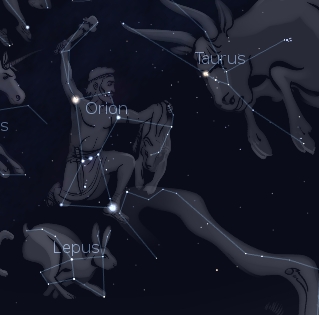
The bird became her pet (also lover). He could no longer fly (as his wings were icicles), so the goddess transformed him into a snow hare with the name of Lepus. (There’s a whole other story about Lepus from the Greeks involving Orion.)

She gave Lepus the power of swift speed so he could evade hunters (presumably Orion). However, to honor his former stature as an avian, Lepus was able to lay eggs. This is where it goes a bit raunchy. Lepus, being a quick one, starting hanging out with some other girls. Eostre, jealous, threw the hare up into the stars where he remains to this day as a constellation.

lepus2

Later, Eostre took pity on her former lover, allowing him to return to Earth once a year for (you guessed it) some egg laying. The catch was, the eggs only went to kids participating in the Eostre festivals held each spring.

Tim Kane

The Dark Whispers of the Elder Futhark

I don’t buy into most divination practices. Many don’t make sense (like the I Ching) or some are too darned complicated (Tarot), but I do have a yen for runes. Maybe it’s the German heritage, but these symbols speak to me.

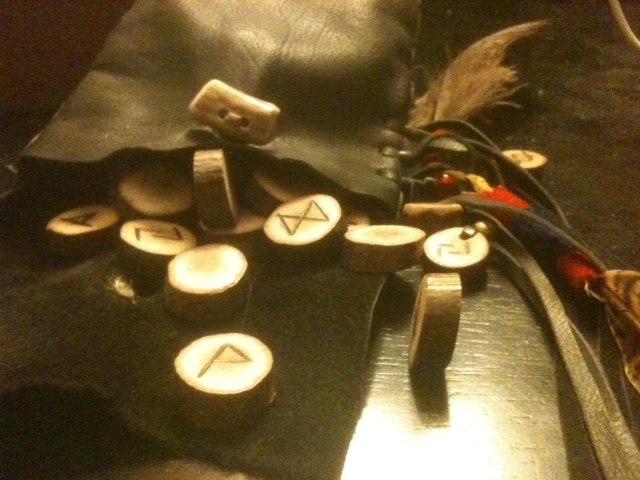
runebag

The word rune has a long and clandestine history. The Old Norse called it runir meaning secret or hidden lore. In Old English it became rün, a secret consultation. Finally the Gothic language titled it as runa, dark sayings, or whispers. These dark whispers are not malicious by any stretch of the imagination. Rather, the runes are like a friend, confiding secrets to you, and rune casting is the best way to get your new friend talking.

Each rune symbol represents both a letter of the alphabet and an idea (see the letters here), but these are a far cry from their true meaning. This only comes from using the runes, over and over and over again. I don’t mean be a fanatic about it. For goodness sake have a life, but allow these messages and the stories they represent to enter into your life.

I don’t put in for the various meditations and soul searchings that many of the books I’ve read suggest when working with runes. I’m a pragmatist. How can I get these things to work for me? What I’ve found is that the runes, as a divination source, are far more practical and straightforward than say the Tarot. I tried various divinatory techniques with the runes, kept what I liked, threw away the rest.

One that I use most often and with tremendous success is rune casting. What’s best about this method is that I don’t even need to have any runes on me to practice it. Once I threw a casting in the parking lot of McDonalds with a bundle of coffee stirrers. I’ve found that there is a bond that develops between you, the caster, and the runes themselves. Often you must read into the casting to find its true meaning, sometimes going by gut reaction.

The manner for casting is pretty simple. If you’ve purchased or made a set of runes, make sure they’re all inside a pouch. Reach inside with the question posed clearly in mind. It helps to be brutally specific here. The more loopholes you allow the runes, the more they’ll take. This method works best with questions that can be answered with a qualified yes or no. Don’t ask how or why because the runes won’t tell you. As in everything in life, you’ll have to figure those out for yourself. Reach inside, grasp a handful of runes, and toss them onto the ground or table. Now a word of caution here, toss does not mean hurl with the force of a two-year-old with his ball. You don’t want to loose any of the runes, just scatter them randomly. Let them decide how to land. The basic interpretation is simple, if more runes are turned face up, the answer is positive (yes), if more are turned down, negative (no). The trick comes in qualifying the answer. What’s the ratio of upright to overturned runes? If you have, say four to one or five to two, the answer is a very sure yes. If they’re all turned face up, then you have little doubt in the matter. The same goes for face down. When the ratio is close or dead even, then you’re stuck with a qualified maybe. Don’t be disappointed. This only means that your fate isn’t decided yet.

EhwazFinally you can interpret the meanings of the upright runes themselves. The most important rune to see is Ehwaz, because it confirms without a doubt those runes around it. It can push a maybe over to yes or confirm a negative result for sure.

If you don’t have runes to cast, you can also use a set of nine sticks, or coffee stirrers or straws, anything about the same size. This method is little more unpredictable and sometimes yields nothing more than a vague notion. I’ve used it for a quick spot check when away from home. Cast the sticks out just like the runes and then examine them. Because the rune signs are all made up of straight lines, sometimes the sticks will form the shapes of a rune. Be careful though, not every crossed stick is Gebo or Naudhiz. When a rune is created, it’ll be rather obvious. If you get nothing, then you’re left with another maybe. In this method you typically see only a single rune, and must interpret the answer from that rune’s meaning. Usually this will not give you a yes or no answer, rather a quality regarding your question. Like I said, it’s not rocket science, but it can help guide you in a clutch.

Rune casting is like inviting a new person over for diner. The first time you meet will be awkward. You may struggle for things to say. But the more often you two meet, the closer you’ll become, until soon you’ll find yourself rather comfortable with those crazy looking symbols. Then you might feel a gentle rush of air by your ear as you catch just a snippet of those dark whispers. The secrets of the runes.

Tim Kane