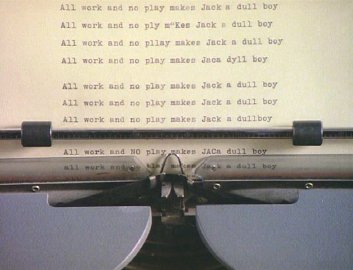
Day After Month After Year After Story After Book

The best thing I ever did as a writer was to move on.

I had struggled with the same manuscript for five years. It was my life. My master work (or so I thought). I couldn’t let go. I wrote a first draft and revised it. Then I joined a critique group and restarted the book again. The new version was even better. Then I went to the Big Sur Writing conference, I realized my protagonist had no backstory. No emotion. Back to page one.

I rewrote that manuscript again. From scratch. Entirely new plot. Things were going well. Both my critique groups grooved on it. Ten months later, I began revising. When I sent out queries, I received two requests for a full manuscript.

Then the hammer fell. One agent gave me a great critique. Trouble was, I agreed with it. My character was true. The premise worked. But the plot was convoluted and the story sagged in the middle.

I had a choice. I could revise that story yet again. I even had a plan for what to fix. But I asked myself: “Am I going to be the sort of writer that reworks the same story over and over again?”

No.

I’m done with this book. Let me write a better one.

And I did. When I finished that book, I was tempted again. This time with revisions to the new book. Now I’ve made the choice to move on again. Write another book.

It reminds me of a quote from Harlan Ellison:

The trick is not becoming a writer. The trick is staying a writer. Day after month after year after story after book.

I plan to live as a writer, and that means writing. Better and better books.

Tim Kane

SDSU Writer’s Conference: Agentpalooza

Okay, it really needs to be agent and editorpalooza. This conference is crazy cool. If you’ve never attended, you can sign up for a speed dating session where you get ten-minutes to meet agents and editors to pitch your manuscript. The first time I did this, in 2008, I was nervous as all get out. I felt that if they said no, then I would be crushed and they didn’t like me.

Well, I’ve grown a bit as a writer. After plenty of critiques and hundreds of thrown out pages, I’m coming from a different place. My goal was still to pitch my manuscript, but I also wanted information and to feel the vibe of each agent and editor. I’ve known too many writers who got hooked up with the wrong agent.

Fortunately, all of the professionals I met today were stupendous. Here’s the breakdown (with links in case you want to check them out).

Kat Brzozowski Assistant Editor at St. Martin’s Press
She was my very first conference (as in run from the keynote to the Catalina room). She was great and gave me very specific feedback.

Michelle Wolfson from Wolfson Literary Agency
I’ve followed her on Twitter for a while now. She always offers excellent advice. I sat with her today at lunch and she broke down the simultaneous versus exclusive submission (I’ll blog about it next week).

Dawn Michelle Frederick from Red Sofa Literary
Dawn and I clicked early on our love of all things Goth and Darren Shan books. We met up later at the wine and cheese where the conversation at the table quickly disintegrated to throwbacks to the 80s and antique typewriters.

Melissa Frain Associate Editor at Tor Books
It was awesome to meet with Melissa. I was under the impression (probably with others) that Tor was only about SciFi. So wrong. They have a thriving YA section. We chatted about how some YA books can be bogged down in the dreary and depressing.

Taylor Martindale from Full Circle Literary
Taylor was impressive with the level of her critique, quoting specific pages and offering great advice at line tightening. Bonus, I also found her on Literary Rambles (my go to site for agents).

My most favorite workshop of the day had to be Genius Plotting by Louella Nelson. In the fifty minutes I was there, I was able to plot out my recent novel. Amazing workshop.

I’ll meet another agent tomorrow as well as attend more workshops.

Tim Kane

SDSU Writer’s Conference: The Secret of Writing

It has been four years since I last visited this conference. Despite being a San Diego native, I had plenty of growth as a writer to accomplish before revisiting this event. In 2008, I had written several novels, but had no support group. Immediately after my first conference, I knew that it would be a learning experience. Afterward, I joined two excellent critique groups, rewrote my novel, and then finished another. In short, I went from wannabe writer to accomplished writer.

Even though I have a book published, along with several short stories, I still haven’t hit it big with the novel. That is my goal, along with the many other attendees this weekend. The golden prize. Yet, four years ago, this was my one and only goal. Since then, I heed some great advice I read from Harlan Ellison interview.

There is only one secret, and the secret is this: Anybody can become a writer. The trick is not becoming a writer. The trick is staying a writer. Day after month after year after story after book. That’s the secret. And if you can do that and produce a body of work, no matter how large or small it is, that is true and can pull the plow, then you’re a writer. If you are not prepared to spend your life doing that, then, for christsake, don’t do it.

So what do I intend to take from the SDSU Writer’s Conference? Information, mostly. I intend to listen closely to the agents, editors, publishers, and writers there. There are several workshops on eBooks and self publishing, which I can see will play an important part to the future of writing and publishing. I’m also at the crucial first stages of a new novel, and that means my brain is perched on a precipice. A push in the right direction can lead to a awesome slide through 70,000 words of prose.

Here are the courses I see as the most intriguing. Obviously I can’t be several places at once. I plan to tweet on what I see and hear. I was surprised that there was no official hashtag for the conference. I created #sdsuwc to fill the void. Also, I was shocked at how few people were tweeting. Writers as a whole are attached to twitter the way most artists cling to alcohol. My only guess is that most of the attendees haven’t realized that tweeting is an effective marketing tool. (These are the workshops I feel I don’t need, but I’m sure they’re quite good).

Saturday

9:30 – 10:20

Establish A Pattern, Then Twist It by Yvonne Nelson Perry
I’m always interested in plot structure and how to twist it. Should make a good workshop.

10:30 – 11:20

Genius Plotting I by Louella Nelson
Again, you can see I’m drawn to structure.

Self Publishing–A New Gateway to Success by M. Louisa Locke
Curious about the options and taboos of the new eBook process.

1:00 – 1:50

No Sag Structure by Q Lindsey Barrett
Yes, I’m obsessed with structure.

Evoking Emotion by Angela Hunt
This is a weak spot for me, so I’d like to learn how to polish it up.

2:00 – 2:50

Fiction is Written in Scenes by Yvonne Nelson Perry
I’m a big fan of Goal, Conflict, Disaster, which breaks writing into scenes. Curious about Perry’s take.

X-Ray Your Plot—Make Sure Your Structure is Sound by Angela Hunt
Okay, maybe I picked too many of these types of workshops. I know I can’t go to all of them.

3:00 – 3:50

Genius Plotting II by Louella Nelson
In case I miss the first one.

Self Publishing–Eight Tips on Selling eBooks on Amazon by M. Louisa Locke
Could be a rehash of the previous workshop, but I’ll need to attend at least one of the self publishing sessions.

4:00 – 4:50

ePublishing, POD, and the Future of Publishing for the Writer  by Bob Mayer
This looks like it’s chock full of good information.

Sunday

10:00 – 10:50

Short Cuts to Deep Characterization by Angela Hunt
I want to focus on building deeper and more well rounded characters. Every little bit helps.

11:00 – 11:50

Beyond the eBook Uploaded — How Do You Sell It by Bob Mayer
Marketing is the key. Looking forward to this one.

1:00 – 1:50

Layered, Nuanced, Original: Crafting Characters by Q Lindsey Barrett
This sounds like it’s right up my alley.

Those are my picks. If I see you there, don’t be afraid to say hi.

Tim Kane

How Calculus, Latin, and Chemistry Led to a Writing Career

I didn’t start out life wanting to be a writer. In high school, I set my sights on engineering. I was on track until two events caused me to alter course. I’ll tackle them in reverse order.

My first semester at UCSD was horrific. Not the classes, per se, but the finals. You see, I had written down when I thought they would fall. I had my honors chemistry final on Monday, the calculus final on Thursday, and the Latin final on Saturday (the very fact that this was on a weekend should have tipped me off). Well I got some super strain of nasty flu the Friday before and was sick the whole weekend. I’d called the chemistry professor to see if I could take the test a few days later, but she told me it was a new exam and she couldn’t write a new one in such short time.

So Monday morning, I slogged in and stared at the pages. I was over the flu, but only barely. My body was wrecked. I managed a passing grade, but I think the professor might have rounded up a bit.

I decided to take the next few days off. Sleep in. Let my body rest up. I mean, I had till Thursday for calculus, and I was pretty good at math. I was rocking an A so far in class.

Wednesday morning rolled around and I decided, just for fun, that I would recheck the times of my finals. Okay, so my chemistry was on Monday. Did that. And Latin was on Tuesday. Holy Peanuts. I missed it. I actually missed my final.

My heart was racing. You have to understand. I was the sort of kid that lived for tests. I always did the bonus problem or the extra credit. The one time in life that I ever cheated (and this event sticks with me like a cancer) was solely to keep my top position, not to pass a test. In my seventh grade science class, I had the top score. How did I know? The teacher posted all the student scores. Then, a girl surpassed me. Don’t ask me why, but I had to recapture the top spot. Later, the teacher let us grade our own tests, and yes, I gifted myself a few points. Sad, but true. But I did reclaim the top spot.

So there I was, one final missed. I looked further to double check on my calculus final. The good news: I hadn’t missed the day. The bad news: The test was that day, Wednesday. And it was already finishing. There was no way I could race to the university and take the test. Impossible.

My mind crashed. You could literally see that little mac bomb on my forehead. I considered my options. I could withdrawal (meaning I’d have to take the whole class again.) Or I could contact the teacher. Which I tried to do for about an hour. Finally, I decided to drive down there and see if I could catch the man in the hallways. If I couldn’t, then withdrawal it was.

Luck was on my side. I located my calculus teacher carrying the pile of finals. He wondered why I hadn’t shown that morning. His offer was this: take the final right now. What could I say? I did it. I locked myself in a little room and sweated through integrals and derivatives. I butchered it. My grade dropped from a high A to a low B.

Then there was Latin. That teacher had been awesome all year. When I finally contacted him, he said he’d be in town Friday night. All I needed to do was translate a certain passage and drop it off to him. Done.

Thus ended my first semester at UCSD. That January, I changed my major from engineering to creative writing. Latin had been the only course I had enjoyed (even the final). I simply could not take more courses along the lines of calculus or chemistry (at least I got out before the dreaded organic chemistry).

Now, I’d said there was one other factor. This happened in my senior year in high school. I was lucky enough to run across Susan Vreeland. That very year, she started a writer’s workshop class designed to teach creative writing. If you recognize the name that’s because she went on to write some chart topping books.

That’s it. Fate intervened and switched my train from the engineering and science track to the writing rails. I then spent far too much time slumming around poetry for anyone’s good, but that’s another story.

Tim Kane

Force That Inner Whiner to Grow Up and Get Writing

No one likes a whiny writer.

Lately I’ve been struggling with my inner whiner. If you’re a writer of any consistency, you’ll know what I’m talking about. It’s the voice in your head that complains about critiques. It grouses about revising. Basically, it’s the one that holds you back.

I’ve learned to beat this inner whiner back, but it never stays down. Just recently I received feedback on the final revised chapters of my manuscript. In my mind, I was ready to send the novel out to agents. Get the ball moving. Etc.

But then the critiques came back. Not what you think. Mostly positive, confirming that the story was ready for an audience. Then, inches from the finish line, one writer saw that I didn’t have enough closure for a key character.

Then came my inner whiner. “Good enough,” it said. “Just ignore it and send the manuscript out.” But when a second critiquer nailed me on the same issue, I couldn’t ignore it. I either had to face up to the fact that I was willingly going to let this novel continue in a substandard state, or I had to get to work.

This got me thinking about the various ways your inner whiner tries to subvert you to produce less than astounding work. I came up with two versions.

The “I Wrote It So It Must Be Good” Syndrome
This inner writer tells you that everything you create is golden. It urges you to rush toward publication like a kid stuffing his hand in a Fritos bag. It doesn’t trifle with revisions and it cringes at the mere suggestion that the writing isn’t ready.

This was me for the better part of my writing career. I had few real writers to bounce ideas off of. No critique groups. It was just me and the computer screen. That, I think, is what breeds this syndrome. Isolation. After only a year with the San Diego Professional Writer’s group, these delusions were slapped out of me.

The “Good Enough” Writer
This is the next step up. Here your inner whiner accepts that you need to do some revision because that’s part of the writing bargain. But there are whispers, at the back of your head. “You’ve done enough. This writing hits all the marks. It’s ready.” It implores you to move on. Finish and submit.

I hate to admit, but this is where I’ve been the last few months. I struggle to resist the call to submit. Just end the constant revision and get the whole thing over with.

A great writing friend of mine, Crystal Allen, pointed out that critique groups aren’t just there to judge and improve your work. They should call you on your foibles. And push you.

There are two types of writing:

  • Good enough
  • The best I can do

The goal of a good critique group is to push the writer toward that second goal—the best possible writing you can accomplish.

The answer to silencing that pesky inner whiner is camaraderie. You need other people, professional writers, who will nail you when you’re being lazy. This requires a level of honesty and trust that is hard to come by. But you’ll need it to grow as a writer.

Tim Kane