Four Types of Produce That Could Kill You

We’ve all walked into to the grocery store to pick up some produce. Who knew that it could kill you. Apparently many common fruits and vegetables are deadly. Check out this guide to the more nefarious elements of the vegetable kingdom.

  1. Potatoes
    Yes, Irish Gold. The harbinger of French Fries and mashed potatoes is actually a member of the nightshade family. (Tomatoes are part of that family too, just not poisonous). The spud contains a toxin called solanine, a plant defense. It causes nausea, diarrhea, vomiting, stomach cramps, burning of the throat, headache and dizziness. In rare cases, this poison can bring on a coma or even death. I know what you’re thinking. “I’ve eaten plenty of potatoes, and haven’t gotten sick yet.” True, but how many raw potatoes have you eaten? It seems that cooking the spud kills most of the solanine. I wonder how many chefs experimented with raw potatoes before figuring that one out?
  2. Corn
    This hardy side dish turns out to be deadly when it turns into a main course. When corn becomes most of a person’s meal (as it did with early settlers), then something akin to scurvy develops. You see, the niacin in corn is very hard to absorb by the body. Traditional recipes added lime to aid the absorption of niacin. What’s the big deal, you say. Well, without enough niacin, people develop pale skin that blisters when exposed to sunlight. Folk have dementia that keeps them up all night. Digestive problems keep them from eating normally. Pretty much all the symptoms of vampirism. That’s what people in Europe thought after importing corn.
  3. Cashew
    Ever wonder why every other nut can be sold with its shell except the cashew? This nut is in the same family as poison ivy. The shells have the same irritating oil, urushiol. The nut is safe to eat. But the shell will create a rash in various parts of the body (imagine chewing on poison ivy). The worst part, even if the outside of the shell touches the nut, it could transfer the poison. Purveyors of this nut steam the little buggers open, thus all cashews are partially cooked (and a bit more pricey).
  4. Red Kidney Beans
    Eating only a few of these beans raw will bring on severe nausea, diarrhea, and vomiting. The poison is called phytohaemagglutinin (this stuff is in most beans, but especially high in the red kidney variety). Just like potatoes, these beans are completely healthy when properly cooked.

If there’s a lesson here, it’s cook your food well, and have some variety in your diet. Otherwise, you could end up sick or dead.

Tim Kane
Death: The Ultimate State of Self Sufficiency

This has been a joke of mine since high school. When you’re alive, such as I am now, many things can happen. Mostly injury and death. Yet being dead means you  can’t change any farther. You’re already at the dead end of existence. This brings in ideas of undead, such as zombies and vampires. Yet even those folk can be destroyed.

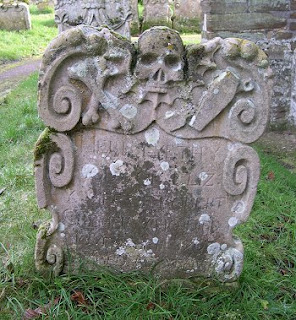
This gets me thinking about burial. What options are out there other than your typical RIP gravestone and green plot? Cremation is there, but it actually pollutes so badly, you’d make BP look like a green company. I’ve always wanted to have a tree planted above my grave so that it’s roots would grow through my body. Then I would fertilize the tree and ultimately live through it again (a sort of rein-tree-nation).

It turns out I’m not too far off from current trends. Green graveyards are springing up. The green here refers to environmentally sound rather than green grass. Deceased are buried in natural environments. No grave marker. Instead, they get a GPS marker that loved ones can seek out.

Another trend that fits the body-as-fertilizer trend is being worked out by the Swedes. A company called Promessa Organic freeze dries bodies and then turns this into fertilizer. The body weighs significantly less when freeze dried (the process removes the water—and we’re mostly water). It also allows for a cleaner decomposition. It turns out that rotting underground, though it may seem wonderful that the body remains intact for so long, actually produces some nasty chemicals that can sully local drinking water. A freeze dried body is interned in a biodegradable coffin. With a tree or bush planted above ground, the body and coffin become a high nutrient loam in about sixth months. That’s full circle baby.

What Can Tarot Cards Teach You About Morality?

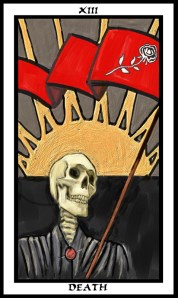
Death card designed by *ligoscheffer

I sat down to do research on the Tarot for a young adult novel, yet found that the majority of the books dealt only with the meanings of each card. There was precious little on their actual history. Most of the books simple threw out a vague paragraph or two about playing cards, Egyptian gods, and mystical forces. Yeah, that’s going to help.

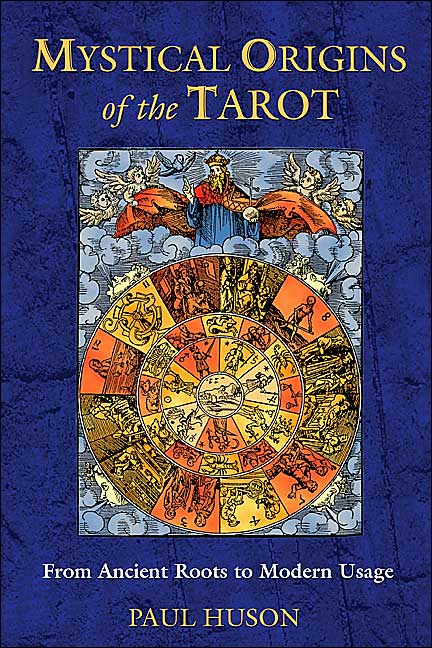
Then I stumbled on Paul Huson’s book Mystical Origins of the Tarot. He linked the Tarot to the Turkish Mamlük cards and all the way back to Chinese “money-suited” Dongguan Pai cards. All this explained the origin of the four suits. Huson’s best argument links the major arcana (which he calls trumps) to Christian morality plays like the Dance of Death.

Okay, strap on your time traveling belts, it’s history time.

The Catholic Church had long banned any sort of pagan drama (read Greek theatre). But, once they had successfully eradicated all hints of pagan storytelling, the Church allowed certain dramatic events (relating to the bible) to be depicted at Easter or Christmas. What started as a pure recitation of Gospel, gradually blossomed into lines of verse performed on a stage.

The French drama, “Adam”, appeared by the twelfth century, which was performed before the gates of the church. By the thirteenth century, plays not based wholly on scripture appeared. The “Miracle of Theophilus”, by Rutebeuf, depicts the popular legend of Theophilus, who lost his holy office and bartered his soul to the devil to regain it. (A precursor to Faust.)

Typical Medieval Morality Play

Morality plays were an offshoot of the Miracle plays, which encouraged proper Christian behavior rather than simply quoting gospel. The most famous morality was “Everyman” (originally called “The Summoning of Everyman”). In this drama, Everyman, who dresses in fine clothes and seems to lead a wild and sinful life, has a visit from Death. Everyman must undergo a pilgrimage to absolve himself from sin before meeting his end. He asks if he’ll have any company on this journey. Death replies that only those who are brave enough will come.

The various characters represent virtues personified. One by one, all the characters desert Everyman, unwilling to face Death with him. Everyman’s friends and family (Fellows, Kindred, Cousin) refuse to go along. Finally Goods (representing worldly belongings), also backs away.

Good Deeds would accompany Everyman, but she is too weak to walk. Her sister, Knowledge, leads Everyman to Confession, who instructs him how to show penance. This allows Good Deeds to travel with Everyman.

Discretion, Strength, Beauty, and Five Wits promise never to leave Everyman’s side. Yet, when they arrive at his grave, and Everyman begins to die, they each leave. In the end, only Good Deeds will follow him into the grave. The play makes its grim point that we can only take with us the things we’ve given.

Paul Huson's Mystical Origins of the Tarot

The Black Death ravaged Europe throughout the fourteenth century. The epidemics were so frequent and merciless, that everyone had to face the prospect of death. This led to the Dance Macabre (Dance of Death), as an offshoot of the English morality play.

This is another play where Death is viewed not as a destroyer, but a messenger from God. The drama consisted of a monk reading Scriptures while actors representing death (dressed in yellow linen painted with bones) escorted other actors to the grave. Every position in society was represented (the King, a Bishop, a beggar, a soldier, a farmer, etc.)  The purpose of the play was to illustrate that regardless of your position or wealth, you were going to die and must Repent now. This idea was summed up in the phrase: “Memento Mori” which translates to “Remember you shall die.”

This procession of figures mimics the trumps of the Tarot. We start with the lowly Fool, and travel up through the Emperor (representing the king) and finally the Pope. At least that’s the theory laid down by Paul Huson. He goes on to state that the various middle trump cards mimic the personified virtues (Justice, Fortitude, Temperance, and the Hermit for Prudence). Dame Fortunate routinely appeared in morality plays, and she’s represented in the Tarot as the Wheel of Fortune.

The four most important events in a Roman Catholic’s life, known as the Four Last Things, are represented by the four trump cards:  Death, the Devil, Judgement, and the World (if we agree with Huson that the world could mean heaven).

I found the connection of morality plays (like the Dance of Death) with the Tarot a compelling argument. There are plenty of books that border on pseudoscience, linking the Tarot to UFOs and Egyptian gods, but Huson lays out a reasonable argument based on historical traditions.

Next time you pick up a Tarot deck, think back to these Medieval dramas. And remember, you too shall die, so start wracking up those good deeds.

Tim Kane

Did the Greek Gods Eat Mini Marshmallows?

Ambrosia. The word either inspires dread or joy from the coconut and marshmallow concoction. But the origin of this word leads to a recipe for immortality.

Now, why the interest in the snack food of a defunct pantheon? Besides the fact that mythology is plain cool, I’m doing research for a new novel. What better way than to blog about it. Now, I’ve really dug how Rick Riordan handled the Greek gods in Lightning Thief. But I feel he could have done more with ambrosia and nectar. (Maybe he has in subsequent books). So, I’m here to explore these mythical foods, as well as what makes a god immortal.

It seems that the Greeks interchanged ambrosia and nectar. Ambrosia could be eaten or drunk. Nectar was mostly drunk, but sometimes eaten. Me, I always thought of ambrosia as the food (maybe because of the fruit salad) and nectar as the drink.

There’s little information on how ambrosia and nectar are made. Apparently doves carried the food to the gods on Olympus. Ambrosia is described as being nine times sweeter than honey and its fragrance guards against disagreeable speech. I take this last part to mean that arguments won’t break out over the dinner table—good idea when you’re dealing with the Olympian family dynamic. (My guess, they weren’t serving Ambrosia when Eris plunked her golden apple on the table.)

What is clear is that eating the stuff makes you a god. Right after Apollo had been born, he climbed up to mount Olympus (a stunning feat for a newborn) where he received ambrosia and nectar to make him immortal.

A version of the Tantalus myth has the fellow dining at the table of the gods. Tantalus slips some nectar and ambrosia in his toga, and then shares the stuff with his friends on Earth. Not a cool move. Sure you get immortality, but is that really going to help you when Zeus hurls a thunderbolt at your butt?

My first exposure to the stuff (not literally, but in literature) was with the 1904 novel The Food of the Gods and How it Came to Earth by H. G. Wells. In this story these scientists, Bensington and Redwood, create a new chemical food called Herakleophorbia IV, which makes things grow to ginormous size. Being responsible nineteenth century scientists, they feed this stuff to their kids and the result is 40 foot babies. Kind of a weird story, but it falls in line with the Greek myths. The gods and titans were supposed to be gigantic.

The interesting thing I stumbled on was the gods’ blood, or lack thereof. It seems that the Greek gods bleed ichor. I only knew this stuff from Dungeons and Dragons and H. P. Lovecraft, so in my mind, I saw this black oily liquid. However, the ichor of the gods is a golden and resplendent. The theory goes that since the gods do not eat mortal food (food that rots and dies) neither do they. After all, the word ambrosia derives from the root of mbrotos, meaning mortal. Add the prefix “a” prefix to get “not mortal”. The food won’t rot, so neither will the consumer.

So what happens when these immortal gods don’t get their food fix? Well, they can’t die. Instead, the godly ones lie down, breathless, and sleep. They loose all power until they get more ambrosia and nectar.

Now eating (or drinking) ambrosia changes mortals. I’m assuming a human’s blood would transmute to ichor. I don’t know how much you need to ingest. Did Tantalus eat enough? Who’s to say.  After Achilles died, Thetis anointed him with ambrosia to destroy the human side he inherited from his mortal father, Peleus. This implies that simply rubbing the stuff on your skin transforms you, killing your mortality.

Bottom line, you start sipping from the nectar cup, there might be no turning back. It’s like the forbidden apple. One taste is too much. No wonder the gods were irked when someone stole the stuff. There were too many bickering brothers and sisters in Olympus already. Why add a few interlopers?

Ambrosia serves as the ultimate class division between mortals and immortals. Gods have it. Men yearn for it. And no, the recipe for immortality does not include marshmallows.

Tim Kane

Moth and Rust: A Story of Parricide and Avuncular Decay

Imagine that someone you know, like an Uncle, died, but not all the way. He lingered. No, he didn’t develop a ravenous appetite for for human flesh. It’s more like his body gave up, but his mind kept going. What would that be like?

Some stories are planned  endeavors, but others, like “Moth and Rust,” come in at a full rush with dreamlike accuracy. Mostly I transcribed this from my subconscious. At the time, I was working on the idea of zombies in suburbia, mowing lawns and washing dishes, that sort of mind numbing work.

I always felt the main character needed to be a kid. A child’s viewpoint of death is so different from our own. Although I certainly skewed the narrative toward the zombie angle, you can just as easily read the story another way. What if the Uncle wasn’t dead. The narrator only thinks so. And he makes his decisions based on a distorted view of reality.

In 2007, the story won the Graversen Award from the Garden State Horror Writers. The title references a line from Matthew 6:19—Do not store up for yourselves treasures on earth, where moth and rust destroy, and where thieves break in and steal.

This story now appears at Nevermetpress as part of the their Stories in the Ether series. Click over, check it out and leave a comment.

Good reading, and enjoy the Pepsi.

Tim Kane