Writing a Novel is Like Directing a Movie

I’m a big movie fan and I noticed that nearly all of my top ten directors also write their own scripts. That’s not an accident. Writing a novel is analogous to directing a film. You have the script, the actors, the set and the pacing to consider.

First off, I strongly believe that any novel writer should bang out at least one screenplay in his or her life. Screenplays are the bare bones stories of this world. There’s nothing but plot and dialogue. No elaborate scene descriptions or convoluted point of view. Just pure story.

I was lucky enough, in my final year at UCSD, to stumble into a screenwriting class. Best thing for me. I wish I’d discovered it early. Most of the creative writing program was a joke. The same people inhabiting the classes (which were little more than glorified critique groups) all peddling the same story they started as freshmen (usually this involved some crisis of the soul about a broken relationship).

In screenwriting, we analyzed scripts of successful films. That’s something that harder to do with novels because they’re so damn long (and I read like a snail stuck in molasses). Because there’s nothing to get in the way of plot, I was able to see the elements unfold clearly before my eyes. I recall analyzing The Silence of the Lambs and marveling at how the screenwriter fit all the pieces together.

After that, I launched out and wrote a few screenplays of my own. I even worked for a “producer” up in Hollywood to punch up his script. Don’t get excited, the guy was from Eastern Europe, and every five pages girls were mysteriously taking off their tops. It made Asylum scripts look Oscar worthy in comparison. But the upshot was, I learned how to get to the essence of a story quickly.

I learned about beats (which can mean two things). I drafted a story idea for another producer that was just the beats (story elements) and condensed the whole script down to about 20 pages. I also learned about inserting beats into dialogue. A beat is that dramatic pause when someone is speaking. In filming, the actor (or the director) gets to decide how to fill that beat. As a novelist, it’s a bit more complicated.

When I write out a chapter in novel, I often take the idea of screenwriting and beats on the first pass. That is, I just lay out the various story actions and raw dialogue. When I want a pause, I just write BEAT, and move on. In the second pass, I start to add layers of detail and description.

For me this mimics the actions of making a film. First you have to write the screenplay (cement the elements of plot and dialogue), and then the director and actors can come along and throw up the scenery, add the tone and mood, make the plot live.

This is the trouble I think most novelists have. They try to do all this at once. I’ve seen first drafts where people have concentrated on the character and descriptive end to the detriment of the plot. That’s like a director bringing together a set of actors and starting to film without a script. It works sometimes (like with Iron Man), but not very often.

I try to switch hats when I write. First I write the script, concentrating on the action events, or if there’s substantial dialogue, I’ll run through the lines without any punctuation, just to get down the flow. Then, preferably on a different day, I’ll go through as a director, setting the scene, adjusting the pacing, and motivating my actors (characters) to give better performances.

Tim Kane

Top Ten Directors

Okay, so I was talking to one of my students about our favorite directors. By the way, you’ll need to watch out for this kid. I’d say in 10 years, he’ll be well on his way to being on this list. Look for the name Jonny Santana in about 2020.

Anyway, we have a dinky media program at our school run by the eminent Lee Sison. I say dinky because it’s never been much until Jonny came along. He James Cameron’ed it by pushing the boundaries to the point that our computer can’t cope (we’re upgrading). His effects are up to Robot Chicken level.

So I got to thinking who would make my list of best directors. They have to be based on the directorial style, not just the actors and the screenplay. I noticed I hewed close to those directors that also write. I also noticed that my list includes mostly creepy directors (not personally, but in the subject matter they film). Nearly all have done at least one horror movie.

Criteria:

1. Casting (how well does this director choose and use talent?)
2. Pacing (do the shots flow well from once scene to another, and does it have a brisk pace?)
3. Vision (Do I remember a film a few days or years after seeing it? Does it linger? Also, how creative is this director? Are the films good because of his choices or just because of a good script and actors?)

I list my favorite movies from most favorite to least.

10. Quentin Tarantino
Favorite Films: Kill Bill 1 and 2, Inglorious Basterds, Reservoir Dogs, Pulp Fiction, Death Proof/Grindhouse
Extra: Also writes his own screenplays. The only reason he’s not higher is that he’s better at writing than shooting. He’s only recently learning to use the camera effectively.

9. Alfred Hitchcock
Favorite Films: The Birds, Psycho, Vertigo, Rear Window, Rebecca
Extra: Never looked through a camera lens. Always trusted his cinematographer

8. Peter Jackson
Favorite Films: The Lord of the Rings Trilogy, Frighteners, Heavenly Creatures, King Kong, Dead Alive, Bad Taste (a horrible bad movie that’s fun to watch).
Extra: Writes or Co-writes nearly all his screenplays. Looks like a Hobbit.

7. Guillermo Del Toro
Favorite Films: Cronos, Devil’s Backbone, Hellboy 1 and 2, , Blade II, Pan’s Labyrinth, Mimic
Extra: Writes or Co-writes nearly all his screenplays. Really twisted and weird guy.

6. Robert Rodriguez
Favorite Films: Sin City, El Mariachi/Desperado, From Dusk Till Dawn, The Faculty, Planet Terror
Extra: Scores most of his films. Defied the Hollywood union system by filming in Mexico. Writes or Co-writes nearly all his screenplays

5. Tim Burton
Favorite Films: Beetlejuice, Mars Attacks, A Nightmare Before Christmas, Sleepy Hallow, Edward Scissorhands, Batman and Batman Returns, Pee-wee’s Big Adventure, Ed Wood, Sweeny Todd, Corpse Bride, Alice in Wonderland (I feel his worst films are the remake of Planet of the Apes, and Big Fish)
Extra: Has crazy ideas that actually work on screen. You always know you’re watching a Burton film.

4. Terry Gilliam
Favorite Films: Time Bandits, Twelve Monkeys, Brazil, The Crimson Permanent Assurance (Part of Monty Python’s The Meaning of Life), The Fisher King, The Adventures of Baron Munchausen
Extra: Also has super crazy ideas. Was the animator for Monty Python. Often writes his own screenplays.

3. Timur Bekmambetov
Favorite Films: Wanted, Day Watch, Night Watch
Extra: Super crazy visual effects. Makes Matrix look amateurish. Hasn’t directed a lot in the U.S. yet, but look for him. His Moby Dick will rival Snyder’s 300. Also the subtitles for Day Watch are wicked (the best ever).

2. Stanley Kubrick
Favorite Films: The Shining (Best Stephen King Adaptation ever), 2001, A Clockwork Orange, Dr. Strangelove, Full Metal Jacket, Spartacus (Okay, so this was really Kirk Douglas’s film, but it’s still an awesome flick).
Extra: So Eyes Wide Shut sucked, and Kubrick’s a real jerk to work for. But hey, his films are iconic and they stick with you. I can still picture some of the shots in my head. He also writes the screenplay for all his movies.

1. James Cameron
Favorite Films: Aliens, Terminator 1 and 2, True Lies, Titanic, Avatar, The Abyss
Extras: I’ve never seen a film by Cameron that I didn’t like. He’s never really had a flop (The Abyss didn’t do as well as expected, but still pulled in the dough). There’s not another director out there that can say that.

Honorable Mentions:

· Sam Rami (almost made the top 10 because Spiderman 1 and 2 are the best films ever—seriously—but Spiderman 3 was terrible and Darkman is hard to watch).
· Christopher Nolan (also almost made the top 10, but he needs a larger body of work. Still Memento and Insomnia are pure genius. Also, there’s the Batman thing.)
· Edgar Wright (I want him on my top 10, but 2 good films does not a career make. But Shaun of the Dead and Hot Fuzz are fantastic. Two of my top films.)
· Kenneth Branagh (a great director, but sometimes I don’t feel like Shakespeare. Let’s see how Thor turns out).
· Ridley Scott (in the same league as Kubrick, read hard to work with, but his films are amazing. Particularly Bladerunner).
· Zack Snyder (So Dawn of the Dead and 300 were unbelievably good. But Watchman wasn’t. Not by far. Let’s wait and see).
· Danny Boyle (Two of my most favorite flicks are Shallow Grave and 28 Days. But I’m just not crazy to see Slumdog Millionaire).
· Michael Bay (Hollywood hates him, but he sure can put together an action flick. You can always trust that his movies will deliver. But I feel he lacks in the vision department.)
· Gore Verbinski (Pirates of the Caribbean rocks. So does The Ring. Let’s see where he goes.)

North American Cryptid Quiz

A friend of mine asked me to make up a quiz of American cryptids. Why me? Well she knows that my wife and I have an extensive library of monsters and supernatural creatures (there’s a whole section devoted to just cryptids). Alas, most of my books were on international cryptids or mythological animals, but I think I dug up enough information to make the quiz work.

Here are 13 of the most popular North American cryptids, complete with a brief description and a picture. A little bit of trivia: out of the 13 creatures, three are native to West Virginia. And I was already worried about my Uncle-in-law who lives there. Plus, three of the 13 creatures were first spotted in 1977. (A banner year for LSD? You decide.)

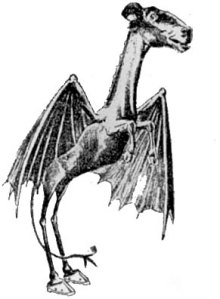
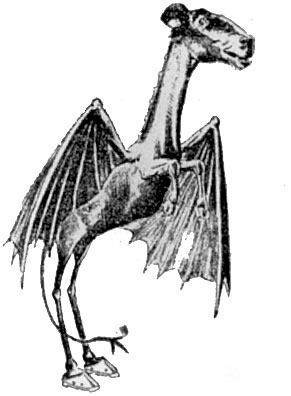
#1: A creature with bat wings, a thin neck, horse’s head with goat’s horns, and cloven hooves. Reports put it anywhere from three to six-feet tall. It preys on small animals and livestock in the woods of Eastern United States.
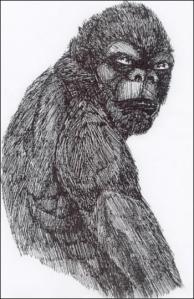
#2: A large hairy, ape-like humanoid that kidnaps humans throughout Northwest United States as well as Canada.
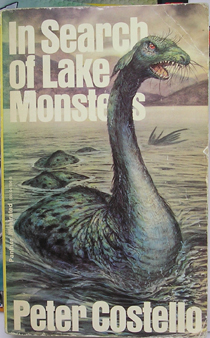
#3: A slimy-gray snake-like creature that haunts a lake in the Northeast United States and Canada.

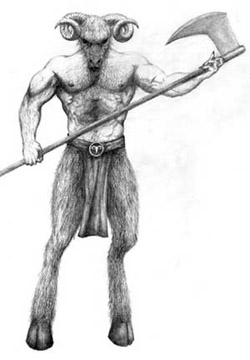
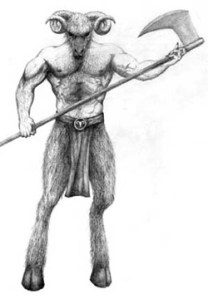
#4: Looking like a cross between a satyr and Satan, this creature haunt lover’s lanes and secluded highways in Maryland.
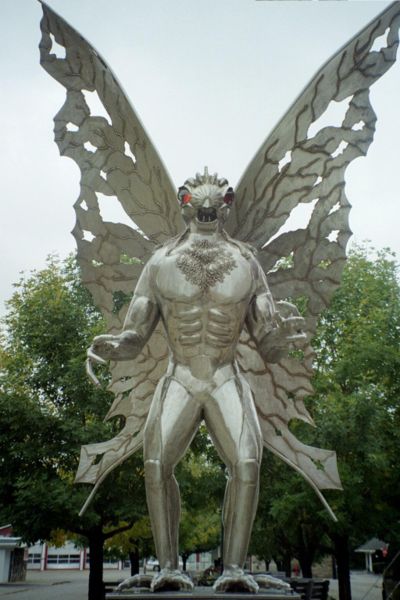
#5: A dark figure with large wings and glowing eyes. Encounters with this creature in West Virginia are portents to disaster.

#6: An ape-like creature that lurks in the wilderness of Florida. It has been known to kill cats, even throwing a kitten at one witness.

#7: A wolf-like creature with clawed hands, yellow eyes that walks the roads around southeastern Wisconsin.

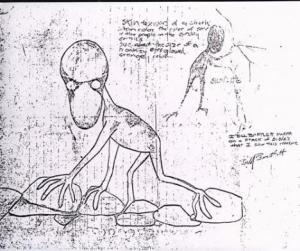
#8: A tan-colored creature with a bulging head and large, reflective eyes. This three-foot tall, spindly humanoid, haunts the woods around the Charles River in Massachusetts.
#9: Four-foot creatures with thick leathery skin, large bulging eyes, and webbed hands and feet. Swimmers in the Ohio River report being attacked from below by these creatures.

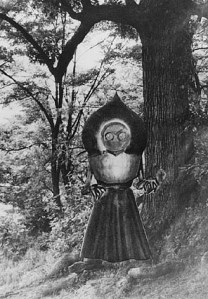
#10: This ten-foot tall creature has a dark green body surrounded by a robe with a pointed hood. It haunts the woods of West Virginia. Witnesses have noted a noxious odor causing skin and eye irritation.
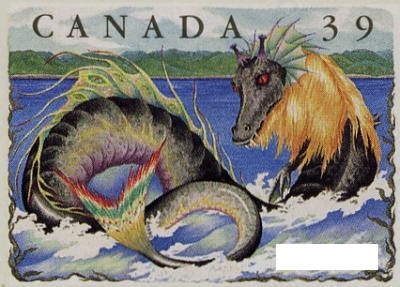
#11: A sea serpent with a dark undulating body that gives the appearance of humps in the water. It’s head looks similar to a horse. It eats fish and the occasional horse around Lake Okanagan, British Columbia.

#12: A giant condor-like bird with a wingspan up to 35 feet. It carries off livestock, pets, and children in Southwestern United States.

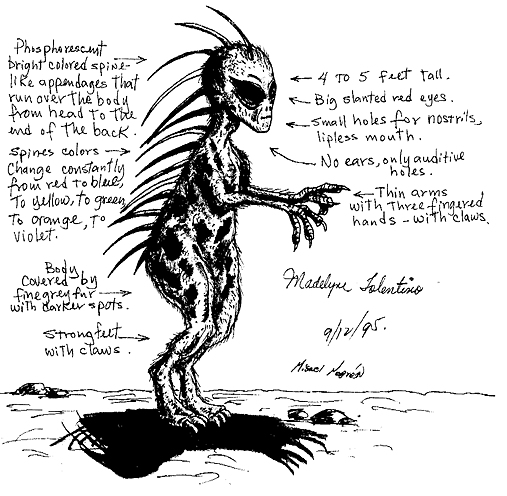
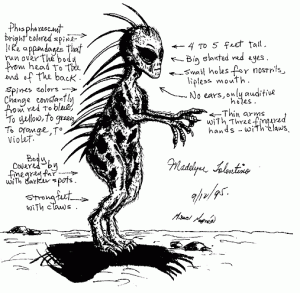
#13: A gray humanoid with large red eyes. It slaughters livestock in Puerto Rico and Mexico.
So, how well did you do? Did you get all 13 right? Check below for answers.

Tim Kane

ANSWERS BELOW

Answer #1: The Jersey Devil or the Leeds Devil.

In the mid 1700s, the monster was born to a woman with the surname of Leeds. The monster leapt from her womb, ate her other children, and flew up through the chimney. It continues to haunt an area of woods called the Pine Barrens in New Jersey. It apparently likes to swoop into family homes via the chimney and make off with screaming children. Over 2000 people claim to have seen this creature over the years.

Answer #2: Bigfoot or Sasquatch.

This cryptid was skyrocketed to superstar status in 1958 when a construction worker named Jerry Crew showed a plaster cast of a footprint he found at Bluff Creek Valley to a newspaper, who dubbed the creature “Bigfoot.”

Answer #3: Champ is the American Loch Ness Monster.

He inhabits Lake Champlain, the largest lake next to the great lakes (100 miles long). He’s been sighted as even before Europeans arrived. Native American’s called him Chaousarou. P. T. Barnum offered a reward of $50,000 for the beast’s body (for his traveling show). Sandra Mansi took the most credible photo of Champ in 1977.

Answer #4: Goatman.

The legend goes like this: A scientist experimenting with goats somehow mutated into a goat-human hybrid. He was driven mad and now takes his vengeance on the youth surrounding Prince George’s County in Maryland.

Answer #5: Mothman.

Beginning in 1966, the town of Point Pleasant, West Virginia, two young couples were followed by this flying creature. They drove to the edge of town, clocking 100 mph, yet the creature had no trouble keeping up. The creature, then called “The Bird” made numerous appearances after that, rising up from behind parked cards, or chasing autos down the road. These appearance continued for a year, coupled with sighting of men in black who questioned and sometimes threatened witnesses. On December 15, 1967 the Silver Bridge collapsed, plunging 30 cars into the Ohio River. After the bridge disaster, the Mothman and the men in black were never seen again.

Answer #6: Skunk Ape or Florida Skunk Ape.

Reports vary, making this creature as large as bigfoot, or as small as an orangutan. It has glowing orange (or green) eyes and a repugnant scent that dogs refuse to track.

Answer #7: The Beast of Bray Road.

During the 80s and 90s, there were a rash of werewolf sightings around the towns of Elkhorn and Delavan. Motorists often saw an oddly hunched creature along Bray Road. The first report involved a woman who pulled to the side of the road after hitting something. She saw a dark shape in the woods. She quickly got back in the car and sped away, but the creature leapt on the back of the car, clawing the trunk, before falling off. Some people have connected this werewolf with the Native American legend of the Shunka Warakin (meaning “carried off dogs”).

Answer #8: The Dover Demon.

In 1977 several teenagers claim to have seen this creature in the woods around Dover. Although it bears resemblance to the “little gray men”, there were no UFO sightings during that time. Also, the creature appears similar to the Native American legend of the Mannegishi (a legendary Cree trickster).

Answer #9: The Loveland Frogmen.

Described as frog-like trolls, they inhabit the banks of the Ohio River near the town of Loveland. They’ve been seen lying along the shoulder of roads, easily mistaken for roadkill. Upon discovery, the creature will stand up on two legs and flee back to the water. Sighting most often occur in the Spring, particularly March.

Answer #10: The Flatwoods Monster, The Braxton Monster, The Green Monster, or The Phantom of Flatwoods.

On September 12, 1952, a UFO was reported to have crashed on a small town in Braxton County, West Virginia. Several boys witnessed the crash and investigated. They ran into a tall green figure with a pointed hood or helmet. Its clawed hands emitted a strange sulfurous smell. The boys fled. Authorities later found strange oily skid marks in the area.

Answer #11: Ogopogo.

Sightings date back to 1860 (about 60 years before Loch Ness). The name is not Native American, as it would seem. Native Americans call the creature N’ha-a-itk (meaning “snake in the lake”). A British entertainer, W. H. Brimblecombe, was fascinated by stories of the creature. He wrote a silly song where he uses a palindrome to name the creature. Recently, in 2000, John McDougal, attempted to swim the entire length to raise money for cancer research. As he swam past Rattlesnake Island, he spied two creatures, 20 to 30 feet long, swim beneath him for several minutes.

Answer #12: Thunderbird.

Almost every Native American tribe has a story about an enormous bird that can beat its wings like thunder. Lighting shoots from its eyes and its shadow blocks the sun. Storms follow in its wake. In 1977, a ten-year old boy from Illinois spotted a pair of thunderbirds in the sky. One swooped down and tried to abduct him. The mother’s screams scared the bird away. Cryptozoologists think this version of the bird, with a reported ten-foot wingspan, might be a relative of the Andean condor.

Answer #13: El Chupacabra.

Second only to Bigfoot in popularity. In the early 1990s an epidemic of slaughtered livestock, mostly goats, affected Puerto Rico. The animals had small puncture wounds on their necks and they were completely drained of blood. The legends spread and seemed to encompass other cryptids, thus creating competing descriptions for the creatures: small and hairy or tall and scaly, using fangs or a forked tongue. Although the Chupacabra is relatively new, its legend probably isn’t. In the 1970s, Puerto Rico had stories of El Vampiro Moca, a vampire in the town of Moca that killed livestock. South America has a mosquito-man, who drains animal blood through a long nose.
Interview on Modern Vampire Trends

I get interview questions about vampires about 2 or 3 times a year. The most recent set of questions came from a grad student in Scotland working on her dissertation.

Q1.  In your book, The Changing Vampire of Film and Television, you provide your readers with detailed information on the three cycles of the vampires film career; Malignant, Erotic and sympathetic.  Which of these cycles is your own personal favorite, and why?

Tim Kane: I think my favorite movies have little to do the cycle. As  child of the 80s I lean toward those films I discovered while still a teen. Films like The Lost Boys and Fright Night. Through my research, I most enjoy rewatching films from the Erotic cycle. Particularly the Hammer films.

Q2.  The area I myself am most interested in, is the vampires change from monster to hero.  Specifically I am looking into the recent Twilight film, and the TV shows True Blood and The Vampire Diaries, all based on novels.  Although they would still appear to be part of the Sympathetic Cycle, I find myself separating them into a separate one of their own.  What is your take on the current vampire craze, mainly associated with the mentioned narratives?  And also, would you say they are part of a new breed of cycle/vampire?

Tim Kane: I don’t think this is a new shift just yet, although time will tell. Mostly I see this as a continuation of the genre pastiche started in the early 80s. Many of the offspring of Twilight and Vampire Diaries are a combination of the romance genre and the vampire genre. In fact there’s a whole new section in the bookstore for these: paranormal romance. True Blood strikes me as a more mystery/vampire book, as Charlaine Harris was a mystery writer before starting this series.

Q3.  In your opinion, was the vampire better suited as a cold, dark predator, or as the warm hearted ‘vegetarian’ heart throb?

Tim Kane: I do think a leading man vampire has a much better change of carrying a novel or film. Instead of a 2D character, he’s been fleshed out, so to speak, in recent years. I do miss the vampire as straight forward villain, which is why I enjoy Damon so much from the Vampire Diaries TV series.

Q4.  For no academic reason what so ever, and purely out of interest, what is your favorite vampire movie, and why?

Tim Kane: Fright Night. Tom Holland really did his homework and threw in lots of odes to previous vampire films. Peter Vincent was a combination of the Hammer’s Van Helsing, played by Peter Cushing, and Vincent Price. The plot is fast moving and funny. And the special effects still hold up. The only thing I’d change is that terrible 80s dance sequence in the middle. That, and maybe the clothes. LOL.

Q5 I am looking into the vampire community, what is your take on societies ‘real vampires’?

Tim Kane: For this I take it you mean the vampire posers, or LARPers (Live Action Role Players). Generally they’re annoying, but I get why they do it. As a teen I LARPed a bit, imagining myself as a vampire (The Keifer Sutherland variety). But that was a long time ago.

Q6 From Monster to Lover.  The Transformation of the Vampire.  Why Are We So Enthralled?: What is our fascination with the vampire?  Take Stefan and Damon from Vampire Diaries. Why are we so attracted to these characters?  Why do we find ourselves falling for these children of the night?  What is the attraction?

Tim Kane: I think it’s the freedom involved. You get to break all the rules of society. Stay up late. Party all night. It also doesn’t hurt that most vampires tend to dress well and look fabulous. No one imagines themselves as a Near Dark vampire.

Q7 Do you believe in vampires?  and to what extent?

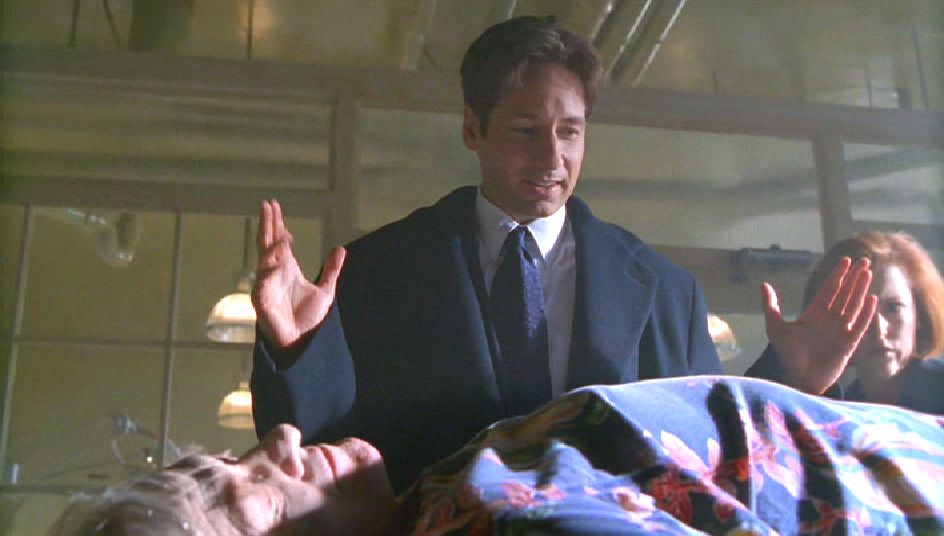
Tim Kane: Yes, but hewn more closely to the folklore. The true Romanian and Slavic vampires I believe to be real. They’re a far cry from even Stoker’s Dracula. They’re pudgy, hairy, and ruddy in complexion. No fangs. They’re OCD and must count up all the grain of spilled seeds. See the X-Files episode “Bad Blood“. This, for me, is as close as it comes.

From "Bad Blood" X-Files episode

Tim Kane

The Right Time to Write

I’m currently reading Girl in Hyacinth Blue by Susan Vreeland, my very first writing teacher. It’s brought me back in time a little. I took my first writing class in the second half of my senior year, a little over 20 years ago. That’s what shifted my career path from engineer to writer.

Although I’ve been writing since that day, I don’t think I was dead serious about it until about 5 years ago. That’s when I discovered I was a genre writer, and specifically, writing for teens and tweens. When I write has changed dramatically. Mostly due to the arrival of my daughter, Lilly.

My wife sleeps in a little later than I do (or did, pre Lilly). So I used to write in the mornings, from 7:00 till about 10:00. I’ve never been an all day writer. Instead, I work in the chunks of time available to me. Once Lilly was born I didn’t think I’d ever be able to fit in writing time. But that’s what I was going to have to do if I wanted the novel finished. Attach ass to seat and let simmer for at least one hour.

I think an hour is the bare minimum time. Sometimes I can get a tremendous amount written in just 45 minutes, but I prefer one to two hours. That’s why I don’t write in the morning now. I could still wake up at 5:00 and get some writing done this way on the weekends, but I like having the end time open-ended. In other words, if I want to keep on writing, I don’t want anything stopping me. So now I switched to evenings. I usually go up around 9:00 and write until 11:00. Sometimes longer. This works for me. When I’m really going, I can get 3-4 pages done in this time.

Recently I went to see a friend sing at Lestat’s coffee house. There was a multitude of people there with laptops, writing and chatting. I wondered, how many of them were there to write versus be “see” writing. I was one of those once. I felt I could only write in a coffee house with a legal pad and a steaming cup of joe. Truth was, it was more of an ego thing. Now I can’t imagine writing anywhere else than a quiet room. My attitude has shifted. Now I want to produce the pages rather than “look” like a writer.

I once read, in Writer’s Digest I believe, about a writer who balanced three kids, a part time job, and keeping up the house. She had only a month to revise her story for an agent. She got it done. Because that’s what writers do. They make the time. The book isn’t going to write itself.

There are plenty of people out there who say they want to be a writer or are going to write a book. Until you glue yourself to a computer keyboard or a legal pad, you’re nothing more than a poser. I think Susan Vreeland once asked us in class why we wanted to write. My answer took a while, but once it came, it was obvious. I write because I have to. It’s who I am and nothing relaxes me more.

Tim Kane