Optimism and pessimism clash together this morning. My mind’s divided. Not sure which will win out. I’m confident about optimism, yet the realist in me says pessimism will win out. Did that just create a circular argument?
The days swim like little fishes
The days swim like little fishes. Yesterday was Halloween. Tomorrow is Thanksgiving. I need to catch my breath. Yesterday I baked brownies with my daughter while the rain dappled the windows. Flurries of brisk air sneaked in each time I opened the sliding glass door. It was a perfect weekend.
How Calculus, Latin, and Chemistry Led to a Writing Career
 I didn’t start out life wanting to be a writer. In high school, I set my sights on engineering. I was on track until two events caused me to alter course. I’ll tackle them in reverse order.
My first semester at UCSD was horrific. Not the classes, per se, but the finals. You see, I had written down when I thought they would fall. I had my honors chemistry final on Monday, the calculus final on Thursday, and the Latin final on Saturday (the very fact that this was on a weekend should have tipped me off). Well I got some super strain of nasty flu the Friday before and was sick the whole weekend. I’d called the chemistry professor to see if I could take the test a few days later, but she told me it was a new exam and she couldn’t write a new one in such short time.
So Monday morning, I slogged in and stared at the pages. I was over the flu, but only barely. My body was wrecked. I managed a passing grade, but I think the professor might have rounded up a bit.
I decided to take the next few days off. Sleep in. Let my body rest up. I mean, I had till Thursday for calculus, and I was pretty good at math. I was rocking an A so far in class.
Wednesday morning rolled around and I decided, just for fun, that I would recheck the times of my finals. Okay, so my chemistry was on Monday. Did that. And Latin was on Tuesday. Holy Peanuts. I missed it. I actually missed my final.
My heart was racing. You have to understand. I was the sort of kid that lived for tests. I always did the bonus problem or the extra credit. The one time in life that I ever cheated (and this event sticks with me like a cancer) was solely to keep my top position, not to pass a test. In my seventh grade science class, I had the top score. How did I know? The teacher posted all the student scores. Then, a girl surpassed me. Don’t ask me why, but I had to recapture the top spot. Later, the teacher let us grade our own tests, and yes, I gifted myself a few points. Sad, but true. But I did reclaim the top spot.
So there I was, one final missed. I looked further to double check on my calculus final. The good news: I hadn’t missed the day. The bad news: The test was that day, Wednesday. And it was already finishing. There was no way I could race to the university and take the test. Impossible.
My mind crashed. You could literally see that little mac bomb on my forehead. I considered my options. I could withdrawal (meaning I’d have to take the whole class again.) Or I could contact the teacher. Which I tried to do for about an hour. Finally, I decided to drive down there and see if I could catch the man in the hallways. If I couldn’t, then withdrawal it was.
Luck was on my side. I located my calculus teacher carrying the pile of finals. He wondered why I hadn’t shown that morning. His offer was this: take the final right now. What could I say? I did it. I locked myself in a little room and sweated through integrals and derivatives. I butchered it. My grade dropped from a high A to a low B.
Then there was Latin. That teacher had been awesome all year. When I finally contacted him, he said he’d be in town Friday night. All I needed to do was translate a certain passage and drop it off to him. Done.
Thus ended my first semester at UCSD. That January, I changed my major from engineering to creative writing. Latin had been the only course I had enjoyed (even the final). I simply could not take more courses along the lines of calculus or chemistry (at least I got out before the dreaded organic chemistry).
Now, I’d said there was one other factor. This happened in my senior year in high school. I was lucky enough to run across Susan Vreeland. That very year, she started a writer’s workshop class designed to teach creative writing. If you recognize the name that’s because she went on to write some chart topping books.
That’s it. Fate intervened and switched my train from the engineering and science track to the writing rails. I then spent far too much time slumming around poetry for anyone’s good, but that’s another story.
Tim Kane
Back to Writing
Enough with the updates to the blog and the look and the pages and everything. I need to write. At least I didn’t waste that opportunity this morning. Burned through edits of three chapters and halted just at the point where I wanted to keep going. Now I’ll be set for tomorrow write.
Will the Codex Lead to the Demise of our Precious Scrolls and Reading?
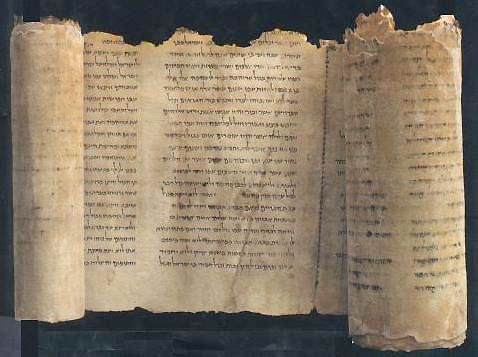 I’m sure you’ve all heard of this new invention: the folding book. Recently certain sects have developed this new format where, instead of our beautiful papyrus scroll, the text is scribbled onto tiny pages. One after the other. Plus, these people write in recto and verso, on both sides of the paper!
Personally, I love strolling through the library and choosing just the right scroll from the stacks. I know where to start reading and where to stop. The scroll is simple. You unroll as you read. Need to take a break? Then simply leave the scroll at the point you stopped.
You can’t do this with to codex. Instead you need some sort of tool to mark your position. Additionally, readers can skip around the text, going from the middle to the start and then to the end. Insanity. The author did not intend for that sort of haphazard reading. You might as well cut up scrolls and toss them on the floor.
Obviously, reading will decline. Scholars shall not tolerate these hard bound, page flipping codices. Our precious knowledge, stored up for centuries on scrolls, will slip away. Readers attention will decrease, tempted as they are by the ability to skip to the end of the story.
I say we do whatever we can to halt the codex in its tracks. Bring back fine papyrus scroll work—the only method to publish a scholarly work.
Think this is absurd? Look closely at what’s happening today with books. Manuscripts have survived from scrolls, to codices, to paper books. Words are ideas that cannot die, no matter the publication format.
Tim Kane
 Tim Kane Books