Spelling Shortfalls (Personal Word Demons)

I am not the world’s best speller. Yet I teach English as one of my core subjects in sixth grade. I’m a big believer in having a building error-checker. You should be able to sense when a word is wrong, even if you can’t figure out how to spell it correctly.

Ironically I was a finalist for a spelling bee in first grade. My stage fright was so great, that I pleaded with the teacher not to let me go. She obliged and I was spared the task of standing on stage and mangling words (though I must have been pretty good at that stage).

My error detector is fairly well tuned. I can sniff out some weird words even on printed paper (no squiggly red lines needed). Yet I do have my blind spots that, for whatever reason, baffle me.

Success: I am determined to spell this word as “sucess”. I think because the second C makes and S sound, my mind tunes it out.

Traveling: I desperately want to add another L to this, making it “travelling”.

Meet and Met: Whenever I type either of these words, I pause and sound it out to make sure I’m using the correct on. A year teaching Kindergarten helped with this.

Lose: This is my all time Achilles heel. I know it and still I type it wrong. I want to spell it as “loose”. In my defense, there is no logical phonetic reason for the spellings. Lose has that weird Z sound it it, like “looz”. Am I crazy here, or does it not sound like it should have a pair of Os in it? I mean, you try spelling it phonetically. It wouldn’t be such a big deal if “loose” weren’t around.

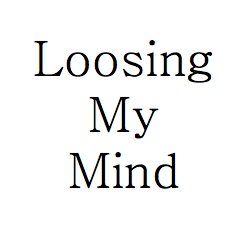
So next time you see a tweet or a blog post from me were I am “loosing my mind”, send me a quick message and tell me that my demon word has struck again.

Tim Kane
How Do You Define Yourself As A Writer?

Hi, I’m a creative and imaginative dreamer? Really? Sounds like you’re a bum to me.

Why can’t we get away with introducing ourselves via our talents? So often we define ourselves with jobs (teacher) and relationships (father of a wonderful daughter). Think about it, we even describe kids by their age or station. My daughter is 4 and a half, about to enter Kindergarten. Not a word about her personality at all.

As writers, we particularly suffer from this. I know that I do. I’ve published a non-fiction book and multiple short stories, yet why do I often feel like I’m not a “real” writer yet. Why? Because I don’t have that elusive “novel” published. It’s frustrating because I know I am a writer. I write. Every day. But it’s those accolades that we yearn for.

Perhaps we should all loosen up a bit. Let’s be what what we do. I write. Ergo, I’m a writer.

Nuff said.

Tim Kane

Protagonists-R-Us

We’re having a sale. Today only. Buy one protagonist, and get the antagonist at a fifty-percent discount. Such a deal. You can’t have one without the other.

I teach writing to sixth grade students. Here’s a typical plot line: Character meets another character and they talk. Then they meet a third character. They talk some more. Finally they all rush back to a) home, b) school, c) a castle. Yes, I know it matches up with a few of the Twilight books (don’t be a hater, I actually like Stephanie Meyers), but what most of my tween writers lack is an antagonist.

Or to be more specific, conflict generated by an antagonist. The two are inseparable. Yes I know that the protagonist herself can have doubts, thus generating conflict. Likewise, nature can also be an obstacle. But let’s face it, nothing beats a good ole white hat versus black hat. (If you wanted to go the Twilight route, Meyers handled that quite well.)

The antagonist defines the protagonist. He often strives for the exact same goal as the protagonist. Since only one can achieve that goal, it creates tension. I love antagonists that mirror the protagonist. For example, if I have a protagonist who hates monsters and the grotesque, I might pair him with a an antagonist who is a monster herself, yet despises it. Perhaps they’re both seeking the goal of destroying the evil beasts. Yet our hero does this out of fear and ignorance, while the villain strives for this goal from self loathing.

However you achieve it, make your antagonist linked to your protagonist. It creates a deeper bond and makes the final mano-a-mano showdown that much more interesting.

Tim Kane

Why Authors Still Need Agents

Recently, I was lucky enough to witness a keynote speech by Mark Coker, the founder of Smashwords. He talked about a day when writers supersede agents and publishers. He even made a joke of it:

One day, an author will tell some friends, “I just got a book deal.”
And they reply, “I’m sorry.”

This elicited groans from the audience (mostly writers with a handful of agents and editors). I agree in principle with Mr. Coker. Publishers have dropped the ball. They need to cut their own costs to become competitive and offer authors a greater piece of the revenue stream. Amazon’s 70% is far better than the 12% you get from publishers.

I still see a place for agents. Next time you’re on Amazon, or Barnes and Noble, troll through the lists of available ebooks. You’ll see plenty of indie authors. That’s a good thing. The ebook has become the great equalizer. Yet, try purchasing one of these indie books.

I did.

I tried quite a few. None were worth the $0.99. Typos were rife. Even when they weren’t the story sagged or had horrific info dumps, or just bad writing. What all these books had in common was a lack of agents and proper editing.

Agents serve as gatekeepers. They champion good books and turn the rest to the door. It’s true, that agents take less and less clients these days, but this is an issue based on the poor state of the publishers. If those corporate guys can get things turned around, I think you’d see many more author’s picked up.

The truth is, as a reader, I want someone to vouch my books. I don’t have a lot of time to read, and wasting it on poor prose is infuriating. That’s not to say that lousy books can’t make it through the agent and publisher system. They can and do. But usually I sour on these as a matter of style. Agents, at the very least, make sure the writing is free of errors and has a decent story.

Tim Kane

When Do You Let Your Creative Pooch Off the Leash?

Animal strokes ... Leonardo da Vinci's Studies of a dog's paw, about 1485. Photograph: The National Gallery of Scotland, Edinburgh

Where do you go to dream up that killer plot twist? I own a restless mind, and like a puppy scrounging for a toy, it’s always off on an adventure somewhere. During my working hours I reign it in, focusing on the task at hand. Oddly, I have a structured and logical side, and I think this takes control in my school situations. Yet when I take off the dog chain and let it loose, my inner puppy romps all over creation.

Over the years, I’ve learned to channel this rampaging creative force. Direct it toward solving difficult writing problems that stymie my logical side. Usually, what I do is mull over a problem, maybe read a few pages of my manuscript in progress and then give my brain time to work.

What works best is showers. I’m stuck there for fifteen minutes. I can’t write, so my left-brain can’t ruin things by trying to put it all into words. Usually when I emerge, a soppy mess, I rush to a pad of paper and jot the whole thing down in one mind dump. So far this technique has never failed me.

I also find that driving produces the same results for the same reason. I can’t write. This leaves my mind free to explore the permieter of the yard inside my head, sniffing and digging the dirt. I often mind myself stopping in a parking lot and unloading on whatever scrap of paper I have. If you ever see me parked and writing, don’t come near. I’m working.

One time, on a drive to Disneyland, there was nowhere to pull over. Thank goodness my phone has a record feature. I must have put down a dozen tiny recordings. Some no more than a few words. My wife must have thought me insane. At least I kept my eyes on the road.

I used to settle in coffee houses for the same effect. Though with the rise of Starbucks, most independent java joints have vanished. Plus I brew my own killer cups at home these days.

So what about you? Where do you let your creative pooch off the leash? Does the dog deliver the goods, fetching back trinkets of character or plot for you to use?

Tim Kane