SDSU Writer’s Conference: The Secret of Writing

It has been four years since I last visited this conference. Despite being a San Diego native, I had plenty of growth as a writer to accomplish before revisiting this event. In 2008, I had written several novels, but had no support group. Immediately after my first conference, I knew that it would be a learning experience. Afterward, I joined two excellent critique groups, rewrote my novel, and then finished another. In short, I went from wannabe writer to accomplished writer.

Even though I have a book published, along with several short stories, I still haven’t hit it big with the novel. That is my goal, along with the many other attendees this weekend. The golden prize. Yet, four years ago, this was my one and only goal. Since then, I heed some great advice I read from Harlan Ellison interview.

There is only one secret, and the secret is this: Anybody can become a writer. The trick is not becoming a writer. The trick is staying a writer. Day after month after year after story after book. That’s the secret. And if you can do that and produce a body of work, no matter how large or small it is, that is true and can pull the plow, then you’re a writer. If you are not prepared to spend your life doing that, then, for christsake, don’t do it.

So what do I intend to take from the SDSU Writer’s Conference? Information, mostly. I intend to listen closely to the agents, editors, publishers, and writers there. There are several workshops on eBooks and self publishing, which I can see will play an important part to the future of writing and publishing. I’m also at the crucial first stages of a new novel, and that means my brain is perched on a precipice. A push in the right direction can lead to a awesome slide through 70,000 words of prose.

Here are the courses I see as the most intriguing. Obviously I can’t be several places at once. I plan to tweet on what I see and hear. I was surprised that there was no official hashtag for the conference. I created #sdsuwc to fill the void. Also, I was shocked at how few people were tweeting. Writers as a whole are attached to twitter the way most artists cling to alcohol. My only guess is that most of the attendees haven’t realized that tweeting is an effective marketing tool. (These are the workshops I feel I don’t need, but I’m sure they’re quite good).

Saturday

9:30 – 10:20

Establish A Pattern, Then Twist It by Yvonne Nelson Perry
I’m always interested in plot structure and how to twist it. Should make a good workshop.

10:30 – 11:20

Genius Plotting I by Louella Nelson
Again, you can see I’m drawn to structure.

Self Publishing–A New Gateway to Success by M. Louisa Locke
Curious about the options and taboos of the new eBook process.

1:00 – 1:50

No Sag Structure by Q Lindsey Barrett
Yes, I’m obsessed with structure.

Evoking Emotion by Angela Hunt
This is a weak spot for me, so I’d like to learn how to polish it up.

2:00 – 2:50

Fiction is Written in Scenes by Yvonne Nelson Perry
I’m a big fan of Goal, Conflict, Disaster, which breaks writing into scenes. Curious about Perry’s take.

X-Ray Your Plot—Make Sure Your Structure is Sound by Angela Hunt
Okay, maybe I picked too many of these types of workshops. I know I can’t go to all of them.

3:00 – 3:50

Genius Plotting II by Louella Nelson
In case I miss the first one.

Self Publishing–Eight Tips on Selling eBooks on Amazon by M. Louisa Locke
Could be a rehash of the previous workshop, but I’ll need to attend at least one of the self publishing sessions.

4:00 – 4:50

ePublishing, POD, and the Future of Publishing for the Writer  by Bob Mayer
This looks like it’s chock full of good information.

Sunday

10:00 – 10:50

Short Cuts to Deep Characterization by Angela Hunt
I want to focus on building deeper and more well rounded characters. Every little bit helps.

11:00 – 11:50

Beyond the eBook Uploaded — How Do You Sell It by Bob Mayer
Marketing is the key. Looking forward to this one.

1:00 – 1:50

Layered, Nuanced, Original: Crafting Characters by Q Lindsey Barrett
This sounds like it’s right up my alley.

Those are my picks. If I see you there, don’t be afraid to say hi.

Tim Kane
Dagan Fish

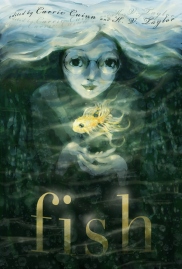
I’m so excited to have the Fish anthology from Dagan Books coming out on February 8th. I submitted to this anthology way back in July. Seems a world ago. I opted for the flash fiction because, quite frankly, I’d never done one. It was fantastic. Having to boil down your words down to 1000. Crazy. Oh, and the awesome folks at Dagan also did a series of interviews with all the writers. Check out mine here.

Lost in Place

My wife has grown used to this by now. Every once in a while I get so involved in a project that I disappear into myself. While driving, my mind is plotting out scenes. While making dinner, I’m pricing together dialogue. And every free second, I’m delving into books or the Internet for research.

Do all writers do this? Does you need the poetic bent or does it happen to non-fiction scribblers too? It’s a bit like. Fugue state, except instead of forgetting my life and leaving home, I travel inward, totally enveloped by the story world.

Typically I emerge from this story coma with fresh insights. If I have a chance to write, I can easily wrack up thousands of words a day. (It helps if I have a deadline looming.)

Sometimes I’ll plan for this. For example, if I have difficult section to work out in a chapter, I’ll review it and then take a shower or go for a drive. These menial tasks let my mind wander. I can’t tell you the number of times I’ve scribbled frantically while still wet from the shower. The worst part is that I don’t have my glasses as they steam up.

I also inhabit parking lots, scratching words onto whatever paper I can find: receipts, envelopes, those flyers they leave under windshields. Sometimes I have to set a timer or I’ll spend the next hour just writing in a parking space.

Tell me if you have any similar situations. Do you ever get lost in one place, your mind dropping off the planet?

Tim Kane

How to Lose Agents and Frustrate Editors

You finished your pride and glory. Now’s the time to tell all those agents and publishers just how damn good it is. A sure bet. The best book they ever read. Here’s how to annoy and pester agents and editors until they relent and publish your marvelous manuscript.

Don’t bother with the first pages or chapter, send them the whole novel. All five-hundred-pages. Be sure to make it UPS or FedEx and a sign on delivery. If you’re not up to plunking down the dough for the whole enchilada, then send the best chapters. You know which ones those are. It’s never the first one. Come on! You’re just warming up. How many other classic books have slow openings? Too many to count. So send a selection of your best chapters to amaze your prospective agent or editor.

Now, let’s talk about formatting. It’s not as important as you would think. We know how much paper costs these days, so don’t waste dead trees with double spacing. Try one-and-a-half or single spacing. That way you can squeeze that three-hundred-page novel down to one-hundred-and-fifty. Or, better yet, print on both sides of the paper. Then you can cut it down to seventy-five pages. Hey, you might just be able to afford to mail that bad boy.

Now, some of us might remember the good old days of typewriters. Yes, those things that printed without electricity. There, you needed to put two spaces after each period. Don’t ask me why. It was a barbaric age. Now with word processors, you don’t need to do this anachronistic task any more. The fonts are developed to look good with only a single space. But don’t worry, add two, three, or even four spaces after each sentence. Sure, it might bug agents, but at least it’ll get their attention.

Speaking of fonts, don’t shy away from frilly cursive fonts as chapter headers. You can even change your font from chapter to chapter. Get creative and make an impression.

As you write, make sure to dump all that exposition up front. The longer the paragraphs, the better. Yes word processors can auto-indent for you, but that’s too complex and hard to figure out. Just tab each paragraph. Or better yet, hit the space bar five times. Consistency rules. Plus, rather than page breaks, you could hit the carriage return enough times until you reach a new page.

Finally, let’s talk dialogue. “Said” is sooo boring, Why not spice things up with “announced,” “protested,” or “cajoled.” Editors love that sort of thing. It shows range. Sure, no other published writers do it, but that only makes you unique.

So are you ready? Heck yeah! Bundle up those pages—coffee stain and all—slap some stamps on it, and mail that sucker away. Yippee-kay-ay. You’re going to be published.

Tim Kane

(I do hope you realize these are list of things NOT to do. If you attempt these, prepare for the long lonely ride to rejection.)

Life Without Amazon

My New Years’ resolution is to shop, as often as possible, away from Amazon. Why? As an author, I’ve noticed some less than savory practices from this corporate giant lately. It seems that the fellas over at the longest river bookstore are leveraging their power to crush and manipulate consumers and authors.

Amazon launched its KDP Select program for authors selling ebooks through its site. They threw out offers like a $500,000 pool of cash. Also a monthly income of $7,500. It all sounds great until you read the fine print. By signing up, the author cannot sell his/her book anywhere else (including a personal website). Also this pool of cash is based on the percentage of sales of all ebooks that month. So, unless you’re a top ten author, your take could easily be pennies. Plus, you’ve cut off any sales from other websites. Add to that the fact that Amazon has moved the link to opt out and you’ve got a massive ebook collection for them and a lot of starving writers.

Now, let’s look at Amazon’s price check app. This little goodie was a one day rollout where customers were encouraged to enter a brick and mortar store, take a picture of a product, and then buy it through Amazon. The incentive…?  Amazon gave customers a $5 price break.

As both a customer and a writer I was maddened. Yet, why did I continue to shop Amazon? Mostly, it boiled down to laziness. Amazon’s site was just so easy to use. I made it a priority to branch out. Inconvenience myself a little bit.

Fist off, books. I admit, I had already downloaded some ebooks through the kindle app. Loved it. But it turns out there are plenty of other sites out there willing to sell an ebook. I just bought a Nook and I have to say, the reading experience is superior. For dead-tree-books, I have to rely on the Barnes and Noble chain (as it’s the only bookstore in my city).

Then came the wish list. Now I tried other sites like wishlistr. Frankly they sucked. Amazon simply has the best wish list. Even Barnes and Noble was cumbersome to use. So I decided to work in reverse. I’ll keep my lists up in Amazon, but buy from other stores. I use the wish list mostly as a bookmark anyway.

So if you’re trying to quit Amazon, it is possible. Yeah, you might pay a bit more. Plus you’ll have to say toodle loo to the $25 free shipping. No one said supporting authors would be easy.

Tim Kane