The Five Most Common Misconceptions About Classic Movie Monsters

I am a monster nut. I’ll own that. My first published book dealt with vampires in film and television. I grew up on the Toho crew. I have action figures for nearly every major Universal monster (including the second Creature from the Black Lagoon, The Creature Walks Among Us).

So it shouldn’t come as a surprise that my four-year-old daughter has taken a liking to the classic monsters. By this I mean the big five: the four Universal monsters (Dracula, Frankenstein, The Mummy, and the Woflman) and also zombies. Recently, while watching the Hex Girls on Youtube, my wife stumbled upon the Monster High videos. My daughter was hooked. But this got me thinking. The cartoon/merchandise features the big five monsters, all with the familiar quirks akin to each one. But I knew that many of these were off base from the true legends of these creatures.
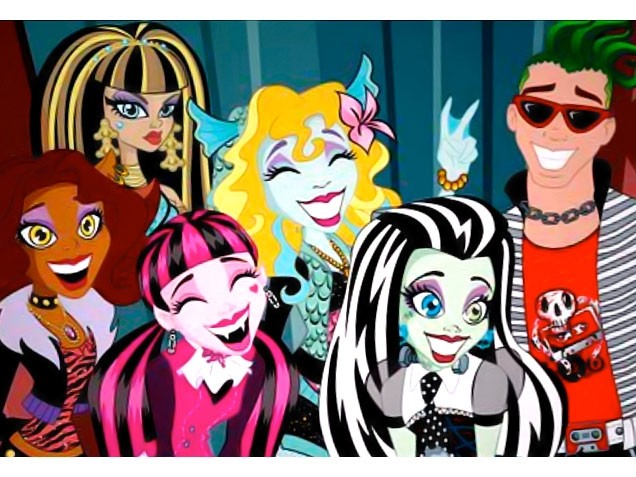
The five classic monsters (plus a gorgon)

So after hours of research, I present to you the five most egregious errors we make about classic movie monsters.

5 Werewolf

Lon Chaney, Jr. as the Wolf Man

I admit, after looking through countless books, I found that most of the traditional legends line up with our common associations. The link of werewolves to the moon dates back to 1214 where Gervaise of Tillbury reported cases in Auvergne of men turning into wolves during the full moon. There is some controversy about the silver bullet. Some believe it was all made up by Universal for the Wolf Man movie. But historians know that in 1767, the Beast of Le Gevaudan was killed with bullets from a melted silver chalice.

The only thing I can say that most likely not part of original folklore is the pentagram on the hand as a mark of the werewolf. This was probably concocted by the Universal folk for the film. A pentagram has traditionally served as a symbol of protection (even from werewolves).

4 The Mummy

Boris Karloff as the Mummy

Mummies are a staple for monster themed parties and kids playing with rolls of toilet paper. But not all mummies are bandaged and scribbled over in hieroglyphics. There are mummies all over the world. Basically any place extremely dry will create a mummy. And for the sake of argument, we’ll define a mummy as something with most of the internal organs still present. Those are the squishy bits that tend to dissolve during decomposition.

The strangest mummies I found were the Incan mud mummies. These date back to 5000 BC, rivaling Egypt as the first to mummify. Basically, the Incans would disassemble the body, organs and all. They used heat to dry the skin. Then the body was reformed using feathers, clay and glass. Everything was covered in a white ash paste. Finally, the skin was refitted on the body.

Then there are the bog mummies. This type of mummification might have been accidental (oops, I fell into a peat bog) or a form of sacrifice (slipping a deceased relative into the bog to bring him or her closer to the gods). Either way, the body became preserved in the frigid stagnant water loaded with tannic acid. Sometimes not everything survived the years in the bog. Take the bodies found in Florida. Here only the brain was preserved (along with the skeleton) from bodies 7000 to 8000 years old.

Finally, we have the Chinese mummies. Western China is basically one ginormous desert. In addition to the sand, heat, and wind you get bonus pits of salt. These were used a cemeteries as well as areas of sacrifice. One young woman was found partially dismembered with her eyes gouged out. There was also a baby boy, apparently buried alive.

The strangest finds have come from the Takla Maken Desert. Over the past thirty years, archeologists have found many mummies, but all of them have been caucasian, not Chinese. And these shriveled folk had a thing for clothes, many being buried with multiple outfits. The most famous mummy is “The Man with Ten Hats.” You guessed it, he was buried with ten hats.

3 Zombie

A Voodoo zombie

Real zombies don’t eat people. In fact they don’t do very much at all. Lafcadio Hearn introduced English speakers to the word zombie through his brief article, “The Country of the Comers-Back”, which appeared in Harper’s Magazine in 1889. Most were little more than slaves working on sugar plantations in Haiti. They were dumb brutes, working mindlessly. The eyes were dead, unfocused and vacant.

A central precept of Voodoo, a hybrid of African animism and Catholicism, is the possession of a body by the loa. A person was believed to have two souls, the gros-bon-age (the big good angel), and the ti-bon-age (the little good angel). Each soul served a purpose. The gros-bon-age served to give the body life, while the ti-bon-age gave the person their personality. During a Voodoo ceremony, the loa would displace the ti-bon-age, and thus control the person’s body.

It was George Romero’s film, Night of the Living Dead, released on October 2, 1968, that forever changed the image of the zombie. Romero never refers to his walking dead by the word zombie. Instead each of his films calls them the living dead. Despite this technicality, modern moviegoers made the connection. When Romero’s second film, Dawn of the Dead, was released in 1978, it was distributed internationally as Zombie (or Zombi).

2 Vampire
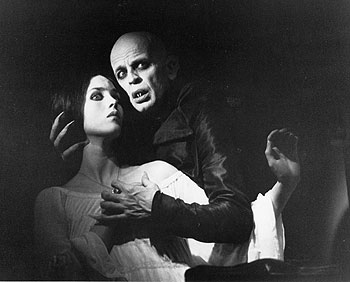
From the 1979 Nosferatu the Vampyre

Traditionally, vampires looked nothing like Edward Cullen or Lestat. A more apt description would be a ruddy-faced overweight man with long fingernails, his mouth and left eye open, with a linen shroud as clothing. (Not really going to sweep you off your feet, is he?) The biggest transformation to this myth came with the 1931 film version of Dracula staring Bela Legosi. Here the monster is shown as debonaire and charming. Much of this depiction came from Bela Lugosi’s performance and the original stage play.

Additionally, Bram Stoker’s Dracula could walk in daylight (although he prefers night). It was left to two subsequent movies to introduce death by sunlight. In Son of Dracula (1943), Lon Chaney, Jr. Plays Count Alucard (Dracula spelled backward). He simply fades away when struck with the sun’s rays. In Return of Dracula (released in 1944, only a few months after Chaney’s performance), Lugosi returns as Armand Tesla. In the end, he dissolves in the sunlight.

For more information on vampires, check out my article on vampire apotropaics.

1 Frankenstein

Frankenstein’s Monster

The problem most people make with this monster is his name. Frankenstein is the doctor. The tall green guy with bolts in his neck is simply “The Monster.” In the Mary Shelley novel, Frankenstein; or, The Modern Prometheus, she called the creation Adam. In one of the play adaptations of the novel, the creature is billed as simply “________, played by Mr T. Cooke.”

This time we can’t completely blame the Universal picture for the confusion over the monster’s name. This happened in Shelley’s time. (It’s what you get for not naming a central character, writer’s take note). Yet once Universal cast Karloff as the “Unnamed Monster”, the audience stuck the monster with the doctor’s name. This is despite the fact that in the opening credits, it’s Karloff who is unnamed, appearing as a question mark.

Opening credits for Frankenstein

I hope all this has cleared up some misconceptions about our favorite monsters. It doesn’t change how these creatures have evolved. It’s natural to think of vampires dissolving in the sun, zombies eating brains, and that hulking monosyllabic fellow as Frankenstein.

Tim Kane
North American Cryptid Quiz

A friend of mine asked me to make up a quiz of American cryptids. Why me? Well she knows that my wife and I have an extensive library of monsters and supernatural creatures (there’s a whole section devoted to just cryptids). Alas, most of my books were on international cryptids or mythological animals, but I think I dug up enough information to make the quiz work.

Here are 13 of the most popular North American cryptids, complete with a brief description and a picture. A little bit of trivia: out of the 13 creatures, three are native to West Virginia. And I was already worried about my Uncle-in-law who lives there. Plus, three of the 13 creatures were first spotted in 1977. (A banner year for LSD? You decide.)

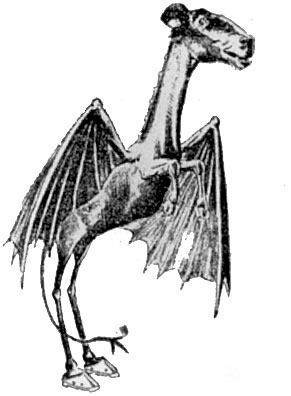
#1: A creature with bat wings, a thin neck, horse’s head with goat’s horns, and cloven hooves. Reports put it anywhere from three to six-feet tall. It preys on small animals and livestock in the woods of Eastern United States.

#2: A large hairy, ape-like humanoid that kidnaps humans throughout Northwest United States as well as Canada.

#3: A slimy-gray snake-like creature that haunts a lake in the Northeast United States and Canada.

#4: Looking like a cross between a satyr and Satan, this creature haunt lover’s lanes and secluded highways in Maryland.

#5: A dark figure with large wings and glowing eyes. Encounters with this creature in West Virginia are portents to disaster.

#6: An ape-like creature that lurks in the wilderness of Florida. It has been known to kill cats, even throwing a kitten at one witness.

#7: A wolf-like creature with clawed hands, yellow eyes that walks the roads around southeastern Wisconsin.

#8: A tan-colored creature with a bulging head and large, reflective eyes. This three-foot tall, spindly humanoid, haunts the woods around the Charles River in Massachusetts.

#9: Four-foot creatures with thick leathery skin, large bulging eyes, and webbed hands and feet. Swimmers in the Ohio River report being attacked from below by these creatures.

#10: This ten-foot tall creature has a dark green body surrounded by a robe with a pointed hood. It haunts the woods of West Virginia. Witnesses have noted a noxious odor causing skin and eye irritation.

#11: A sea serpent with a dark undulating body that gives the appearance of humps in the water. It’s head looks similar to a horse. It eats fish and the occasional horse around Lake Okanagan, British Columbia.

#12: A giant condor-like bird with a wingspan up to 35 feet. It carries off livestock, pets, and children in Southwestern United States.

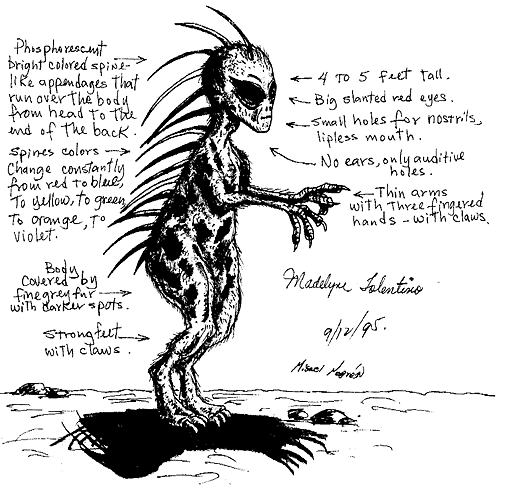
#13: A gray humanoid with large red eyes. It slaughters livestock in Puerto Rico and Mexico.

So, how well did you do? Did you get all 13 right? Check below for answers.

Tim Kane

ANSWERS BELOW

Answer #1: The Jersey Devil or the Leeds Devil.

In the mid 1700s, the monster was born to a woman with the surname of Leeds. The monster leapt from her womb, ate her other children, and flew up through the chimney. It continues to haunt an area of woods called the Pine Barrens in New Jersey. It apparently likes to swoop into family homes via the chimney and make off with screaming children. Over 2000 people claim to have seen this creature over the years.

Answer #2: Bigfoot or Sasquatch.

This cryptid was skyrocketed to superstar status in 1958 when a construction worker named Jerry Crew showed a plaster cast of a footprint he found at Bluff Creek Valley to a newspaper, who dubbed the creature “Bigfoot.”

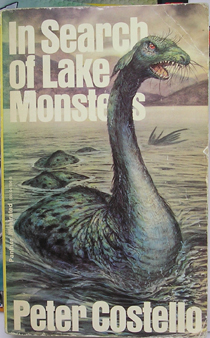
Answer #3: Champ is the American Loch Ness Monster.

He inhabits Lake Champlain, the largest lake next to the great lakes (100 miles long). He’s been sighted as even before Europeans arrived. Native American’s called him Chaousarou. P. T. Barnum offered a reward of $50,000 for the beast’s body (for his traveling show). Sandra Mansi took the most credible photo of Champ in 1977.

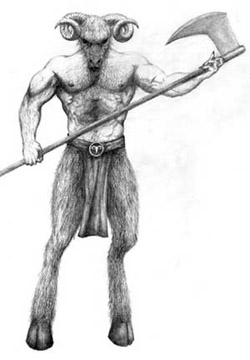
Answer #4: Goatman.

The legend goes like this: A scientist experimenting with goats somehow mutated into a goat-human hybrid. He was driven mad and now takes his vengeance on the youth surrounding Prince George’s County in Maryland.

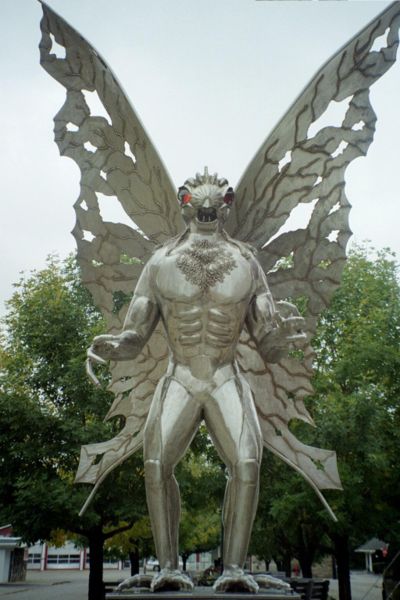
Answer #5: Mothman.

Beginning in 1966, the town of Point Pleasant, West Virginia, two young couples were followed by this flying creature. They drove to the edge of town, clocking 100 mph, yet the creature had no trouble keeping up. The creature, then called “The Bird” made numerous appearances after that, rising up from behind parked cards, or chasing autos down the road. These appearance continued for a year, coupled with sighting of men in black who questioned and sometimes threatened witnesses. On December 15, 1967 the Silver Bridge collapsed, plunging 30 cars into the Ohio River. After the bridge disaster, the Mothman and the men in black were never seen again.

Answer #6: Skunk Ape or Florida Skunk Ape.

Reports vary, making this creature as large as bigfoot, or as small as an orangutan. It has glowing orange (or green) eyes and a repugnant scent that dogs refuse to track.

Answer #7: The Beast of Bray Road.

During the 80s and 90s, there were a rash of werewolf sightings around the towns of Elkhorn and Delavan. Motorists often saw an oddly hunched creature along Bray Road. The first report involved a woman who pulled to the side of the road after hitting something. She saw a dark shape in the woods. She quickly got back in the car and sped away, but the creature leapt on the back of the car, clawing the trunk, before falling off. Some people have connected this werewolf with the Native American legend of the Shunka Warakin (meaning “carried off dogs”).

Answer #8: The Dover Demon.

In 1977 several teenagers claim to have seen this creature in the woods around Dover. Although it bears resemblance to the “little gray men”, there were no UFO sightings during that time. Also, the creature appears similar to the Native American legend of the Mannegishi (a legendary Cree trickster).

Answer #9: The Loveland Frogmen.

Described as frog-like trolls, they inhabit the banks of the Ohio River near the town of Loveland. They’ve been seen lying along the shoulder of roads, easily mistaken for roadkill. Upon discovery, the creature will stand up on two legs and flee back to the water. Sighting most often occur in the Spring, particularly March.

Answer #10: The Flatwoods Monster, The Braxton Monster, The Green Monster, or The Phantom of Flatwoods.

On September 12, 1952, a UFO was reported to have crashed on a small town in Braxton County, West Virginia. Several boys witnessed the crash and investigated. They ran into a tall green figure with a pointed hood or helmet. Its clawed hands emitted a strange sulfurous smell. The boys fled. Authorities later found strange oily skid marks in the area.

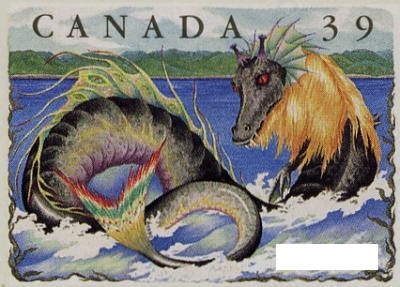
Answer #11: Ogopogo.

Sightings date back to 1860 (about 60 years before Loch Ness). The name is not Native American, as it would seem. Native Americans call the creature N’ha-a-itk (meaning “snake in the lake”). A British entertainer, W. H. Brimblecombe, was fascinated by stories of the creature. He wrote a silly song where he uses a palindrome to name the creature. Recently, in 2000, John McDougal, attempted to swim the entire length to raise money for cancer research. As he swam past Rattlesnake Island, he spied two creatures, 20 to 30 feet long, swim beneath him for several minutes.

Answer #12: Thunderbird.

Almost every Native American tribe has a story about an enormous bird that can beat its wings like thunder. Lighting shoots from its eyes and its shadow blocks the sun. Storms follow in its wake. In 1977, a ten-year old boy from Illinois spotted a pair of thunderbirds in the sky. One swooped down and tried to abduct him. The mother’s screams scared the bird away. Cryptozoologists think this version of the bird, with a reported ten-foot wingspan, might be a relative of the Andean condor.

Answer #13: El Chupacabra.

Second only to Bigfoot in popularity. In the early 1990s an epidemic of slaughtered livestock, mostly goats, affected Puerto Rico. The animals had small puncture wounds on their necks and they were completely drained of blood. The legends spread and seemed to encompass other cryptids, thus creating competing descriptions for the creatures: small and hairy or tall and scaly, using fangs or a forked tongue. Although the Chupacabra is relatively new, its legend probably isn’t. In the 1970s, Puerto Rico had stories of El Vampiro Moca, a vampire in the town of Moca that killed livestock. South America has a mosquito-man, who drains animal blood through a long nose.