Mad Mary (Why We Love to Be Scared)

Children love to be scared. Heck, we all do. This Halloween, a colleague and plan to host a Scary Story night at our elementary school. In past years, I tried to read the classics, excerpts of Poe and Stoker. Mostly the kids were bored. I think they only stayed out of respect. And the candy. (Mostly the candy).

Then I got smart. I started asking kids what they liked in scary stories. Started recalling all those creepy stories I’d heard as a kid. I discovered two things: kids like gross plus a little bit of humor.

I dug up a story I hear while I was at a summer camp in the mountains (Camp Marston). The actual story had very little detail. At least that I can recall. I remember hearing about the cattle mutilations. There was mention of a wild girl with ultra long fingernails and crazed eyes. Of course I heard the story over a campfire under a night sky. Very spooky. The camp even had a tree with the manacles still bolted in. That was the best part. Scared the crap out of me.

Obviously, the camp had to take them down. None of the existing counselors remembered Mad Mary. I did a search for her, but came up with nothing.

I decided to write my own version of the story, taming it down a bit for the kids. Here’s what follows:

When I was in sixth grade, I went to Camp Marston, and the counselors there told me the story of Mad Mary.

It seemed there was a girl named Mary. As she grew up, she became more and more insane. Her parents were very old and didn’t want to send her to a mental hospital. They kept her at home away from any other people.

But Mary grew worse. She would growl like a wild animal and gnaw on the furniture like a dog. One day she attacked her mom. Bit her in the arm. Blood was everywhere.

Her father yanked Mary away, but didn’t have the heart to call the police. You see, he still loved her. But she was out of control.

He chained her arms to a tree. He brought her food and water every day, but never unchained her. There she stayed for a whole year.

Now, I told you that her parents were very old. They both passed away suddenly one night, leaving Mary totally alone. She cried all day and all night, calling their names. No one answered. They were dead.

But Mary was still chained to the tree. Unable to get food or water.

For several days she screamed for help, but the house was high up in the Julian hills. There was no one around for miles.

Finally, insane with hunger, she snatched a squirrel off a branch and ate it. Whole. The blood reminded her of when she bit her mother’s arm.

For the next few years, this was how Mary survived. She ate animals that strayed too close. She sucked the dew off grass. All that time she was chained to the tree. Her hair grew down below her bottom. Her fingernails grew long and sharp. She used them like knives to catch her food. And her eyes showed a growing madness.

Finally, the bolts that attached the chain to the tree pulled loose. Mad Mary was free. She scampered off into the woods, dragging the chains behind her.

Every few years after that, farmers would find a that a cow had been killed at night. The animal was sliced open along the gut. Mary had used her long sharp fingernails. And the insides were chewed up.

Now, Marston still had camp for sixth graders every year. One year, a little before I went to camp, a boy named Chris came up with his sixth grade class. Chris was a very forgetful little boy. He had his camp list, but seemed to forget everything.

He forgot his flashlight, his camera, his Chapstick, and his pillow. He remembered his shoes, thank goodness, but even the things he brought he would leave in his cabin.

One day, he was going on a day hike. He brought his jacket because it was chilly in the morning. By afternoon, it had warmed up, so he took it off. That evening it cooled down again, but he couldn’t remember where he left it. The weather turned cold and he shivered.

This was the skit night, and all the students were gathered in the main cabin with the stage for the show. There was a lot of noise with people laughing and clapping.

Chris needed to go to the bathroom. Now normally, he would go with a buddy. But he was embarrassed that he had lost his jacket. So he snuck out of the skit night and headed down to the bathrooms.

It was a clear night with the stars twinkling in the sky. The shadows seemed impossibly dark. By the time he reached the bathrooms his heart pounded hard inside his chest.

Then he heard a noise. It sounded like someone dragging something. The clinking of chains. It was Mad Mary.

Clink. Clink. Clink.

Chris froze. The sound was coming from the field between the bathrooms and the skit night. He couldn’t get back the main cabin.

He cried for help, but of course no one heard him. They were all enjoying the show. If he had brought a buddy, he might have been all right. But Chris was alone.

He dashed for his cabin. All along the way he heard the drag – clink, drag – clink of Mad Mary following him.

He made it to the door, rushed inside, and jumped into bed. He threw the covers over his head.

Outside her heard drag – clink, drag – clink.

Then, along the wall outside the cabin, Mary scraped her long fingernails.

Scraaaaatch. Scraaaaatch.

Then she reached the door. Chris heard the click, click, click of her fingernails on the wood. Then the handle turned and the door squeaked open.

The sounds of the chains drew closer—drag – clink, drag – clink—until they were right by his bed. Then Mad Mary spoke.

“I’ve been looking for you.”

She snatched the covers away. Chris saw two beady eyes peering through the long tangled hair. She held the sheet between her long sharp fingernails.

“You forgot…your…jacket!”

Earlier, on one of my first visits to Camp Marston as a sixth grade teacher, I dropped hints about Mad Mary to many of the kids. We arrived at camp on a Monday and left on a Friday. For several days I got little to no response. I had pointed out a tree that looked like it had been clawed by Mary. Everything changed on Wednesday.

At lunch recess, two contractors were repairing a door. I casually told the students that Mad Mary had ripped it off. They went to ask the contractors, who, going along with the gag, said that she had.

Within a few minutes, students were seeing Mad Mary everywhere. In the trees. In the shadows. I had to start backpedaling, saying that the story was made up. I did some damage control.

Usually on Wednesday, we teachers drive into town for dinner, skipping the meal with the kids. Big mistake. A student from a different school had been nervous about life at camp. For the past few days he had not defecated, scared of the walk to the bathroom outside his cabin. That night, the constipation had reached breaking point, so to speak, and he passed out. Immediately, students spread the rumor that somehow Mad Mary had done the deed.

I was reprimanded for spreading the story. The student recuperated at the hospital. Everything went pretty much back to normal. But I remembered the incident. I was amazed at how much a single story could affect people.

Tim Kane

Nosferatu: The Film That Wouldn’t Die

There is no doubt that Freidrich Willhelm Murnau’s Nosferatu, Eine Symphonie des Grauens (Symphony of Horror) is a piece of landmark cinema, both for its Expressionist filmmaking and its unique treatment of the vampire as plague. Yet few people saw this monumental film prior to 1960. Though slated for destruction by Bram Stoker’s widow, the film managed to survive, popping up in the most peculiar places.

Nosferatu debuted at the Marble Hall of the Berlin Zoological Gardens in 1922. The movie was the first and last product of a small art collective called Prana Films — the brainchild of artist Albin Grau (later Nosferatu’s production designer). A month later, Florence Stoker caught wind, and she started the legal machines rolling. Her only income at this point was her deceased husband’s book Dracula, and she would not let some German production company steal her meal ticket. During the 1920s, intellectual rights were a bit dodgy, so Florence paid one British pound to join the British Incorporated Society of Authors to help defend her property. Never mind that the society would also pick up the tab for the potentially huge legal bills.

Florence seemed unaware that a second vampire film, this one called Drakula, was produced by a Hungarian company in 1921. Although the title harkens back to Bram Stoker’s novel, the resemblance ends there. This film, now lost save for some stills, was more concerned with eye gouging than straight out vampirism. Nosferatu on the other hand took much of its plot from Stoker’s Dracula, changing only the names.

The film continued to be exhibited in Germany and Budapest up through 1925, though Prana was beleaguered by creditors and harassed by Florence Stoker. They tried to settle with the society, offering a cut of the film’s take in order for them to use the Dracula title in England and America. Florence would not relent.

She not only wanted Prana to halt exhibition of the film, she wanted it torched — all prints and negatives of the film destroyed. And she got her way. In 1925 Florence won her case and the destruction order went through. Nosferatu, Eine Symphonie des Grauens vanished into thin air just as Count Orlock, the vampire in the film, did when exposed to the rays of the morning sun.

Nosferatu did not stay dead. Like any good horror movie, the villain revived himself and carried on the fight. A print of the film resurfaced in 1929, playing to audiences in New York and Detroit. However preeminent Dracula scholar, David J. Skal, writes that the film “was not taken seriously” and that most audiences considered it “a boring picture”. The print was then purchased by Universal to see what had already been done in terms of a vampire movie. The film was studied by all the key creative personnel leading to the Universal production of Dracula in 1931.

The undead film continued to rise from the grave throughout the years. An abridged version was aired on television in the 1960s as part of Silents Please, and subsequently released by Entertainment films under the title Terror of Dracula, and then again by Blackhawk Films under the name Dracula. Blackhawk also released the original version to the collector’s market under the title Nosferatu the Vampire. An unabridged copy of the movie survived Florence Stoker’s death warrant and was restored and screened at Berlin’s Film Festival in 1984.

Despite its influence on the making of the 1931 Dracula, Nosferatu has few film decedents. It’s theme of vampire as a scourging plague has only been seriously taken up by two films: the 1979 remake by Werner Herzog, Nosferatu: The Vampyre, and the 1979 television miniseries of Salem’s Lot, directed by Tobe Hooper. Perhaps if the original Nosferatu, Eine Symphonie des Grauens had been allowed regular release, this would not be the case. It remains to be seen if Nosferatu will vanish again with the daylight or if this rare film will rise again in a new form.

For more information on the making of the original Dracula, check out David Skal’s book Hollywood Gothic: The Tangled Web of Dracula from Novel to Stage to Screen.

Tim Kane

Top 10 Vampire Movies You Need to Watch

I have watched A LOT of vampire films. Not all of them are wonderful or even watchable. I recall one, Jugular Wine, that I only lasted fifteen minutes. Don’t take that as a dare to watch it. It’s not worth your effort. Although the film Jesus Christ Vampire Hunter sounds interesting, it is too odd to really enjoy. And then there are the musical numbers (yes, you heard me right).

In honor of my book, The Changing Vampire of Film and Television, passing the 500 sales mark, I picked the top ten vampire films every horror devote should see. My criteria for choosing these films were the following: Could I watch this movie over and over and not be bored; was there some nifty artistic qualities (like cinematography, set and costume design, and direction); Finally, did any of it make me laugh.

10. Son of Dracula
Why put a Dracula sequel (the third in Universal’s series), with the inscrutable Lon Chaney Jr. as Dracula, on a list of vampire movies? The short answer is that it sticks with me. Take Dr. Brewster, who pokes his nose where it doesn’t belong as only an American can do. There’s also a very physical Dracula, who strangles his adversaries. The special effects are well done for the 1940s. Dracula transforms into mist and a bat, and also dissolves when the sun rises (the first on screen since Nosferatu).

9. Blacula
Okay, I know this was part of the Blaxploitation films of the 1970s and as a time capsule for that era you couldn’t do any better. This is the one film where a vampire walking around in a cape attracts no attention. Surprisingly, Blacula has a lot to offer even as a vampire film. William Marshall puts depth into his portrayal of Mamuwalde, an African Prince who has been imprisoned in a coffin by Dracula. His original love, Luva, is reincarnated as Tina. And check out this this love line: “I live again, to loose you twice.” In the end, when Tina is destroyed, Blacula decides to take his own life, staggering up into the sunlight and dissolving. After you get past the camp factor, Blacula has a lot to offer as a vampire film.

8. Dracula
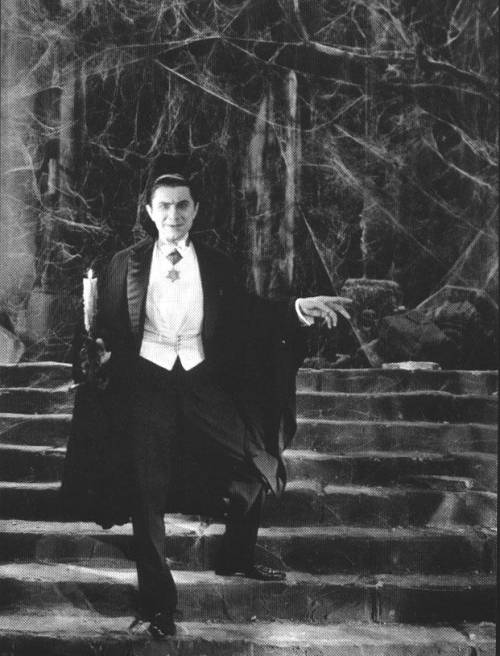
I know I’m going to get crucified for putting the Bela Lugosi film in 8th. But let’s be serious, is this film really frightening anymore? The film drags, and this is due to Tod Browning’s direction. Browning did not pay close attention to how the film was shot and edited. In one scene, on the balcony, there is an “endless take” of about three minutes where the camera never moves. Dracula remains, however, a strong film. It has some stunning visuals (due mostly to Karl Freund, the camera man) like when Dracula emerges from his coffin. Bela Lugosi’s performance remains unmatched. Because he had to learn his English lines phonetically, he inserted odd pauses to his delivery, thus creating the famous Lugosi accent. Finally, Dracula would not be complete without Dwight Frye’s manic performance as Renfield. His laughter alone should put this movie on anyone’s list.

7. Return of the Vampire
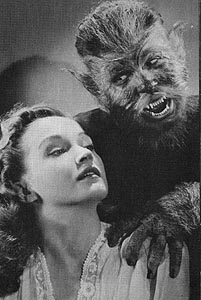
This film marked the return of Bela Lugosi to the role of a vampire, Armand Tesla. The werewolf servant (now a staple in Halloween lore) had its start in this film with Andreas Obry, played by Matt Willis. He redeems himself in the end, dragging the hapless vampire into the sunlight, which oddly doesn’t kill him. Tesla seems merely stunned by the daylight. Andreas drives spike through his chest, causing the vampire to melt away, a special effect quite gruesome in its day.

6. Underworld
Guns, vampires, werewolves, and tight leather outfits. How could you loose? Underworld takes the art direction of the Matrix and meshes it with a Mafioso-style action movie. The casting of Bill Nighy as the head vampire, Viktor, added just a bit more panache (he also was Davy Jones in the Pirates movies). The film’s original concept was to remake Romeo and Juliet only with werewolves and vampires. If you extract the sappy romance and beef up the Tybalt, you get Underworld.

5. From Dusk Till Dawn
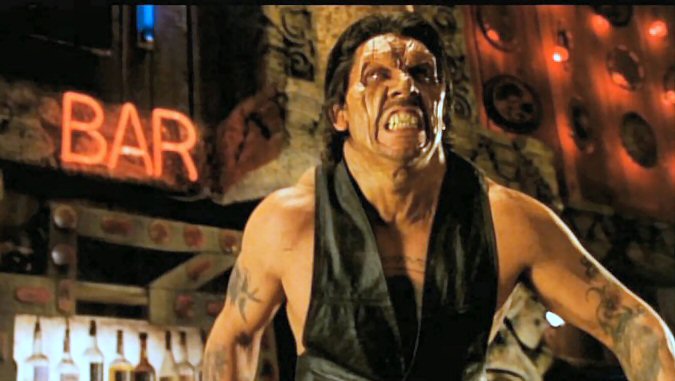
Technically this is only half a vampire flick. The first part is pure Quentin Tarantino dialogue and plot line. Robert Rodriguez’s shoot ‘em style doesn’t take charge until the main characters reach the Titty Twister bar across the Mexican border. Tom Savini (the makeup master for Dawn of the Dead and Friday the 13th) sports a penis shaped pistol that springs from his belt buckle. The priest, played by Harvey Keitel, can’t bring himself to curse, yet blows away multiple vampires with a shotgun that doubles as a cross. Honestly, if you haven’t seen this movie, then stop what you’re doing and rent it. You have a nearly naked Salma Hayek dancing with a snake. Need I say more?

4. Fright Night (The Original)
A campy vampire film set dead in the middle of the 1980s. With that said, it single handedly revived the vampire genre. What works about this film is that writer-director, Tom Holland, did his homework. The main character, Charley Brewster, has a name borrowed from Son of Dracula. While the actor and vampire hunter, Peter Vincent, is a combination of Vincent Price and Peter Cushing (See Horror of Dracula below). Peter Vincent is unusual in that he is terrified of vampires and cowardly through most of the film. While the vampire Jerry Dandrige, played to the hilt by Chris Sarandon, eats up the scenery, and several apples. I read that Sarandon added the apples because somewhere in his family tree was a fruit bat. (Insert rim shot.) As a film it nears perfection, but you have to overlook the sad 1980’s attire and mandatory dance scene.

3. Horror of Dracula
This film marked the first color Dracula and spawned eight sequels. It also starred a pair of actors that became notorious in their own right: Peter Cushing as Van Helsing and Christopher Lee as Dracula. Hammer Films took full advantage of Technicolor with dripping fangs and bloodshot eyes. The studio acquired the rights from Universal so long as they didn’t use any of the trademark looks or plots from the original Dracula movies. The result is a somewhat haphazard tale set in Germany. In the final face-off between the two adversaries, Peter Cushing crosses two candlesticks to from a crucifix, thereby driving Dracula into the sunlight. A classic move now a part of vampire lore.

2. Bram Stoker’s Dracula
Some people hate this film. I choose to embrace it, bad acting and all. In terms of the acting, I am of course referring to Winona Ryder and Keanu Reeves. Winona was so adamant about not showing guilt (apparently she doesn’t believe in the emotion) that director and cast members had to shout obscene things to her from off camera to get any reaction. However, this movie best portrays the novel by Bram Stoker. Yes it inserted a reincarnated love. (Remember Blacula? You never thought that movie could be so groundbreaking did you?) Gary Oldman’s performance as Dracula was spot on, adding layers of back story to a traditionally flat character. Finally factor in Francis Ford Coppola’s fauvist set and lighting and you have a masterpiece of a movie.

1. Interview with the Vampire: The Vampire Chronicles
Let me say this up front, I am not an Anne Rice fan. However, I love the movie Neil Jordan crafted from her prose. Even Anne Rice, who at first threw a fit over the casting of Tom Cruise as Lestat, had to eat crow. Brad Pitt admirably butches up the role of Louis, and a young Kirsten Dunst holds her own as Claudia. One particularly moving scene is when Claudia and her newly transformed companion are set in a sewer at sunrise. We see the light slice down the wall, and strike the couple, now embracing. When Louis discovers them, the bodies flake away as ash. This film is the culmination of the mood and themes from sixty years of vampire films.

I know I will get flack for the films on this list. You may have your own favorites that didn’t make it. Or perhaps you feel the order is wrong. I invite you to share your opinion. Remember, these are all great vampire films, whatever order you put them in.

Tim Kane

The Un-History of the Undead Part 2: Romero Zombies

"They're coming to get you Barbara."

October brings the ghoul out of me every year. My mind delves in the macabre (as usual), but during this month nobody stares. Flesh eaters and the living dead hardly warrant a second look.

In part 1 of this series, I examined the folklore behind the Voodoo zombie. Movies through the sixties all featured shambling, glassy eyed figures who were as menacing as a line at the DMV. Then, on on October 2, 1968, one movie changed everything.

Night of the Living Dead so shocked America, that Variety’s review included this scathing critique: “On no level is the unrelieved grossness of ‘Night of the Living Dead’ disguised by a feeble attempt at art of significance.” Ironically, George Romero had originally wanted to make an art-house movie, but quickly realized that an exploitation movie would be the best chance of making a profit.

What was it that had audiences of the late 60s so terrified? Up until then, monsters were typically people in rubber suits, and zombies had been relegated to strangling or bludgeoning their victims. Romero made his zombies crave human flesh. Critic Robert Ebert commented on the horror in the pages of Reader’s Digest: “This was ghouls eating people.” (The idea of consuming human flesh was borrowed from the mythology of the ghoul, who rips its victims apart and devours them whole.)

Romero’s zombies were completely divorced from the corps cadavers of the Caribbean. His creatures rose from the dead through a pseudo-scientific agent— A Venus probe that returns to Earth is hinted as the cause for the living dead. Rather than appearing docile and compliant, they were wildly aggressive, doing everything possible to tear people apart and eat their flesh. Finally, the zombie’s fate in Romero’s film was permanent. There was no zombie master to kill, and salt would not wake these creatures from their trance. These were truly the living dead. The additions Romero made to the zombie mythology have so dominated the genre that few movies made afterward strayed from his formula. (One notable exception is Wes Craven’s The Serpent and the Rainbow, made in 1987 from the book by Wade Davis.)

Romero never refers to his walking dead by the word zombie. Instead each of his films calls them the living dead. Despite this technicality, modern moviegoers made the connection. When Romero’s second film, Dawn of the Dead, was released in 1978, it was distributed internationally as Zombie (or Zombi).

An intriguing fact presents itself when titles of zombie films are viewed as a whole. Nearly every film title translated into English will use the word zombie, even if this was not in the original title. Take for example the 1980 Spanish and French production El lago de los muertos vivientes (literally, The Lake of the Living Dead). When this film was released in the United States, it took the title Zombie Lake. Interestingly, the word zombie hardly ever appears in titles for French, Spanish, or Italian films. (The notable exception to this is Lucio Fulci’s series of films titled Zombi 2, 3, 4 and 5. This may be due to Fulci releasing Zombi 2 as an unofficial sequel to Dawn of the Dead, which was titled Zombi.) These languages prefer to call the walking dead les morts vivants (French for the living dead) or simply los muertos (Spanish for the dead). Perhaps these counties were influenced by the George Romero films, or even that the word zombie has a stronger connection with the Americas, having its origin in the Caribbean.

So once again, let’s revisit that lowly creature on our front stoop. We expect our zombies to be rotten and hungry for flesh, not blank-faced and obedient. When the mythology leapt from one medium to another, folklore to film, it transformed. Certain elements were lost. Others were reinvented. Perhaps we’re not finished yet. As zombies enter new realms, the meanings of this word may further mutate to a point where we might not even recognize it.

By Tim Kane

I brought this article back from the dead in recognition of the digital release of Stories in the Ether. This has my story, Moth and Rust, which is my take on the zombie story that involves a weary husband who does his wife’s chores for years, only to drop dead. Yet, she still insists he work his butt off. No rest for the dead. Don’t worry, the young nephew has some ideas how to solve this undead problem.

Check out Stories in the Ether in Kindle or Lulu.

The Un-History of the Undead Part 1: Zombie Folklore

Don't bury me. I'm not dead!

Imagine that a zombie knocked on your door—a real, true to life (or death) zombie. You open the door and find a black man, looking every bit normal and alive, except for the listless expression and glazed eyes. No shambling carcass of rotting flesh and bones. It does not salivate for your intestines or brains.

The word zombie signifies a member of the undead—those creatures that come back to haunt the living. However, the image that comes to mind for this creature has been greatly shaped by popular media, such as literature and film. In the example above, the first description comes from folklore, while the second is influenced by fiction. How did our perception of these creatures change over the years?

Lafcadio Hearn introduced English speakers to the word zombie through his brief article, “The Country of the Comers-Back”, which appeared in Harper’s Magazine in 1889. (Although the OED dates zombie back to 1819, it was Hearn’s article that circulated widely enough to catch the public’s attention.) Hearn had traveled to Martinique in 1887 to study local customs and folklore for a series of articles on the Caribbean. It was there that he heard talk of zombies.

While it’s true that Hearn discovered the zombie, it was left to American adventurer William Seabrook to capitalize on it. Arriving in Haiti in 1928, he left no stone unturned in his quest for the corps cadavers (walking dead). This led to his autobiographical travelogue The Magic Island, which became an immediate bestseller.

A Haitian farmer by the name of Polynice introduced Seabrook to some real live zombies. The farmer brought the adventurer to the middle of a plantation and pointed out three zombies and the man controlling them. Seabrook went up to each of the zombies in turn, and found them to be little more than dumb brutes, working mindlessly. The eyes were dead, unfocused and vacant.

A central precept of Voodoo, a hybrid of African animism and Catholicism, is the possession of a body by the loa. The loa is usually translated as god or divinity, but it is closer to a genie, demon, or spirit. A person was believed to have two souls, the gros-bon-age (the big good angel), and the ti-bon-age (the little good angel). Each soul served a purpose. The gros-bon-age served to give the body life, while the ti-bon-age gave the person their personality. During a Voodoo ceremony, the loa would displace the ti-bon-age, and thus control the person’s body.

A Voodoo sorcerer, called a bòkò, had the ability to transform any person into a zombie. The bòkò would sprinkle a powder on the doorstep, and when the intended victim stepped on it, the magic entered through the soles of the feet. The person died soon after. Within three days the bòkò snuck into the graveyard, recited a magical chant, and called the victim’s name several times. The zombie had no choice but to answer and come out of the ground. The bòkò then beat the body with a whip to keep the ti-bon-age from returning. Often the bòkò kept the ti-bon-age in a jar. This was called a zombie astral, while the body that walked around, soulless, was called a zombie cadavre.

Every member of society shunned the zombie. This fear did not center on what the creature might do physically. Zombies were entirely docile. It was becoming a zombie that so horrified the islanders. This represented a return to slavery, as the creature must literally do whatever its master bids. Even after death, you might return to work in servitude. Canadian ethnobiologist Wade Davis spent several years researching the zombie powder. He commented, “Given the availability of cheap labor and the physical condition of the zombie, there is no economic incentive to create a force of indentured labor” (American Scientist, 1987).

In order to prevent loved ones from becoming zombies, Haitians took precautions similar to what the Serbians did for vampires. The body was often killed again, either by poison, strangulation, stabbing, a shot to the head or decapitation. Measures were also taken to prevent the zombie from rising. A wealthy family would bury their loved one in a solid tomb, while the less off would inter the body under a piece of heavy masonry. In order to prevent the zombie from answering this call, precautions were made. The mouth might be sewn up or tied shut using a strip of cloth fastened over the head and under the chin. Finally, a zombie might be distracted so that he might not hear the bòkò calling his name. There were two types of distractions. First the body would be buried with an eyeless needle so the corpse would spend eternity trying to thread it. The other method involved scattering seeds in the coffin, and the zombie was forced to count them all, one by one.

Becoming a zombie was not necessarily a permanent condition. There were several cases of people who died, only to be discovered many years later seemingly normal. One Clairvius Narcisse died in 1962 after complaining of sickness and coughing up blood. Eighteen years later his sister, Angelina, discovered him in the l’Estere marketplace. His speech was slurred and his muscles were weak, but he knew that he was no longer a zombie. Apparently, after being dug up and beaten by the bòkò, he had worked on a farm with other zombies. Only when one of the zombies killed the zombie master did they all become free.
Another way to cure an individual of the zombie curse was with salt. If a zombie consumed even a grain of salt, the fog that swirled around his brain would lift, and he would become filled with an unspeakable rage. He would first turn on the one who controlled him, killing the zombie master and destroying his property. The released zombie would then go in search of his tomb, claw at the dirt, and collapse onto his empty grave.

Seabrook’s 1929 publication of Magic Island touched off interest in the zombie and the Caribbean. Unlike Dracula or Frankenstein, the zombie wasn’t under copyright, since Seabrook was essentially reporting on fact. This led to the production of Universal’s 1932 White Zombie, with Bela Lugosi as the zombie master. (The film was preceded by a dreary play, Zombie, penned by Kenneth Webb. The production opened and closed in 1932 after only twenty performances.) The film cemented the Haitian myth of the zombie as a soulless body accepting any order. However the Voodoo version of the zombie would quickly be forgotten in the 60s when an independent filmmaker from Pittsburg got a hold of the concept.
Part 2 will examine what Romero has done to the zombie mythology.

By Tim Kane

I brought this article back from the dead in recognition of the digital release of Stories in the Ether. This has my story, Moth and Rust, which is my take on the zombie story that involves a weary husband who does his wife’s chores for years, only to drop dead. Yet, she still insists he work his butt off. No rest for the dead. Don’t worry, the young nephew has some ideas how to solve this undead problem.

Check out Stories in the Ether in Kindle or Lulu.