Historical Gotham was a Town Filled with Madmen

I can’t say I’m a Batman fanatic, but I do enjoy the vigilante crusader. Little did I know the sordid history behind Gotham’s name.

It turns out that Gotham was a village in England known to be populated by madmen. The villagers feigned insanity to prevent King John from building a royal road near them (at the time, villages would have to pay for the upkeep of the road). When the king’s herald arrived, the townsfolk were engaged in all manner of madness. Needless to say, they rerouted the road.

Twenty of these tales were bound together as The Merry Tales of the Mad Men of Gotham in 1540. Over time, the “mad” part was replaced with “wise.” Makes you wonder just where madness ends and wisdom begins.

One tale, called “Of Drowning Eels,” concerns the fishermen of the village. It seems that all the fish vanished from the local pond. Only a great eel remained. They presumed that the eel must have eaten all the fish, so the folk of Gotham put the eel on trial. Finding him guilty, they sentenced the eel to death by drowning. (Yes, drowning). They cast him back into the pond, saying: “Lie there and shift for yourself, for no help thou shalt have from us.”

A nursery rhyme concerning the loony Gothamites survives. It first appeared in Mother Goose’s Melody in 1765.

Three wise men of Gotham,
They went to sea in a bowl,
And if the bowl had been stronger
My song had been longer.

Washington Irving borrowed the legend of the town filled with crazies and used it as a label for New York city. In a letter printed in his magazine, Salmagundi, on February 13, 1807, he writes:

One of the most tickling, dear, mischievous pleasures of this life is to laugh in one’s sleeve – to sit snug in a corner unnoticed and unknown and hear the wise men of Gotham, who are profound judges (of horseflesh) pronounce from the style of our work, who are the authors. This listening incognito and receiving a hearty praising over another man’s back is a situation so celestially whimsical that we have done little else than laugh in our sleeves ever since our first number was publisht.

So Gotham was filled with mad men long before Batman appeared on the scene.

Tim Kane
Why I Write

I was talking to a friend the other day about how most writers have vastly unrealistic ideas about the business of writing. I once shared their views as well, so this is not purely peering-down-my-nose at “those folks.” We dream of writing one stellar book, becoming instantly famous, and then retiring to a) a yacht in the Caribbean, b) a log cabin in the woods (this the Stephen King dream), or c) a villa in Italy.

I’d laugh if I didn’t have this dream myself. And I can’t say I wasn’t warned. Way back, when I first discovered my passion for writing in a class with Susan Vreeland in my senior year, a local author came to speak to us. His name was Vernor Vinge. If you love SciFi, then you’ve certainly heard of him.

We asked him a multitude of questions, but mostly he tried to illustrate the process, and demystify the glamor. I was like Teflon, and it slid right past me. One thing did stuck. He asked us all why we wanted to be writers. We had to write down our response. Of course visions of books covers with my name on it, money and fame flitted through my head. What I settled on was this: Because I have to.

I’ve spent the last twenty some odd years since then working this out. I find I’m happiest when writing, even when it frustrates me. Maybe it’s because I end the session creating something? Writing offers a level of control that is ephemeral in real life (I think this is the lure of video games to some). That’s my world in there. I created it.

So why do you write? Do you have what it takes to go the long haul?

Tim Kane

Masters Class on Voice

Every start reading a book and find that you simply cannot put it down? You’re hooked. Snagged. Hopelessly snared by the character unspooling the story. That, my friends, is voice. Some authors have it in spades. It’s a very tricky subject to nail down. Rather than pontificate, let’s show two amazing examples.

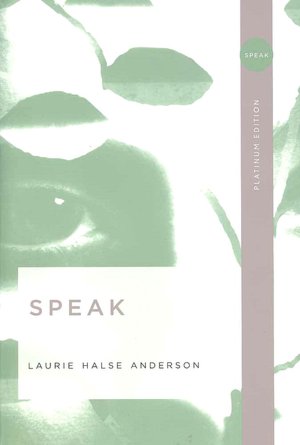
Speak, by Laurie Halse Anderson

“The musical would be easy for me. I am a good actor. I have a whole range of smiles. I use the shy, look-up-through-the-bangs smile for staff members, and the crinkly-eye smile with a quick shake of my head if a teacher asks me for an answer. If my parents want to know how school went, I flash my eyebrows upward and shrug my shoulders. When people point at me or whisper as I walk past, I wave to imaginary friends down the hall and hurry to meet them. If I drop out of high school, I could be a mime.”

You can smell the desperation on the narrator in Speak. How does Anderson make it happen? Look closely, she has the narrator’s thoughts fire away like dialogue. It helps that she uses a first-person narrator in present tense. It creates an immediacy that resonates with the reader. She also utilizes made up words and phrases to convey this girl’s distinct point of view. Check out: “look-up-through-the-bangs smile.” Everyone can picture this. It so completely describes the action, yet it also demonstrates the girl’s viewpoint. Strong verbs like “flash my eyebrows” or descriptions like “crinkly-eye smile” also paint a picture of this narrator.

How Lamar’s Bad Prank Won a Bubba-Sized Trophy, by Crystal Allen

“Since Saturday, I’ve fried Sergio like catfish, mashed him like potatoes, and creamed his corn in ten straight games of bowling. And it’s just the middle of the week. People call Wednesday “hump day,” but for Sergio, it’s “kicked-in-the-rump day.” I’m his daddy now. The maddest, baddest, most spectacular bowler ever.”

Allen uses many of the same techniques as Anderson. She works with a first-person narrator in present tense. She makes up phrases like “kicked-in-the-rump day” and “creamed his corn.” She also employs fragments to better create the feel of clipped speaking. Notice she started the second sentence with “and.” Not grammatically correct, but if she’d fixed it, the narration would have lost it’s punch.

So when scanning for a book to read, look for a narrator who lets it all hang out. Or, if you’re a writer, use these techniques to add captivating voice to your writing.

Tim Kane

Literary Easter Eggs

I love to give gifts for Easter, so in that spirit, I have several writerly nuggets of advice gleaned from Ray Bradbury. They come mostly from an interview he did back in 2001. Here are my favorites, passed along to you via a frisky Sylvilagus audubonii (Desert Cottontail).

Get Rid of Unbelievers

Are there people in your life who won’t support your writing? I don’t mean support as in pay for your lazy butt, but people who frown on your endeavors. Fire them. Unfriend them. Unlike them. Unfollow them. They will drag your dream down.

Write with Joy

Why did you get into writing in the first place? There had to be a spark of joy there. Right? Fan that spark until it’s a flame. Make your work your love. After all, for most of us, no one’s paying for it. So if a story feels like drudgery, scrap it. Start a new one that you love.

List Ten Things you Love

Then write about them. Create stories about them. Combine your passions. I love to write and cook. No, that doesn’t mean I’ll write a cookbook. But I do have some ideas in the works for stories that involve cooking.

List Ten Things You Hate.

Kill these things but putting them on the page. It’s great therapy. I once had a difficult time with a few friends of mine, so I bashed out a screenplay. A serial killer screenplay. Then I promptly offed all the offending friends. I felt awesome afterward. Thought I’m not sure what this says about my psyche.

Type Anything, So Long as It’s English 

The first thing that pops into your head. Put it down. Use word associations to break through that dreaded writer’s block. Hey, words on the page beats a blank page. Even if they don’t make a lot of sense. You might even try the Write of Die website. The screen turns red if you stop typing for too long.

Don’t Write for Everyone

It just takes one person. Someone to notice and appreciate your writing. Maybe it’s the fella who will tell you that you’re not totally nuts.

Be a Cheerleader

Writing is a lonely awful business full of neck aches, bleary eyes, and rejection letters. Sometimes people need a little encouragement. Writers need to support other writers. It’s the only way we’ll all get through this.

Tim Kane

Rube Goldberg Devices

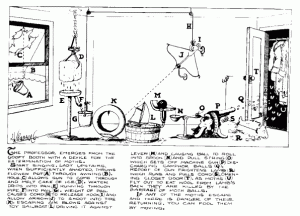
I’ve always adored Rube Goldberg devices. It may stem from watching too much Tom and Jerry or Wile E Coyote as a young tot. Each of those fellas built some outlandish contraptions.

Another great product from Acme

The origin of these machines dates back a century to Ruben Lucius Goldberg. At a young age, he obsessed with tracing from books, newspapers, and calendars. After a failed career as an engineer, he began drawing cartoons for the San Francisco Chronicle.

Perhaps the best device I’ve seen to date is “Page Turner”. Watch and enjoy.

Tim Kane