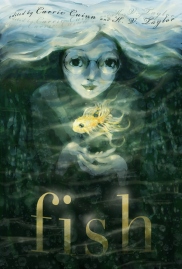
 I’m so excited to have the Fish anthology from Dagan Books coming out on February 8th. I submitted to this anthology way back in July. Seems a world ago. I opted for the flash fiction because, quite frankly, I’d never done one. It was fantastic. Having to boil down your words down to 1000. Crazy. Oh, and the awesome folks at Dagan also did a series of interviews with all the writers. Check out mine here.
Monthly Archives: January 2012
Lost in Place
 My wife has grown used to this by now. Every once in a while I get so involved in a project that I disappear into myself. While driving, my mind is plotting out scenes. While making dinner, I’m pricing together dialogue. And every free second, I’m delving into books or the Internet for research.
Do all writers do this? Does you need the poetic bent or does it happen to non-fiction scribblers too? It’s a bit like. Fugue state, except instead of forgetting my life and leaving home, I travel inward, totally enveloped by the story world.
Typically I emerge from this story coma with fresh insights. If I have a chance to write, I can easily wrack up thousands of words a day. (It helps if I have a deadline looming.)
Sometimes I’ll plan for this. For example, if I have difficult section to work out in a chapter, I’ll review it and then take a shower or go for a drive. These menial tasks let my mind wander. I can’t tell you the number of times I’ve scribbled frantically while still wet from the shower. The worst part is that I don’t have my glasses as they steam up.
I also inhabit parking lots, scratching words onto whatever paper I can find: receipts, envelopes, those flyers they leave under windshields. Sometimes I have to set a timer or I’ll spend the next hour just writing in a parking space.
Tell me if you have any similar situations. Do you ever get lost in one place, your mind dropping off the planet?
Tim Kane
STRIKE
I am joining the strike against the SOPA bill. Visit these websites to learn more.
All Work and No Play…
I’ve been going stir crazy. This is the longest I’ve gone without writing. Four days. Granted I had to start teaching again. Plus there was that jaunt to Disneyland. But man, switching away from morning writing is killing me. There’s no sure fire way to get the writing gears going in the evening. I’ll keep plugging away and carving out time. I have to write. I just have to.
How to Lose Agents and Frustrate Editors
 You finished your pride and glory. Now’s the time to tell all those agents and publishers just how damn good it is. A sure bet. The best book they ever read. Here’s how to annoy and pester agents and editors until they relent and publish your marvelous manuscript.
Don’t bother with the first pages or chapter, send them the whole novel. All five-hundred-pages. Be sure to make it UPS or FedEx and a sign on delivery. If you’re not up to plunking down the dough for the whole enchilada, then send the best chapters. You know which ones those are. It’s never the first one. Come on! You’re just warming up. How many other classic books have slow openings? Too many to count. So send a selection of your best chapters to amaze your prospective agent or editor.
Now, let’s talk about formatting. It’s not as important as you would think. We know how much paper costs these days, so don’t waste dead trees with double spacing. Try one-and-a-half or single spacing. That way you can squeeze that three-hundred-page novel down to one-hundred-and-fifty. Or, better yet, print on both sides of the paper. Then you can cut it down to seventy-five pages. Hey, you might just be able to afford to mail that bad boy.
Now, some of us might remember the good old days of typewriters. Yes, those things that printed without electricity. There, you needed to put two spaces after each period. Don’t ask me why. It was a barbaric age. Now with word processors, you don’t need to do this anachronistic task any more. The fonts are developed to look good with only a single space. But don’t worry, add two, three, or even four spaces after each sentence. Sure, it might bug agents, but at least it’ll get their attention.
Speaking of fonts, don’t shy away from frilly cursive fonts as chapter headers. You can even change your font from chapter to chapter. Get creative and make an impression.
As you write, make sure to dump all that exposition up front. The longer the paragraphs, the better. Yes word processors can auto-indent for you, but that’s too complex and hard to figure out. Just tab each paragraph. Or better yet, hit the space bar five times. Consistency rules. Plus, rather than page breaks, you could hit the carriage return enough times until you reach a new page.
Finally, let’s talk dialogue. “Said” is sooo boring, Why not spice things up with “announced,” “protested,” or “cajoled.” Editors love that sort of thing. It shows range. Sure, no other published writers do it, but that only makes you unique.
So are you ready? Heck yeah! Bundle up those pages—coffee stain and all—slap some stamps on it, and mail that sucker away. Yippee-kay-ay. You’re going to be published.
Tim Kane
(I do hope you realize these are list of things NOT to do. If you attempt these, prepare for the long lonely ride to rejection.)
 Tim Kane Books